
Captain of the Birds
*100 copies limited edition* Jukka Rintamäki composes music for video games, films, and theater. He has a background in indie music with the band Silverbullit and has composed music for the video games Battlefield 3 and Battlefield 4. In recent years, he has also produced and performed live with the band Kite. The music is mostly acoustic, featuring the piano, cello, and alto horn. However it also incorporates some electronic music.
“The album is inspired by the book Terre des hommes by Antoine …
Musique d’été
Pierre Mariétan (1935–2025) was a prolific Swiss composer, sound artist, and pioneer in acoustic ecology who spent most of his life working in France. Over his long career, he composed more than 300 instrumental, orchestral, vocal, and electronic pieces. Mariétan studied under avant-garde legends like Pierre Boulez, Karlheinz Stockhausen, and Bernd Alois Zimmermann. In 1966, he founded GERM (Groupe d’Étude et de Réalisation Musicales), a music collective that blurred the lines between strict com…
Remanens
*200 copies limited edition* The music on ‘Remanens’ is the result of a commission by Art Cinema OFF off and B.A.A.D.M to score the short silent film ‘Positano’ made by french actor and filmmaker Pierre Clémenti in 1969. The film itself is an ever-shifting series of glimpses, without much context, of a family vacation to the island Positano. The short cuts are similar to a dream or obscured, residual memories where chronology has fallen apart.
The score was reworked into album format on ‘Remane…
Interior Realms - vol. I
*Handmade textile sleeve* British composer Simon Goff interprets space, both within ourselves and the objects that surround us with Interior Realms - vol.1; a wondrous, contemplative work of electronic chamber music. The idea first came from the philosophical idea underpinning the book Interior Realms, published by Theatrum Mundi in 2021. In it, a collection of essays reflects upon architecture’s influence on the human spirit. It challenges us to think not only about music as space, but also abo…
aground
*250 copies limited edition* At low tide boats near the shore are no longer carried by the water but rest aground. Only after high tide recurs do they function in the way they are intended to. Boats may touch ground while approaching the shore at unknown depths. This is something to be avoided in order to keep the boat sound and safe. A boat moving towards the shore where the ground comes nearer and nearer was the image for me at the time of writing the score. It became the title of the piece – …
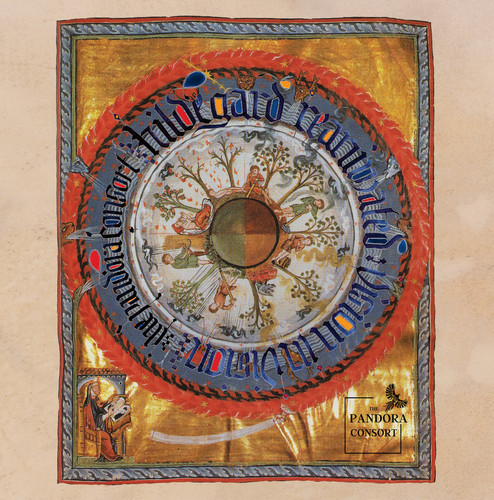
Hildegard: Vision in Vision
*200 copies limited eidtion* Boston based The Pandora Consort, a dynamic force in early music, is excited to release a 16-work album of their sought-after concert program, Hildegard Reanimated: Vision in Vision (Hildegard Von Bingen) with a dedicated performance recorded in the stunning acoustic Sanctuary space at Epsilon Spires in Brattleboro, Vermont. The release is a collaborative effort of Sedimental, The Pandora Consort and Epsilon Spires with In-Situ Polyculture Commons who sponsored the p…
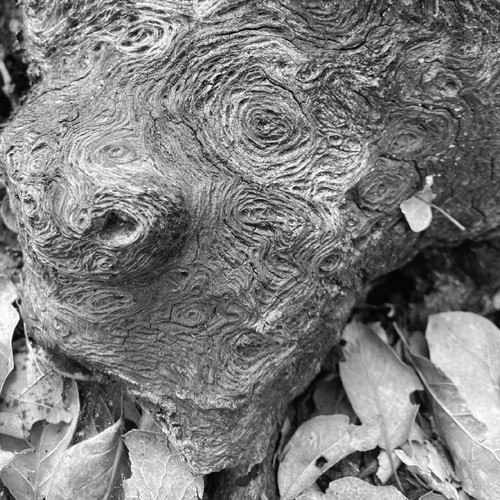
Nonalith
“This album resulted (like many things) from experimentation, and actually from composing etudes formyself to practice justly-tuned chords. From that starting point I began to think about space, not justspace like the silence around sound events, but also the hollow, resonant spaces in my sinuses andmouth, and the space where the sounds were recorded, or the space where the sounds were listened to.I wanted to show the many colors of the sounds, even the hidden ones, like Pauline Oliveros who sai…
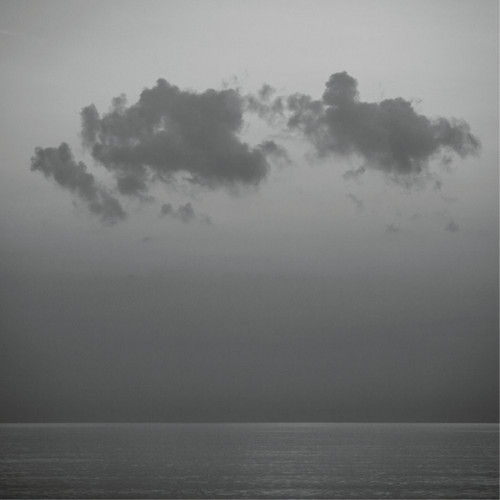
The Great Liberation Through Hearing
The Great Liberation Through Hearing (1995) is scored for amplified, just-tuned string quartet and digitallytransformed human voice. Generated from a phonetic analysis of the names of Buddhist deities describedin The Tibetan Book of the Dead, the piece explores connections between Eastern mantric science andWestern linguistic structuralism. It brings together the compositional linguistics of Kenneth Gaburo andthe intonational theories of Harry Partch through two simultaneous mappings of the anal…
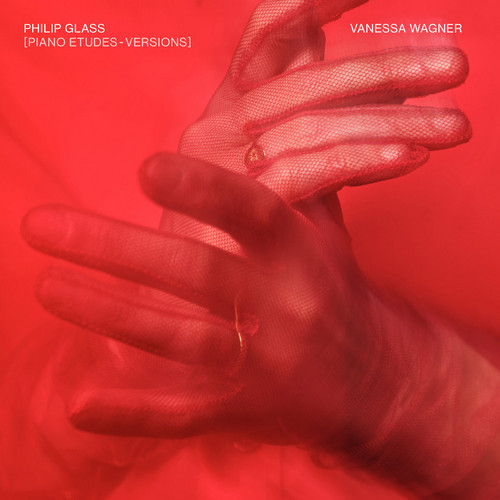
Philip Glass: Piano Etudes Versions
Few have ventured to record Philip Glass’s twenty piano etudes in their entirety. Even fewer have attempted to remix them.
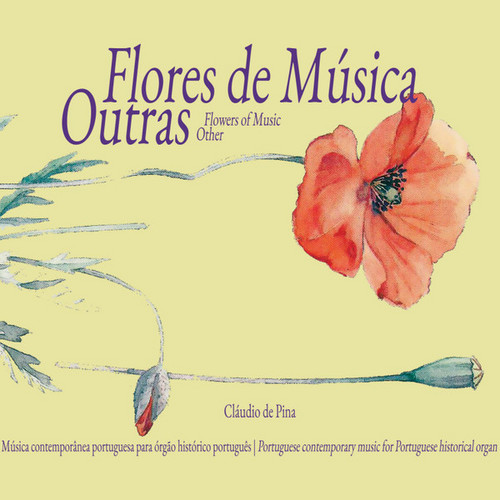
Outras Flores de Música
Outras Flores de Música (2026), ‘Other Flowers of Music’ is an album of contemporary Portuguese music dedicated exclusively to works written for the Portuguese historical organ, a unique national instrument from the 18th century. Here we find compositions by Bruno Gabirro, Diogo Alvim, Cláudio de Pina and Vítor Rua. Performed, recorded, edited, mastered and under the artistic direction of organist Cláudio de Pina. Outras Flores deMúsica takes its title from another collection of keyboard works, …
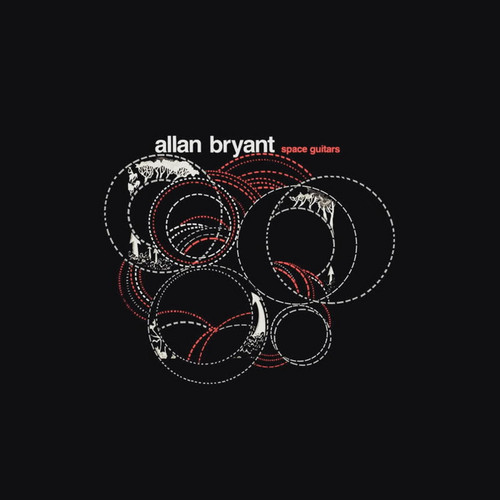
Space Guitars
Music for New String Instruments, composed and performed by Allan Bryant. A pioneer of underground American electronic music, Bryant helped push the boundaries as a founder member of Musica Elettronica Viva alongside Alvin Curran, Frederic Rzewski, and Richard Teitelbaum. Following his departure in 1968 he continued to independently compose, record, and archive live vintage MEV sets on his own IRML imprint until his death in 2019. During a period in the early to mid 1970s, Bryant channelled his …
Almost Starlight
Almost Starlight is the extraordinary new album by Jem Finer (hurdy-gurdy) and John Matthias (violin). Produced by Jay Auborn and recorded in a Medieval Church, deep in the Devon countryside, in the Summer of 2025, the music is suffused with light, heat and the natural acoustics of the space.
The album defies categorisation; forced to pigeon hole it the nearest approximation would be ‘modern-classical’ but this ignores its myriad influences and explorations which encompass inspiration from Arvo …
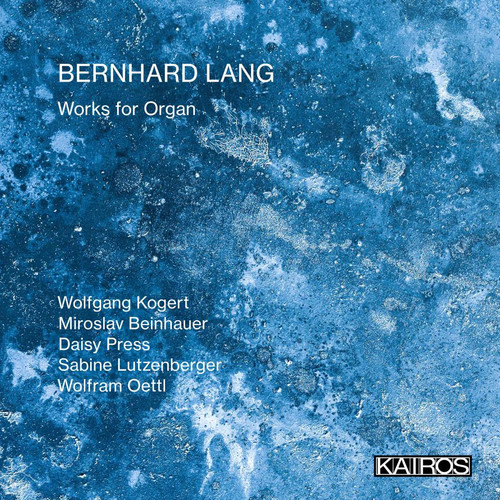
Works for Organ
The album Works for Organ documents and brings to life Bernhard Lang’s engagement with this instrument – which dates back to his youth – in its most diverse forms. The musical roots lie in his own improvisational practice as part of a band, in his ongoing interest in microtonally composed music, and in his long-standing exploration of loops, a technique that can relate to various musical parameters. Furthermore, the exceptional skills of Lang’s performers and their artistic interests play a sign…
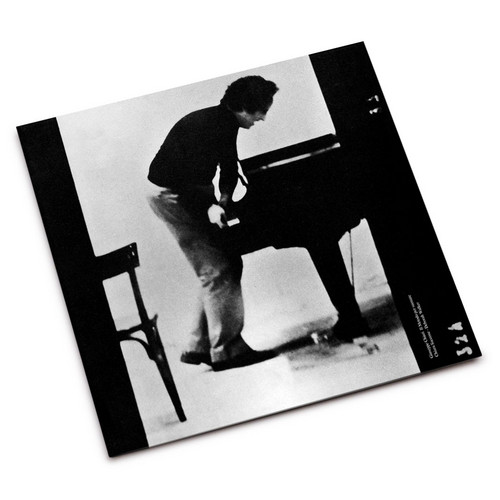
Il Metodo per Suonare
Mega Tip! Edition of 200 copies, comes with a large illustrated insert. Giuseppe Chiari arrived at music from the wrong direction. He read mathematics and engineering at university and studied piano and composition privately, and it was John Cage who turned him toward experimental music. With Pietro Grossi he founded Vita Musicale Contemporanea, one of the first Italian associations for new music, and with Sylvano Bussotti he assembled the travelling exhibition Musica e segno. In 1962 Frederic …
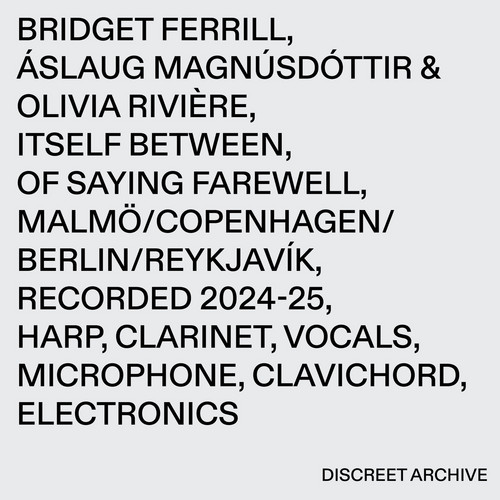
itself between, of saying farewell
*50 copies limited edition* itself between, of saying farewell is an opera in two parts by Bridget Ferrill, Áslaug Magnúsdóttir and Olivia Rivière. Written through harp, electric harp, clarinet, voice, microphone, clavichord and electronics, the work moves through a strange and intimate parable of attachment, pain and release. At the centre of the libretto are three figures: Shoe, Foot and Nail. Shoe is in love with Foot. Foot is leaving to find the House of Bliss. Shoe convinces Nail to impale …
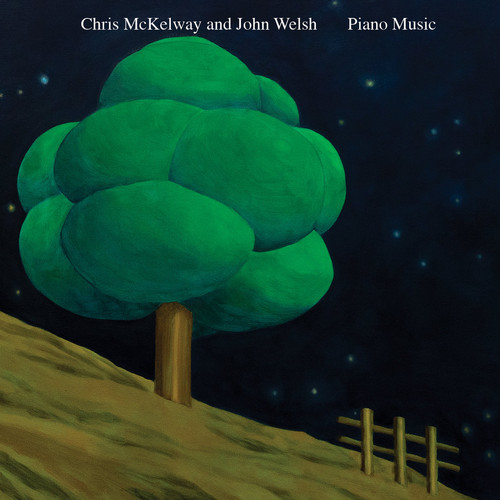
Piano Music
Piano Music is a double-album of works for piano by two brilliant musicians: Chris McKelway and John Welsh. Both of these people have been moving beacons in my own inquiry into what will count as a really musical life. McKelway's collection, "Best Of," is a collection of private and occasional works for himself — as well as works for others brought back to CM's home instrument — from the past 15 years or so. Remediations of Chopin, Donnie Hathaway, and Tom Jobim threaded through lieder whose wor…
Brisk
The idea for this album began taking shape in 2021 and has slowly evolved into a seven-track snapshot of Juli Deák’s musical world and artistic thinking. Coming from the challenging, refined, and often seemingly flawless sound of classical music, the flutist began redirecting her musical voice toward a much more personal space through experimentation and improvisation. What eventually grew into this project originally began as a handful of unfinished ideas—which only revealed their true meaning …
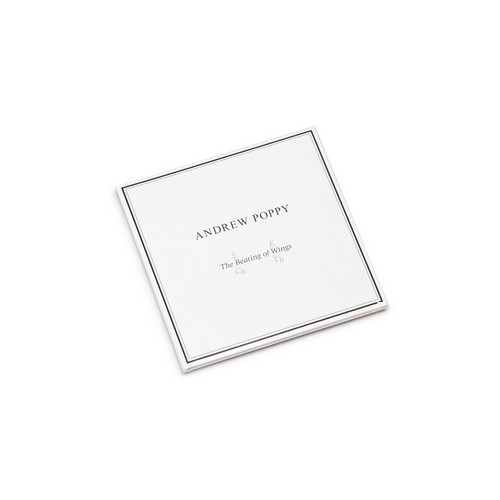
The Beating of Wings
The 40th anniversary edition of Andrew Poppy’s The Beating of Wings, originally released on ZTT Records. Hailed as “a major landmark in pop-classical genre-blending and post-minimalism” (Robert Davidson, Topology) and “… ahead of his time … he’d fit right in with the Max Richters and Nils Frahms of today” (Steven Wilson; Porcupine Tree, The Album Years podcast). Composed and produced by Andrew Poppy and performed by his bespoke ensembles, The Beating of Wings contains four mesmeric tracks that m…
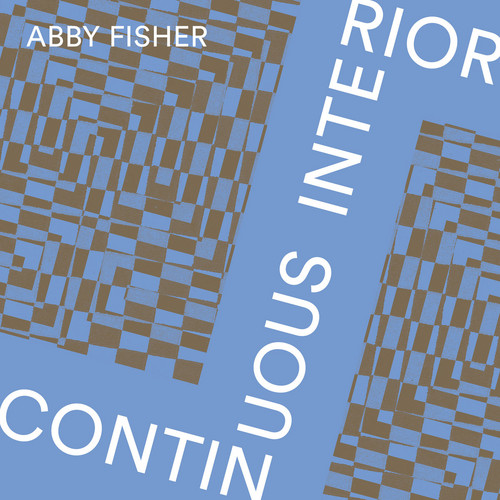
Continuous Interior
With Continuous Interior, Abby Fisher unveils a solo album that reimagines percussion and electronics. The album includes two immersive works that explore scale, space, and perception. The title track – the evocative Continuous Interior by New York composer Robert Honstein – draws inspiration from the modern experience of limitless, bounded spaces – shopping malls, airport terminals, vast warehouses – and translates that feeling into waves of resonant sound, where vibraphone tones sparkle above …
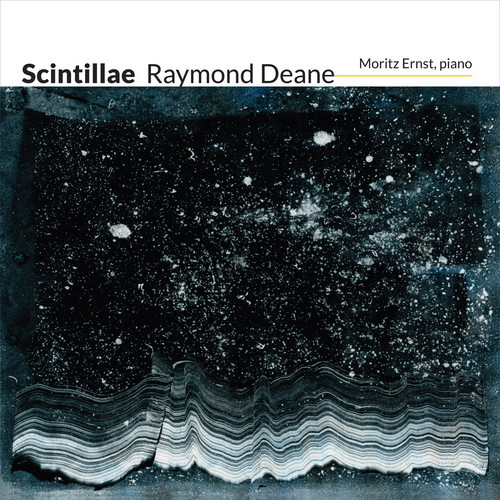
Scintillae
For fifty years, the piano has been the backbone of Raymond Deane’s creative output. This journey began at age sixteen with the first Orphic Piece, a work that set the stage for a career defined by breaking contemporary taboos. Rejecting both the strict rules of traditional keys and the lawlessness of atonality, Deane creates his own temporary musical structures, constantly building them up and dismantling them again. For him, composition is a process of conflict and negotiation, allowing for th…