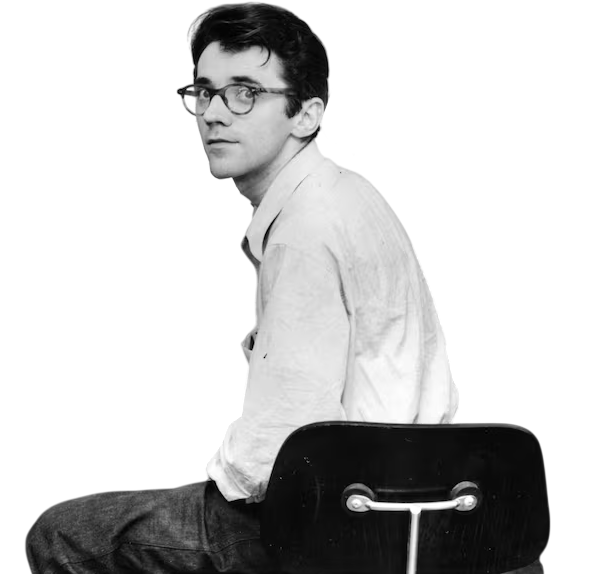
David Tudor - Anima Pepsi
Viewed through the lens of what was, is, and might have been, the two pieces comprising this collection, Anima Pepsi and Pepsibird, by the American pianist and composer, David Tudor (1926-1996) - one of electronic music’s most important pioneers - offer the tools for time travel, presenting an unmediated encounter with radical, optimistic ideas that gave way to the complex cultural landscape of our time. Composed in 1970 by Tudor for the Pepsi-Cola Pavilion - a unique artist-designed and programmed space for Expo ‘70 in Osaka, Japan, created by Experiments in Art and Technology (E.A.T.) - these works deploy electronic technology as a means to experience sound in ways that are anything but matter of fact, rendering liberated environments, within and through which one might democratically express and commune.
Initially trained on organ and then piano, David Tudor emerged as a leading figure within New York’s musical vanguard, not long after his arrival in the city, following his groundbreaking 1950 performance of Stefan Wolpe’s Battle Piece (1943-1947) and the virtuosic, American premiere of Pierre Boulez’s Second Sonata (1948). Within less than a year, Tudor had joined the Merce Cunningham Dance Company, upon its founding, as its accompanist - a role within which he would remain until his death in 1996 - and began cultivating one of his most important and lasting creative relationships with Cunningham’s partner, John Cage, who would subsequently state that the entirety of his output, composed between 1951 and the end of the 1960s, was written with Tudor in mind.
A clear marker in Tudor’s emergence as a composer occurred in 1966 during 9 Evenings of Theatre and Engineering, a series of performances that presented collaborations between ten New York artists - Tudor, Cage, Lucinda Childs, Öyvind Fahlström, Alex Hay, Deborah Hay, Steve Paxton, Yvonne Rainer, Robert Rauschenberg, and Robert Whitman - and thirty engineers and scientists from Bell Labs. In addition to the event being widely cited as a historical milestone in the emergence of new and interdisciplinary media within the arts, it led directly to the founding of Experiments in Art and Technology (E.A.T.), a platform to promote collaborations between artists, engineers, and scientists, formally launched by the engineers Billy Klüver and Fred Waldhauer, alongside Rauschenberg and Whitman, the following year.
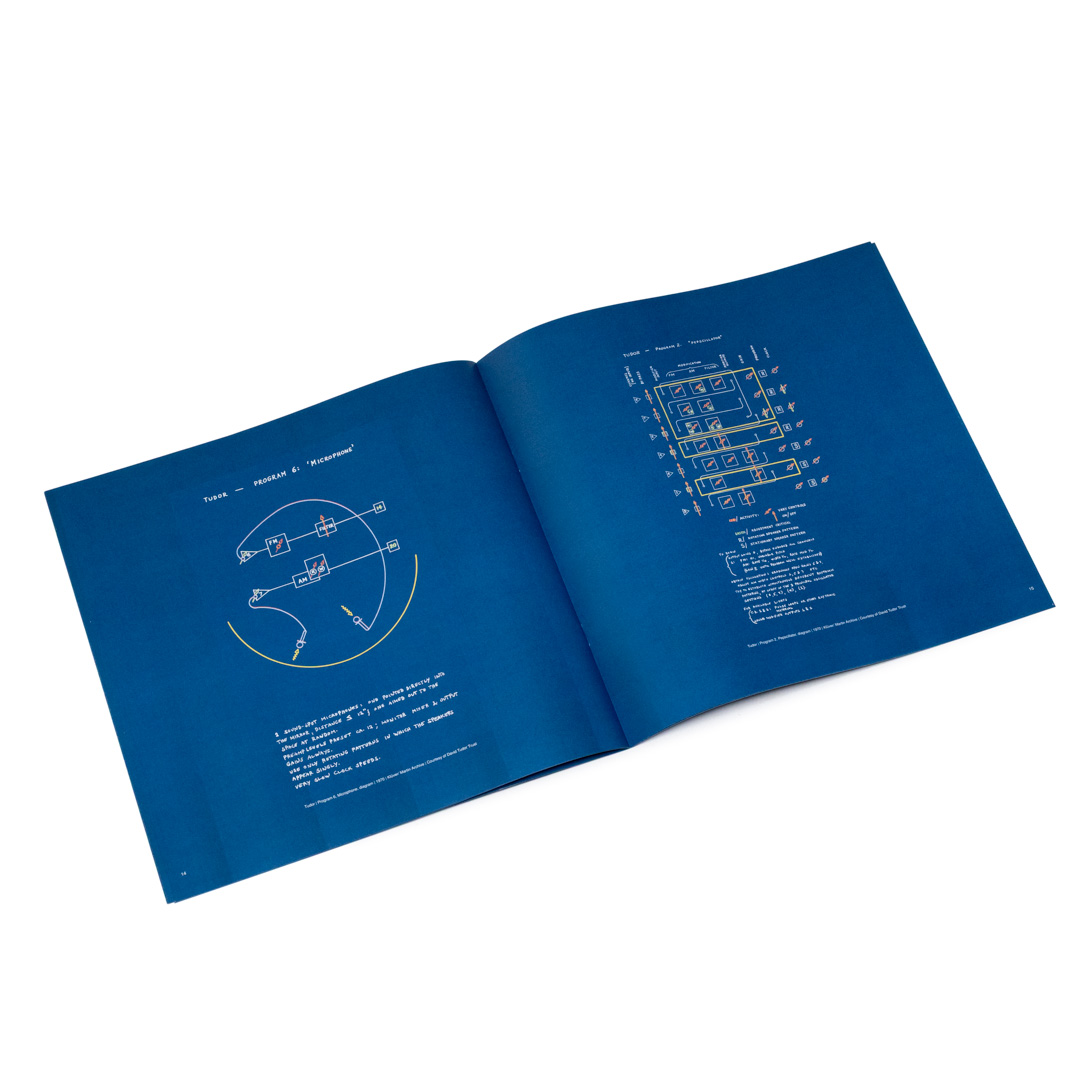
Upon its formation in 1967, Tudor would remain an active member of Experiments in Art and Technology for years, realizing numerous works under its umbrella, as well as taking part in its projects and initiatives. Among the most noteworthy and ambitious of these was the Pepsi-Cola Pavilion, an interdisciplinary architectural construction for Expo ‘70 in Osaka, Japan, for which Tudor composed four pieces - Pepsibird, Anima Pepsi, Pepscillator, and Microphone - between March and April of 1970. The culmination of the vice president of Pepsi-Cola’s marketing team, David Thomas’ desire to involve artists in the process of creating the company’s Pavilion at the expo - a world’s fair themed around “Progress and Harmony for Mankind" - resulted in E.A.T. and three of its core artists - Forrest "Frosty" Myers, Robert Whitman, and David Tudor - alongside the sculptor and filmmaker, Robert Breer, and the architect, John Pearce, being tasked with creating the design and function of the building: a 120-foot diameter steel and polyvinyl dome, shrouded in mist and fog created by spray nozzles, and a square of an intense blue-white light, created by xenon lamps, during the evenings.
Pepsibird and Anima Pepsi were realized for and within this entirely singular environment. Pertinently, unlike Bandoneon!, which electronically processed the sounds of a live acoustic instrument, or many of Tudor’s collaborations with Cage during the preceding years, they are an advanced form of musique concrète. Both pieces utilize libraries of tape recordings, live mixed and processed through the Pepsi pavilion’s sound console, before being distributed through the system’s 37 speakers, divided into 8 channels of stationary and rotating patterns, designated by Tudor’s instructions: small circle, great circle, large rhomboid, single overhead, spiral, small triangles, and small ovals. Pepsibird is thematically focused upon a physical interiority, with its ten source tapes being recordings of brain wave activity of both humans and animals: cat’s eye, nerve firing, bats, brainwaves (slow / regular), EKG, alpha wave AM-FM, modified nightjar (slow), modified nightjar (regular), and demodulated Alpha waves.
In its live rendering, Anima Pepsi utilized the same stationary and rotating shape patterns for the sound system in the Pepsi pavilion that are prescribed to its companion. However, where Pepsibird’s source material was drawn from interior realities, Anima Pepsi is conceptually centered on the exterior, specifically field recordings that Tudor made of animal and insect sounds: mosquitoes in a jar, a fly on flypaper, a wasp chewing, a beetle walking, as well as a mix of human and animal sounds that he referred to as the “funny tape”. Further distinction is rooted in audibly different approaches to the interface between source material and technology. If Pepsibird deploys interior sounds in ways that allude to the natural world, Anima Pepsi pushes the sounds of nature and humanity toward the otherworldly through the clear presence of electronic sounds and processing, revealing a stronger association with the artist’s hand, as it moulds detailed, pointillistic patterns of abstract sonority into the work’s gauzy blankets of ambience and space.
The pavilion can also be regarded as a bridge between sociocultural and economic paradigms, marking the fading of institutional support for the optimistic zeitgeists of Modernism - propelled by a Cold War - and platforms for scientific and artistic innovation increasingly falling under the sway of the interests of multinational corporations and the cynicisms of neoliberal thinking. Pepsi-Cola’s brief support of E.A.T. belongs to the beginning of this shift. Unsurprisingly, it didn’t end well. Having instigated the project for its own personal gain and image, which the Pepsi corporation came to view as unfulfilled, less than a month after its opening the company withdrew their support, fired E.A.T., disregarded Tudor’s tapes (which, according to accounts, had to be smuggled out by staff) and played their own banal soundtrack in the pavilion for the remaining months of Expo 70, before letting the building fall into ruin upon its closure.
While many of today’s commercially produced tools for electronic music are descendants of Tudor’s pursuits, for the remainder of his life and career he continued to use his own circuits and instruments, refusing to allow anyone else to dictate the parameters and terms, cherishing the unpredictability of those he made himself. While Pepsibird and Anima Pepsi sonically anticipate numerous territories of electroacoustic practice that would emerge through advances in computer and digital technology in the years following his death, embracing - particularly those encompassing field recording, live processing, and the strong presence of ambience - the terms through which these works were made - radically unpredictable, indeterminate, and experimental to the core - entirely reconfigure what we’ve come to expect from electronic process, making one wonder if the past was ahead.
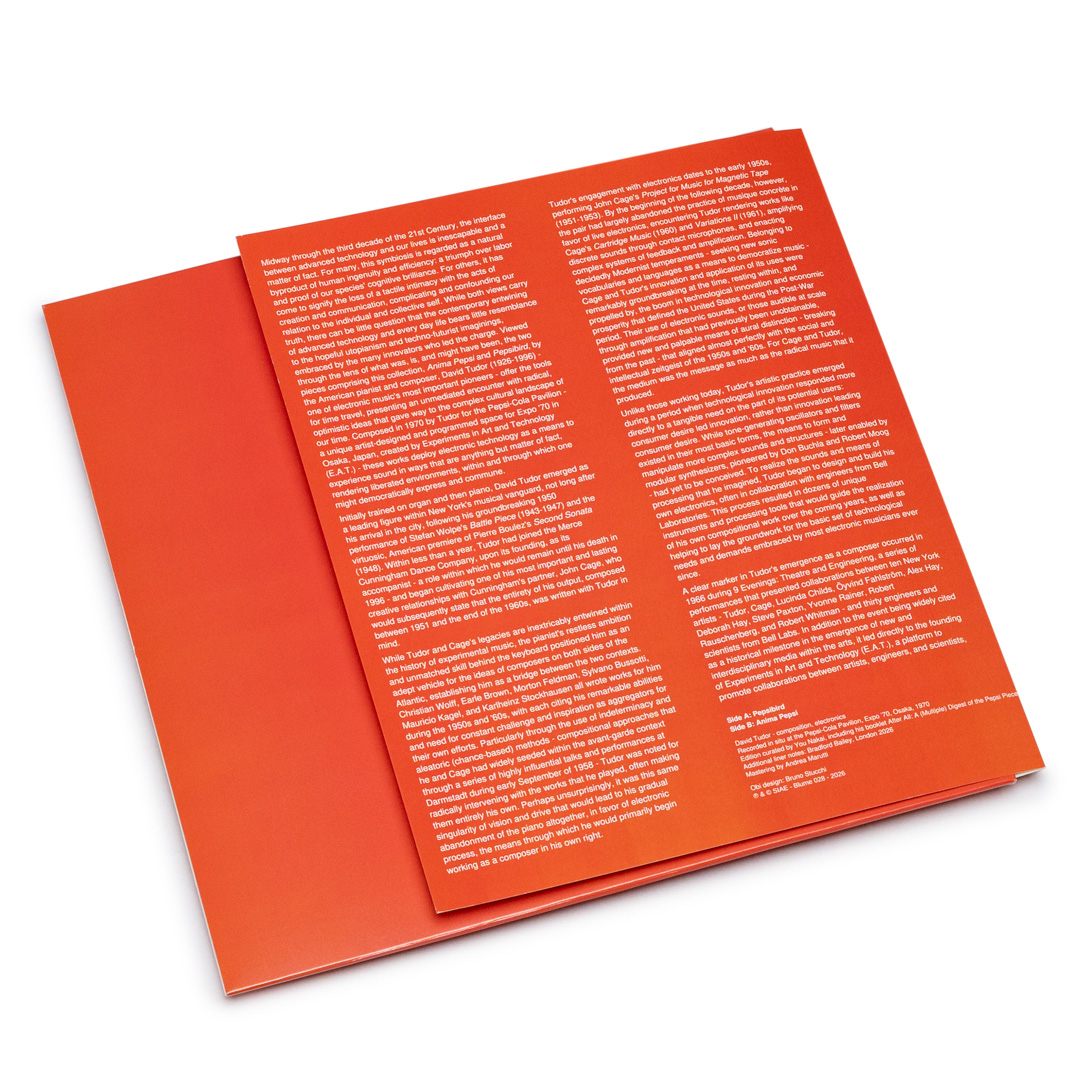
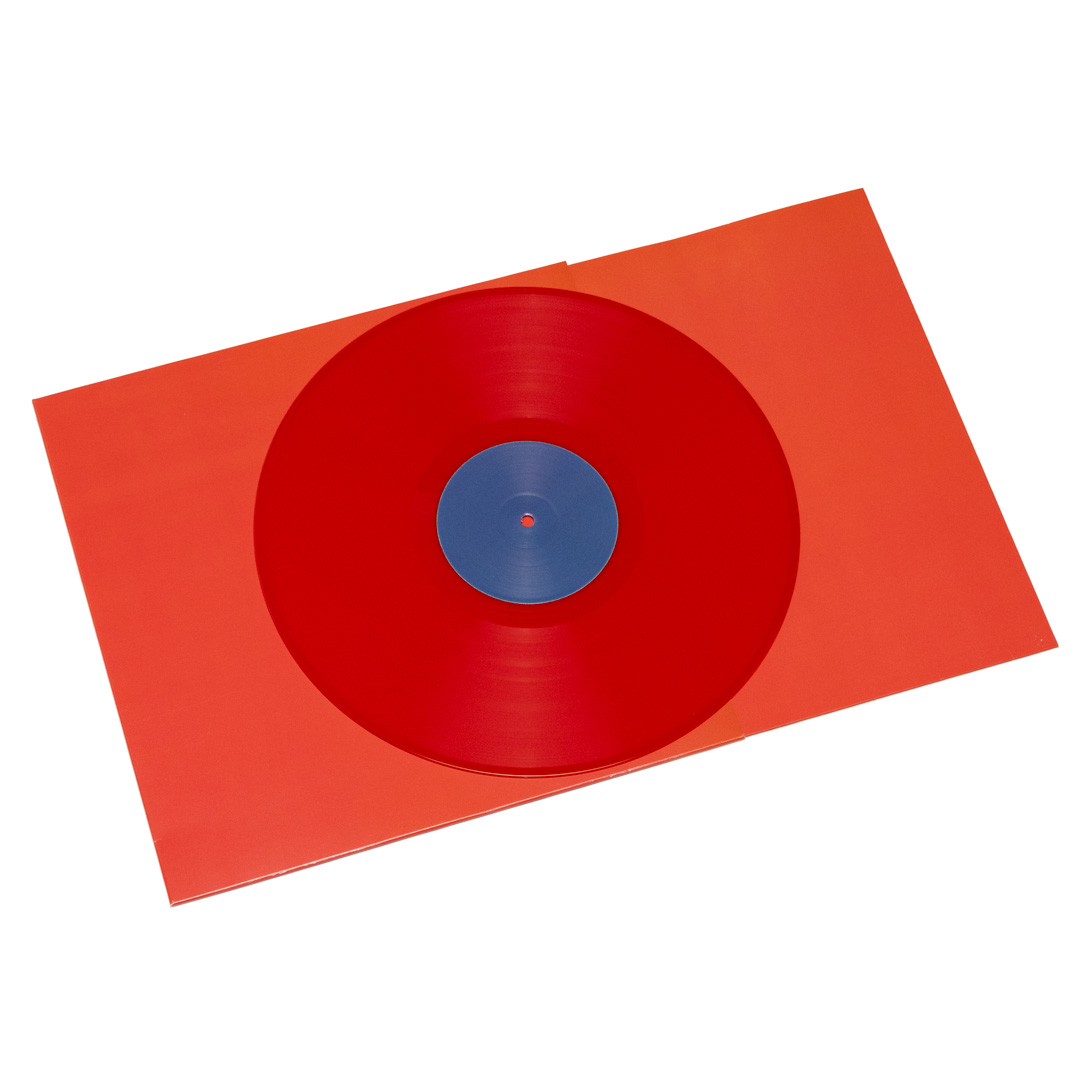
David Tudor, Anima Pepsi (Anima Pepsi, Pepsibird). LP, BLUME 028, edition of 300 copies, red vinyl, with a 20-page LP-size booklet.
Issued by Blume, with liner notes by Bradford Bailey and an essay by You Nakai.