Meinert, the myth: two LPs from Copenhagen, 1970
Myths. Myths? Real or not real? What is a myth? A historic narrative playing a cultural role for someone? Some unattainable custom value of sorts? The definitions are many. A myth is a myth. There are myths in society and in history. We all carry myths with(in) us. The question is perhaps more what the myth does to you. And how it makes you look at and hear the world. In a different way? The debut album of Danish sax maestro Carsten Meinert was a myth to me, a mythical object. For a long time. “To You” on Meinert´s own M.S. label. A killer album constantly blowing minds and hearts. For a reason.
A mythical and mysterious album to me. I had never seen it. Just heard people raving about it. For many years, one of those impossible grails you will never find.
Since being a collector and discaholic means determination and obsession… with getting the goods (i.e. vinyls…) you are looking for I was doomed to try harder. You are on a constant and never-ending roll looking and hunting for them. In order to kill your wantlist of needs. In a never-ending circle of commitment and desire. For your well-being and for your development as a person – in general – and as a musician in particular. Therefore we need to find and get the objects. In order to develop. In order to go deeper. Are you with me?
“To You” was simply impossible to find. In the years before Discogs and eBay-mania… what could we do? The only constructive way and manner is to rely on your networks of collectors, friends, musicians and (especially) physical record shops. Real record shops. Visit them. IRL. Make yourself worthy of attention. Ask the questions. Listen to what the shop owners play and expose in the shops. Pay attention. Ask even more questions. It is a slow process. It should be slow. As in s l o w . It is truly a rewarding development if you keep the process respectfully correct and real.
I am a sucker for beat poetry. I live for the content of books by Robert Creeley, Kenneth Patchen, Allan Ginsberg, William S. Burroughs and other greats. Poetry books in English and Scandinavian languages inspire me deeply and constantly. I wish my language skills were better, so I could read other poetry in original languages as well. To read Boris Vian in French would make my world implode. My collection of vinyls and poetry books is what makes me eager to go deeper into my own artistic creativity and finding new perspectives. Pure inspiration for a better living. Visual and conceptual art do the same for me. Films, videos, theatre and contemporary dance? Of course. Performance and action art. You name it. But beat poetry has a special place in my heart and mind. It is opening up the states of mind and altering the mind and stating the non-obvious in ways keeping the mysteries intact and beautiful. My main source in Scandinavia for getting these books is an amazing antiquarian book shop, Booktrader, in Copenhagen. Run by the great Lars Rasmussen, a discographer of Abdullah Ibrahim, Johnny Mbizo Dyani and other Cape Jazz greats. I started visiting the shop already in the early 90s. Asking for beat literature. I have been buying an insane number of books over the years at this amazing bookstore, where half of the stock is English literature, and the other half is in Scandinavian languages. Since my interest in South African and Danish jazz is huge and since Lars obviously was interested in Cape Jazz, I started early on to ask if he had any vinyl records for sale as well?
He always smiled at me and told me kindly he is running a book shop and then he served me some red wine. This routine continued over the years. Almost like a ritual. Going into the shop. Greetings. Red wine. Looking around for rare books, beat poetry related things and objects and books and pamphlets by the Danish Situationist movement. And in addition… the obligatory question about vinyl records for sale in the store. Every year. Every time. Lars smiling eyes needed no oral reinforcement. Until one day Lars smiled at me and told me: “I have decided to sell my records now, you can have a look next time you are in town”. I spilled the wine. My knees practicing oi-punk esthetics. I had no response to give. Just a stupid smile. Lars smiled back. “Let me know when you are in town next time and you will get the first look at the goods. I will not show it to anyone else”.
This all sounded like diamonds in the sky to me or rather like a jukebox filled with Merzbow EPs given unexpectedly to me. I bought a Robert Creeley book and a rare Ginsberg booklet and walked up the stairs into the cold Copenhagen winter air. Looking for an akvavit. To calm my body and soul down. Thinking about the proposal. There is no way I would get the first look at that collection, when there are so many collectors passing by all the time. But something in the way Lars presented his idea made me believe.
My next visit was planned for July. Copenhagen Jazz Festival. Some weeks before the event I emailed Lars and told him what day I was planning to show up. “You are welcome” arrived shortly with a returning email. With a very high pulse and sweaty hands I entered the shop the day before my gig (I went a day early, just in case I needed to work seriously with the proposed collection, without any kind of stress or interruption added to the situation). Lars gave me a glass of wine and showed me the back room. A room hidden behind the bookshelves. Like in an old film. A hidden secret room. Everything happening the next couple of hours was like taken from a cinematic dream scenario XXL. What was offered to me was simply spectacular. Beyond my wildest dreams. Three of the most amazing hours I have ever spent in a book or record shop. My wife, who accompanied me on the trip, wisely took a long walk. Shaking her head. But still smiling.
Two shelf meters of extremely rare records. An almost complete collection of Don Cherry LPs, an insane amount of South African broadcasting LPs with the Blue Notes (Chris McGregor, Johnny Dyani, Mongezi Feza, Dudu Pukwana, Nikele Moyake and Louis Moholo), Abdullah Ibrahim and others. I was literally shaking my butt. And head. I couldn’t stop. These South African records were intended for the domestic radio broadcasting service and were never ever for sale officially. Very few copies were ever made. None were distributed or sold. All unique music. HOLY SHIT! I could not believe it. And as the frosting of the vinyl cake: the mythical Carsten Meinert “To You” on MS records. In mint condition. The myth. The Grail.
I emptied my wife’s and my bank account. I am grateful she is still with me to this day. The records I carried out of the shop are some of the most amazing records I have ever, ever acquired. I value them higher than Burj Khalifa. What Lars did, keeping his word, showed me what trust really is about. Same thing in music, sharing the stage with your colleagues is all about trust. And respect. It can take some years to get there. In this particular case, 20 or so years…
The Carsten Meinert LP was the first one I listened back to when I arrived home again. I remember sitting absolutely still and hardly breathing for the run of both sides of the vinyl. The world suddenly changed its pace and color.
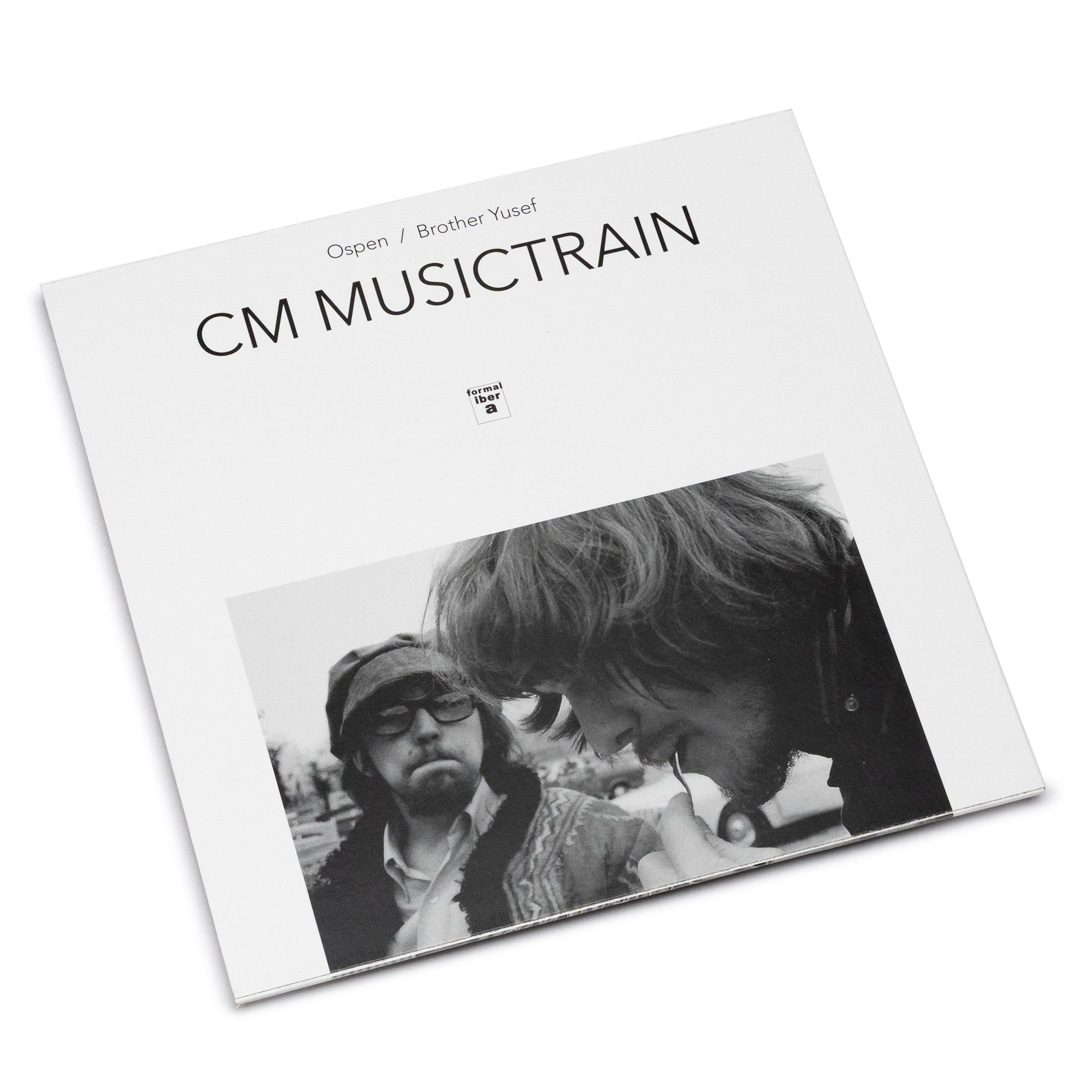
I am a very proud Swede when it comes to certain music and art from Sweden. Conceptual art and music in particular. My forever-heroes being Åke Hodell, Sten Hansson, Bengt Nordström and Leif Elggren. Believing we had and have something special to present, from the land of fermented herring in tin cans. And we do. But Denmark… is a whole other beast. The early years of free jazz and related activities are just amazing. In the land of flat open sandwiches, bright red sausages and cold beer. The works of Hugh Steinmetz, Franz Beckerlee, Tom Prehn, Niels Harrit and many more changed my view on jazz and improvised music. Meinert took it even deeper. When I finally found his second album “C.M. Musictrain” from 1970 it blew the fuses of my jazz-mind. Spectacular stuff, folks! A very radical mix of the tradition and the future in one very natural setting. The music sounds deep, because of its firm connection to the history and how it can be altered and fucked with, but still with deep love and respect. A lesson for us all. Only two records were made under his own name during his lifetime. These are facts very hard to accept and understand.
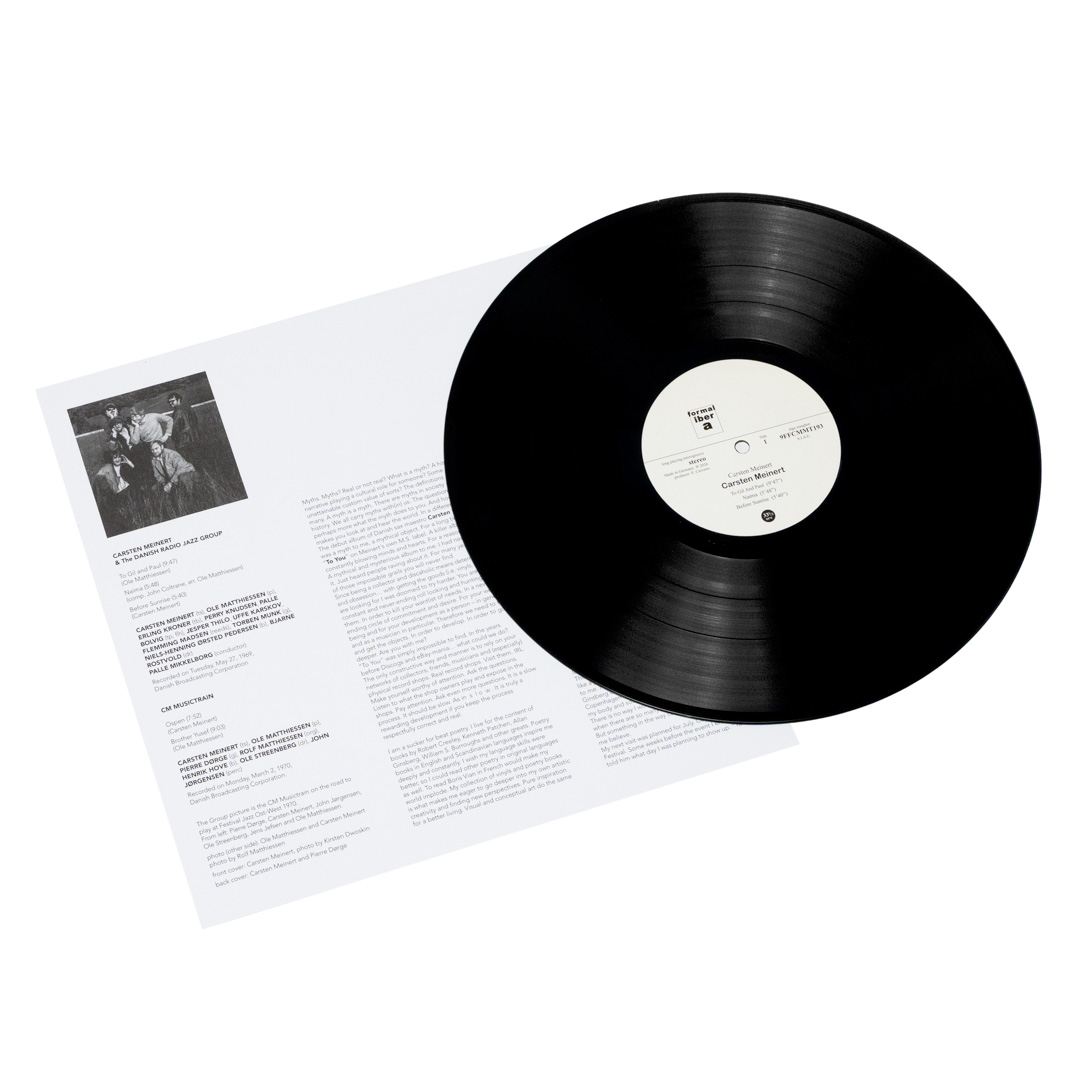
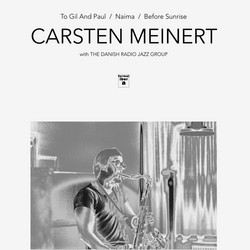
And here we are. FINALLY! Some unreleased kick-ass-actions by Meinert from the days when things were done differently. The first time I listened back to these recordings I had the same thrill inside of myself as when I had enjoyed to “To You” and “C.M. Musictrain” for the first time.
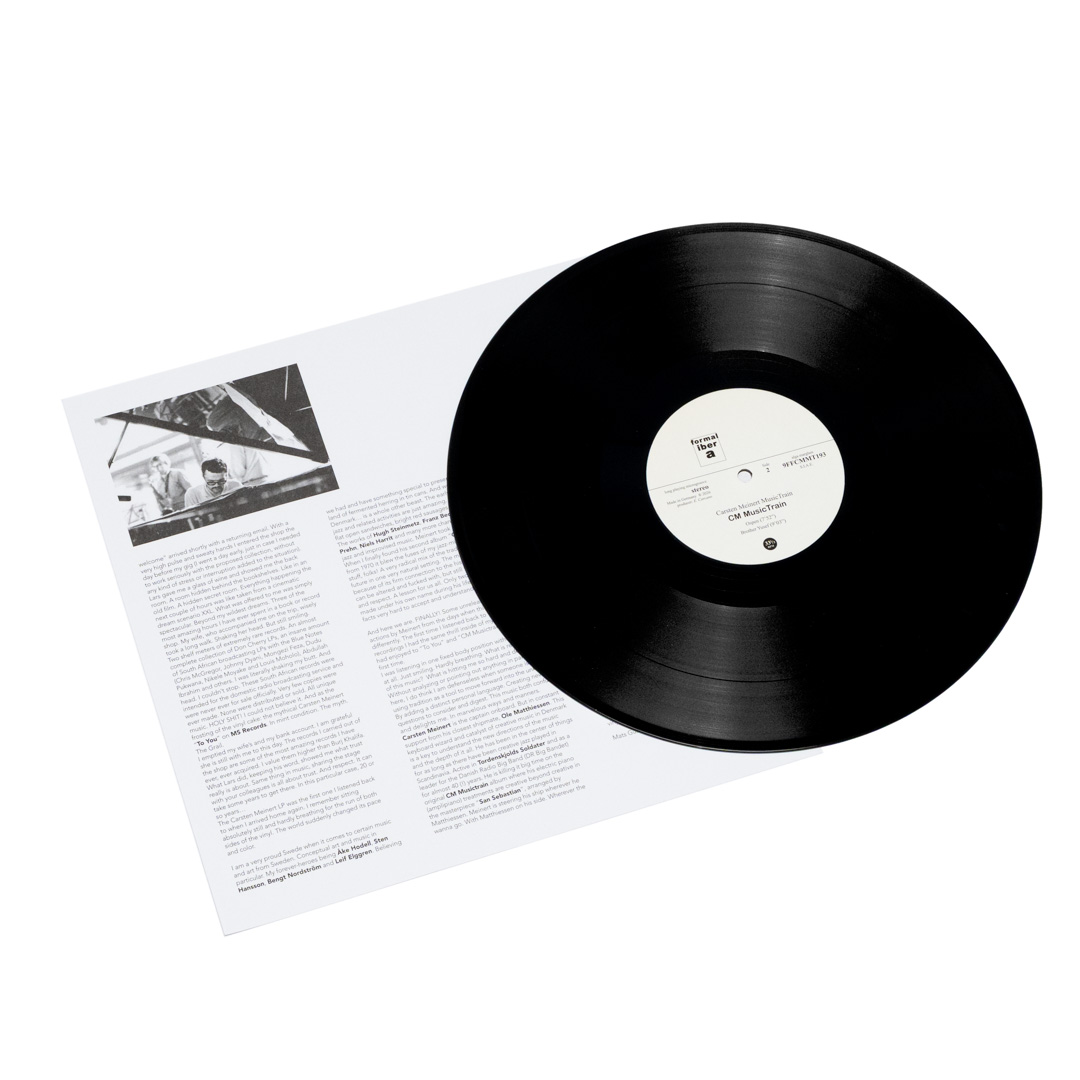
I was listening in one fixed body position without moving at all. Just smiling. Hardly breathing. What is really inside of this music? What is hitting me so hard and deep? Without analyzing or pointing out anything in particular here, I do think I am defenseless when someone is really using tradition as a tool to move forward into the unknown. By adding a distinct personal language. Creating new questions to consider and digest. This music both confuses and delights me. In marvelous ways and manners. Meinert is the captain onboard. But in constant support from his closest shipmate, Ole Matthiessen. This keyboard wizard and catalyst of creative music in Denmark is a key to understand the new directions of the music and the depth of it all. He has been in the center of things for as long as there have been creative jazz played in Scandinavia. Active in Tordenskjolds Soldater and as a leader for the Danish Radio Big Band (DR Big Bandet) for almost 40 (!) years. He is killing it big time on the original C.M. Musictrain album where his electric piano (amplipiano) treatments are creative beyond creative in the masterpiece “San Sebastian”, arranged by Matthiessen. Meinert is steering his ship wherever he wanna go. With Matthiessen on his side. Wherever the music takes it to. Never setting anchor. Never playing safe. But always experiencing new perspectives, harbors and angles. Of music. Of life.
His tenor sax actions demand special attention. What I hear is a tonal color and way of phrasing connected to John Coltrane. But so much more added to it. There are definite inspirations drawn from the late and great Gato Barbieri as well, as you can hear if you check out the beautiful session on the B-side of this spectacular album. Coltrane is at the core though, played with a definite Scandinavian diphthong. Many sax players have tried before – to get close. But only a few succeeded adding a personal voice to the matter. How to make the music valid with such a strong model at hand? Many artists have drowned in their attempts.
I can think of just a few in Europe that took Trane´s thing further and deeper: Juhani Aaltonen, Gunnar Lindgren, Börje Fredriksson and of course, Carsten Meinert. The search continues. How to add your personal voice to something that inspires you deeply. Meniert managed.
This album is full of it. Full of beauty. Creative beauty.
Unreleased music. Alternative versions and more. This is classic radical music from a turbulent and creative time in music making. The rhythm section is working hard in the small groupings with commitments and enthusiasm. On top of the rhythm plateau you hear the intense and warm fire of Meinerts sax and the insanely creative guitar treatments by Pierre Dørge. The guitar slaying of Dørge is simply brutal and highly creative. This is spectacular music, no holding back, led by the great Carsten Meinert.
Meinert. The myth. Appearing in front of us. Again. Very real. His narrative is an essential one.
Respecting and loving the tradition. Fucking with the tradition. It is all about WHAT you hear.
And HOW you treat it. Trust and respect are recommendable ways. Dare to believe. You will be highly rewarded. Not only with rare vinyls…
Mats Gustafsson, June 2026
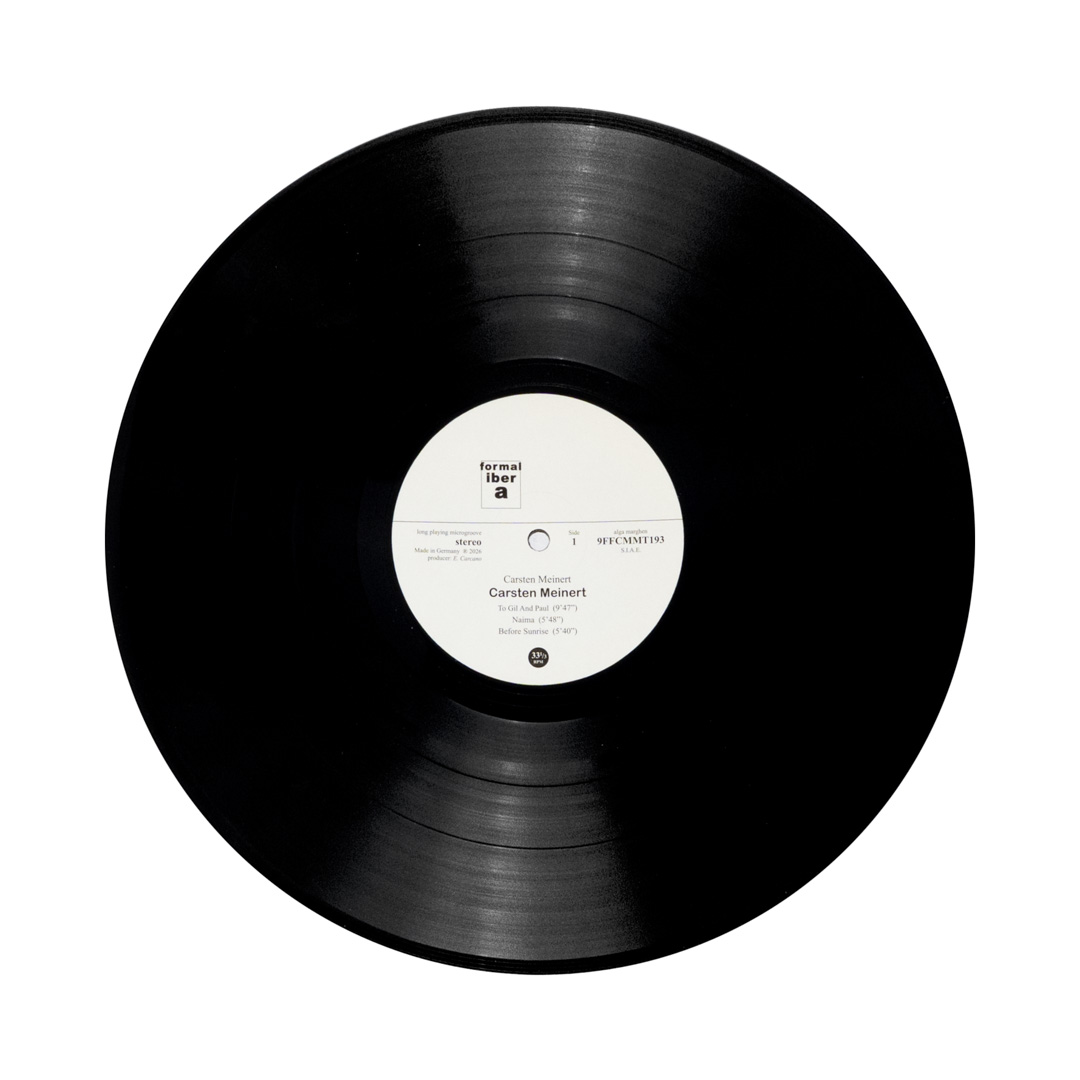
The Meinert LP
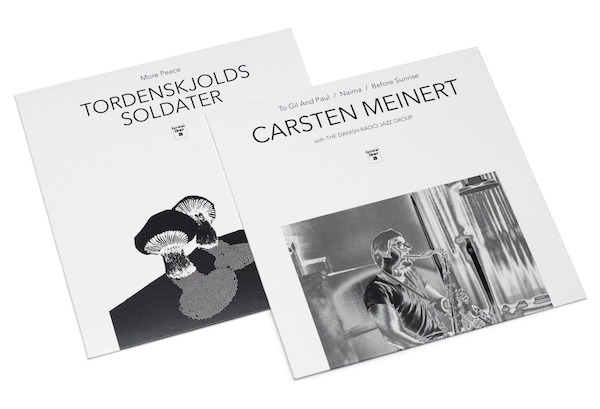
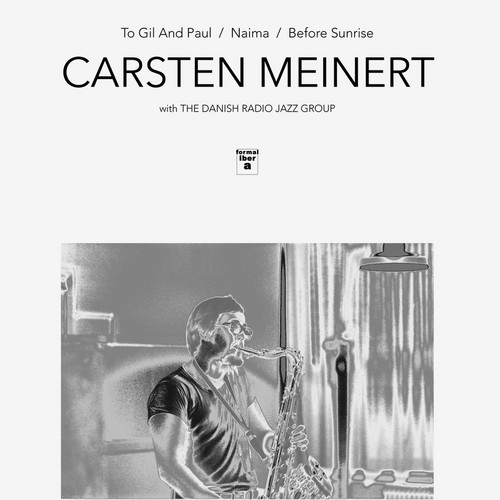
Carsten Meinert made two albums under his own name in his lifetime. To You came out in 1968 on his own M.S. label, with Matthiessen, Henrik Hove and Ole Streenberg. It opens with Naima and is one of the most convincing European readings of Coltrane's modal language. C.M. Musictrain, from 1970, widened the frame to fifteen musicians, with Meinert's tenor run through a Varitone, Pierre Dørge's guitar, vibraphone, organ and a bank of percussion. That record sits closer to Bitches Brew than to the free jazz of Copenhagen's cellars. Formalibera now presents unreleased recordings and alternate versions from the same years, with Matthiessen and Dørge at his side.
Tordenskjolds Soldater, More Peace
Tordenskjold's soldiers. In Danish the phrase means the same faces turning up again and again. It comes from the legend of an 18th-century admiral at Marstrand, whose handful of men kept moving from one street corner to the next until the Swedish commander believed he was facing an army.
At Jazz i Reprisen, the venue run out of a cinema in Holte, north of Copenhagen, audiences said it about the musicians on stage, and they were not entirely wrong. Rhythm sections were scarce in Denmark at the end of the 1960s. Between 1967 and 1970 the bassist Henrik Hove played 83 of the first 100 concerts the venue presented. When Reprisen closed in early 1970 and its regulars moved over to Jazzhus Montmartre, one quartet took the jibe as its name: Jesper Nehammer on tenor, Ole Matthiessen on piano, Hove on bass and Jon Finsen on drums.
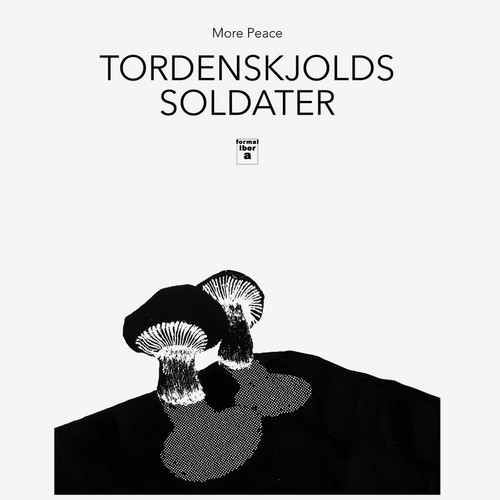
Their life together was brief. From April 1970 they held the Monday night slot at Montmartre through the summer, and in that window they recorded Peace for Spectator Records, a small Copenhagen label set up the year before by former Danmarks Radio journalist Jørgen Bornefeldt together with Carsten Meinert. It was the only album the group released. Last year Formalibera issued Love, a set of unreleased recordings from the same months. More Peace is the label's second and last LP by the band.
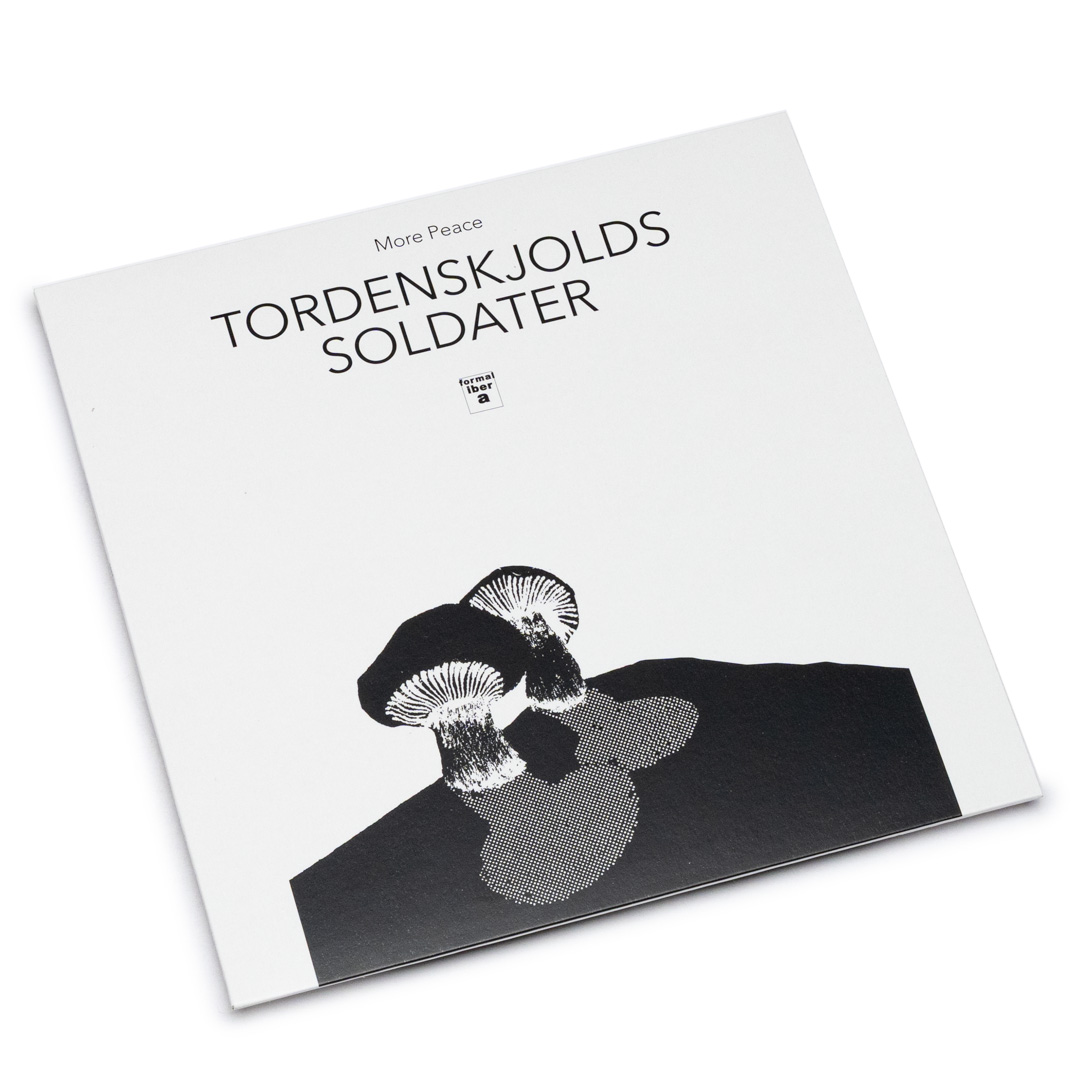
The tapes were made live at Montmartre in late April, shortly before the studio session, by the drummer Ole Streenberg. All four pieces are Matthiessen's, and all four ended up on Peace in compressed studio form. Here they stretch out. Brother Yusef is for Yusef Lateef. Memories of Isadora Duncan was prompted by a television documentary on the dancer's life. A Message for Mike is dedicated to Michael Hove, Henrik's younger brother, an alto player and another Reprisen regular. Pharoah, in 5/4, was written as a feature for Nehammer and quotes the melody of Pharoah Sanders' Upper Egypt. Sanders was the musician who moved this band more than any other, and the uneven meter gives Nehammer a tilted floor to push against.

Matthiessen restored and remastered the tapes himself, fifty-six years on. He is candid about the result: a few dropouts and occasional distortions remain. He left them there. What he wanted back was the force of the room and the music as it still sounds in his memory.
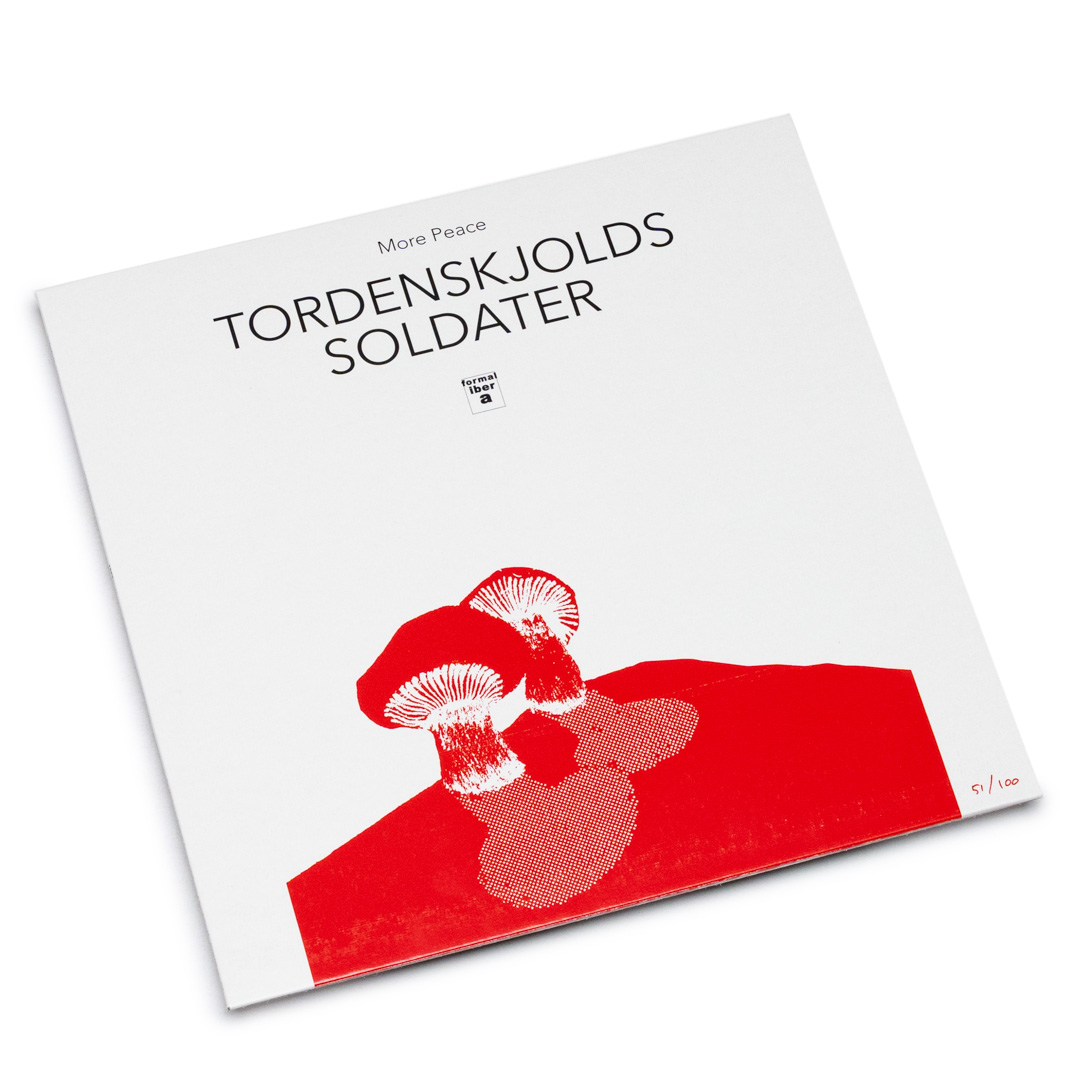
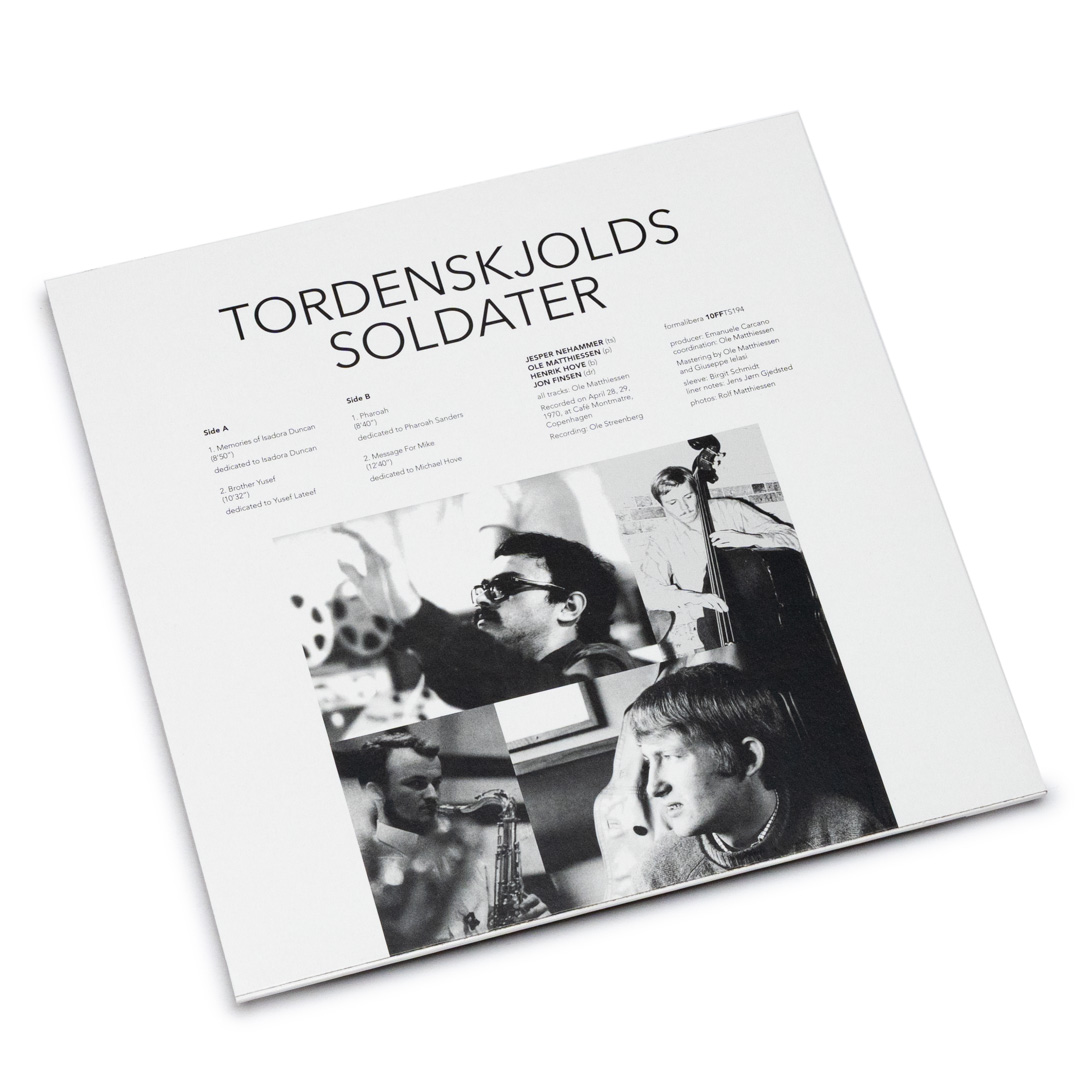
Around 1970 Danish jazz was changing fast. Young players were folding rock, soul, Latin and African music into the modern jazz they had learned from American records, and Matthiessen had a rare ear for that moment. He took the language of his heroes and turned it into tunes that could only be his. Peace was the studio photograph. More Peace is the band at full length on its home stage, a few days earlier, and it is the last word we will hear from them. Also available in a numbered edition of 100 copies with a silkscreened cover.
The editions
There is nothing left in the archive. After Love and More Peace no unreleased Tordenskjolds Soldater recordings remain, so beyond their one studio album these two records are all of the band there will ever be. Both LPs are issued by Formalibera in editions of 300 copies, in high thickness cardboard sleeves with an opaque laminated cover and a printed insert. More Peace also exists in a numbered edition of 100 copies with a silk-screened cover, hand numbered and intended for musicians and their families. The two LPs are also available together as a bundle.