We use cookies on our website to provide you with the best experience. Most of these are essential and already present.
We do require your explicit consent to save your cart and browsing history between visits. Read about cookies we use here.
Your cart and preferences will not be saved if you leave the site.

John Cage

John Cage (1912 to 1992) was an American composer, writer, philosopher and printmaker, and the figure who did most to widen the idea of what music can be. Educated in California and on a study tour of Europe, he studied with Henry Cowell and Arnold Schoenberg, gave up painting for music in 1934 and in 1940 devised the prepared piano, inserting bolts and rubber between the strings so that one instrument became a percussion orchestra. From Music of Changes (1951) he composed with chance operations drawn from the I Ching, so that his own taste would no longer decide the notes, and with 4'33" (1952) he framed silence and the sounds around it as a piece.
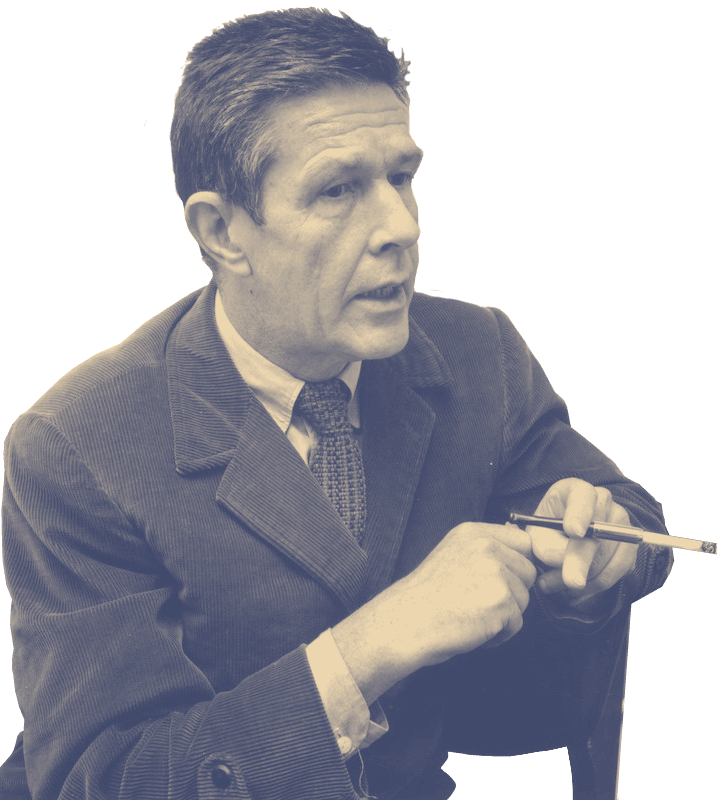
John Cage (1912 to 1992) was an American composer, writer, philosopher and printmaker, and the figure who did most to widen the idea of what music can be. Educated in California and on a study tour of Europe, he studied with Henry Cowell and Arnold Schoenberg, gave up painting for music in 1934 and in 1940 devised the prepared piano, inserting bolts and rubber between the strings so that one instrument became a percussion orchestra. From Music of Changes (1951) he composed with chance operations drawn from the I Ching, so that his own taste would no longer decide the notes, and with 4'33" (1952) he framed silence and the sounds around it as a piece.
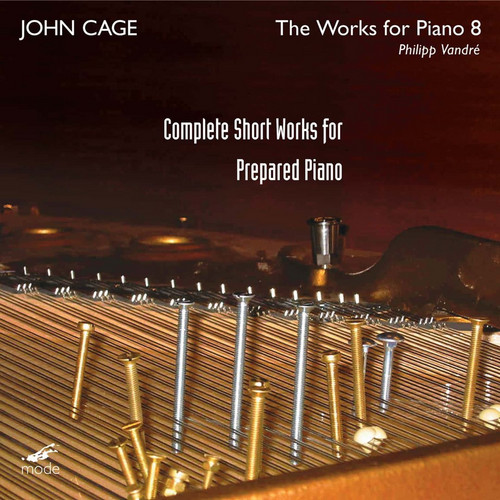
Complete Short Works for Prepared Piano
All of John Cage's short works for prepared piano on two CDs, everything except Sonatas and Interludes, played by Philipp Vandré.
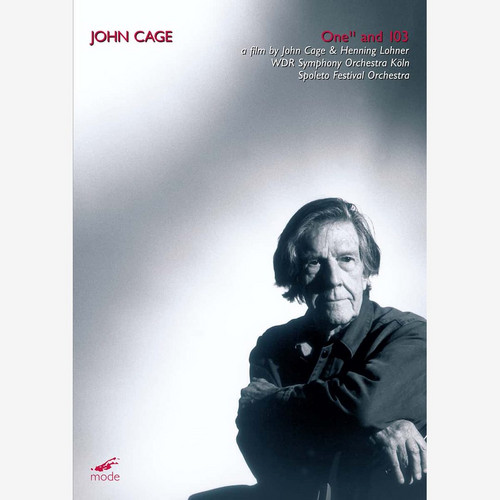
One11 And 103
First commercial release of John Cage's only major film, One11 (1992), directed by Henning Lohner, with the orchestral work 103 as soundtrack in two performances (WDR Sinfonieorchester Köln, Spoleto Festival Orchestra), plus a documentary and an interview.
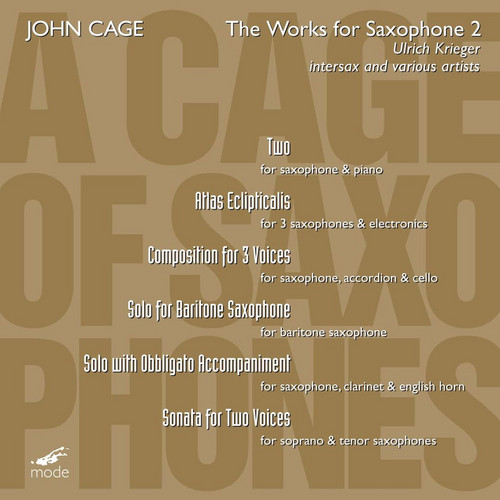
A Cage of Saxophones 2
Second volume of John Cage works for saxophones, played by Ulrich Krieger and his ensemble: early pieces of unspecified instrumentation, saxophone parts drawn from Atlas Eclipticalis and Concert for Piano and Orchestra, and the first saxophone version of Two.
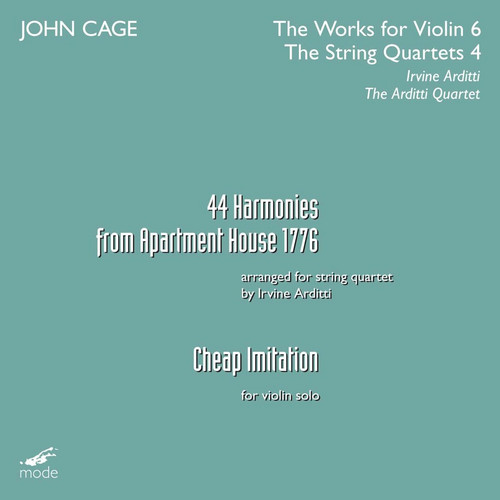
44 Harmonies from Apartment House 1776
First recording of all 44 Harmonies from Cage's Apartment House 1776, arranged for string quartet by Irvine Arditti and played by the Arditti Quartet, with Arditti's solo violin performance of Cheap Imitation.
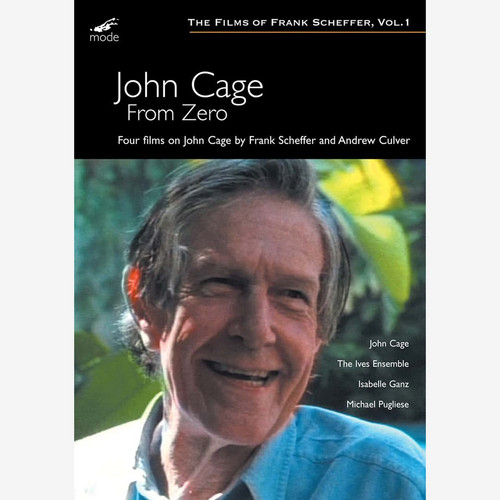
From Zero
Four films on John Cage by Frank Scheffer and Andrew Culver, gathered as From Zero: 19 Questions, Fourteen with the Ives Ensemble, Paying Attention and Overpopulation and Art with Ryoanji, plus extras.
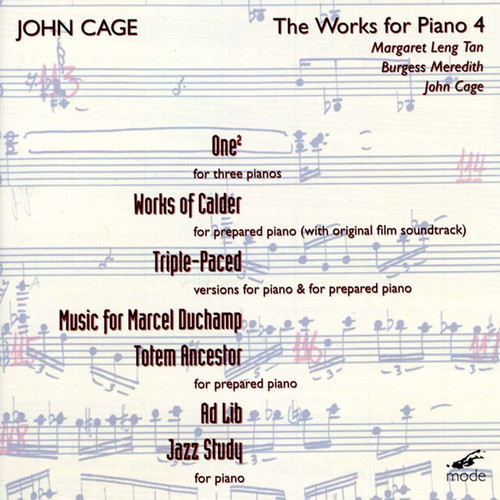
The Works for Piano 4
Piano works by John Cage played by Margaret Leng Tan: 1940s pieces found at his publisher including Triple-Paced, Ad Lib and Jazz Study, the Works of Calder film score, and One2 for three pianos.
Atlas eclipticalis / 103
Two live, unedited performances of Cage's orchestral music: "At last Eclipticalis With Winter Music" (recorded 5/19/93, performed by The Orchestra of the SEM Ensemble, conducted by Petr Kotick, piano by David Tudor) and "103" (recorded 11/21/98, performed by the Janacek Philharmonic Orchestra, conducted by Petr Kotik)." Kotik and Cage met for the first time in May, 1964, performing a 3-hour, six percussion version of Atlas Eclipticalis. Kotik's association with Cage continued until the composer'…
Empty words (parte III)
John Cage's empty words is something of an epic in reverse: a diminutive vocal exercise divided into four distinct parts that gradually breaks down the writings on sound from Henry David Thoreau's Journal into pure vocalise. Disarticulated, distended and utterly transformed, Cage's recitation utterly abandons all connection to linguistic meaning and becomes pure aesthetic glossolalia. The nearly three hour performance documents Cage reading from the third part of empty words at Teatro Lirico in …
A tribute
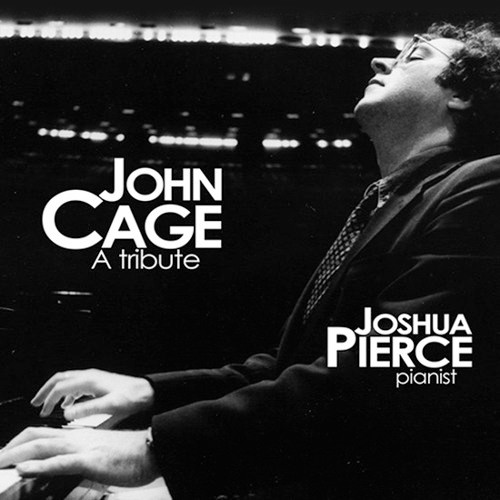
From the liner notes of Eric Salzman: “John Cage wrote for keyboards throughout most of his life. Most famously, he invented the so-called "prepared piano" but he also wrote for unprepared piano in both traditional and untraditional ways. His later piano works employ an almost ferocious complication and virtuosity at the outer limits of performer possibility. Earlier he used electronic extensions, chance and performer collaboration in complex ways. His early keyboard music was written for himsel…
Locations - John Cage: Sonatas and Interludes / Herbert Henck: Festeburger Fantasien
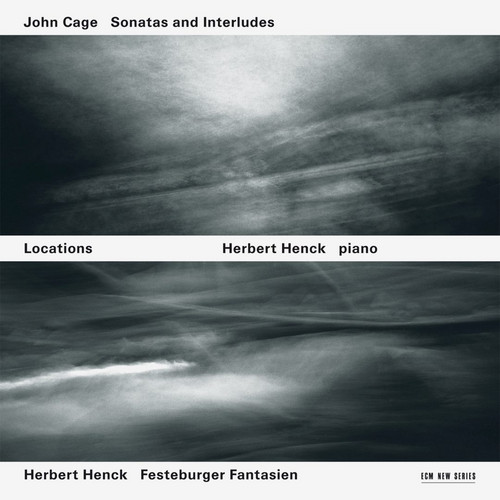
Herbert Henck plays John Cage's Sonatas and Interludes for prepared piano and his own improvised Festeburger Fantasien (two series), recorded at the Festeburgkirche, Frankfurt, in August 1993 and August 2000.
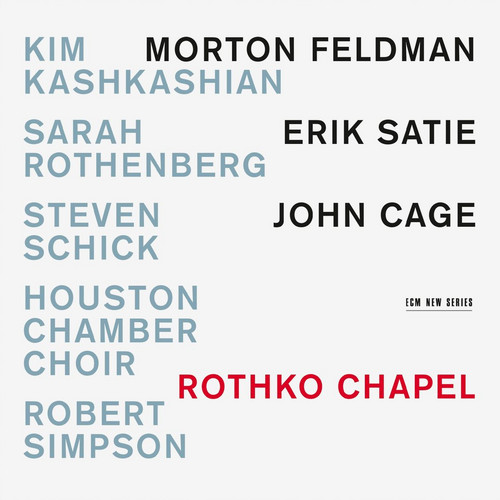
Rothko Chapel
Morton Feldman's Rothko Chapel with music by Satie and Cage, played by Kim Kashkashian (viola), Sarah Rothenberg (piano, celesta), Steven Schick (percussion) and the Houston Chamber Choir under Robert Simpson, recorded in Houston in May 2012 and February 2013.
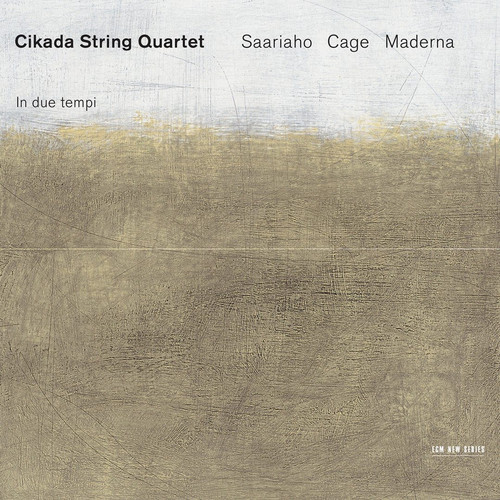
Saariaho, Cage, Maderna
String quartets by Kaija Saariaho (Nymphéa, with live electronics), John Cage and Bruno Maderna played by the Cikada String Quartet, recorded in August 2001 at Sofienberg Church, Oslo, and released by ECM New Series in 2005.
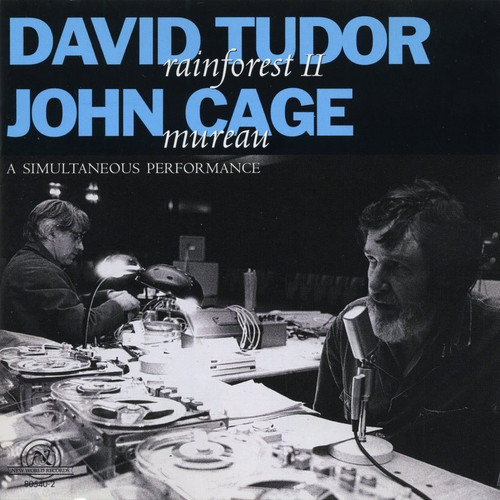
Rainforest II / Mureau
This historic release of a simultaneous performance by David Tudor and John Cage of Rainforest II and Mureau, recorded live by Radio Bremen on May 5, 1972, preserves the only surviving performance of the second of Tudor’s "Rainforest" series. In addition, it documents one of the precious few recorded collaborations between these two visionaries. In 1970 Cage composed the piece called Mureau, in which phrases from Thoreau’s journals (in particular, passages which touch on the subject of music) ar…
1 3 8 9 10 11 12 13