
Karlheinz Stockhausen
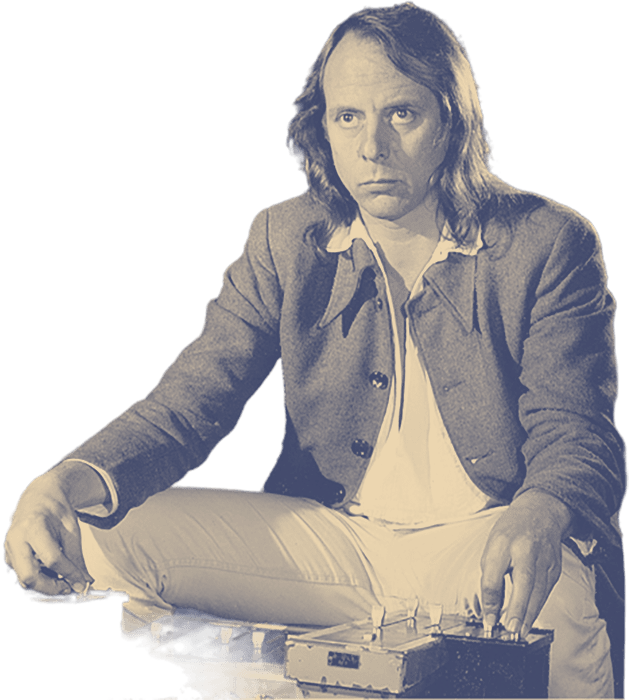
Karlheinz Stockhausen (1928 to 2007), born in Mödrath near Cologne, wrote more than three hundred works, from orchestral and chamber pieces to pure electronic music, and did more than anyone to shape the postwar avant-garde. His Studie I (1953) was the first piece composed entirely from sine waves, Studie II the first electronic score to be notated and published, and Gesang der Jünglinge (1956) and Kontakte (1960) remain the classics of the Cologne studio.
Klavierstücke I - XI
Stockhausen's complete Klavierstücke I-XI (1952-61) played by Sabine Liebner, with Klavierstück XI in two versions. Two CDs, a co-production with Bayerischer Rundfunk, released by Wergo in 2018.
Amour / Der kleine Harlekin / Wochenkreis
Karlheinz Stockhausen's Amour (1974/76), Der kleine Harlekin (1975) and Wochenkreis from Montag aus Licht (1986/88), played by clarinettist and basset horn player Michele Marelli with Antonio Pérez Abellán on synthesizer, recorded in March 2013.
Zeit(t)räume
Soprano Claudia Böttcher and pianist Jovita Zähl perform Stockhausen's Tierkreis (soprano and piano version) and Klavierstück IX and Berio's Sequenza III and Quattro Canzoni popolari, recorded in Cologne in 2011-2012.
Tierkreis
First CD recording of Karlheinz Stockhausen's Tierkreis in the version for organ, played by Dominik Susteck on the Willy Peter organ of St. Peter, Cologne, with four of his own improvisations.
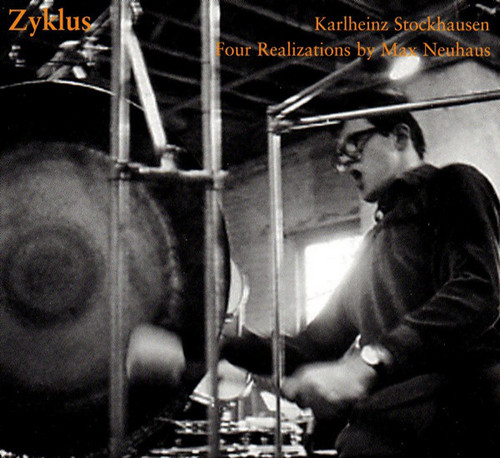
Zyklus - Four Realizations By Max Neuhaus
2004 release. Four previously unreleased realizations of Karlheinz Stockhausen's "Zylus" (different recordings than the one featured on the Columbia LP Electronics and Percussion -- Five Realizations. Recorded 1959-68. The term "New York School" ref…