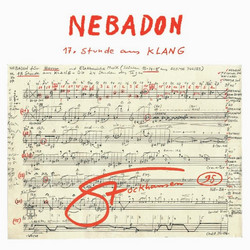
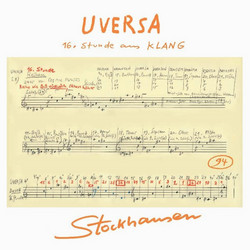
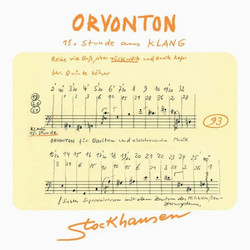
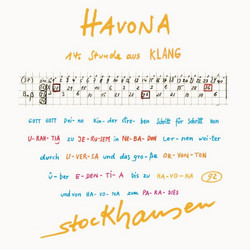
Karlheinz Stockhausen
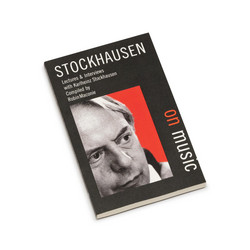
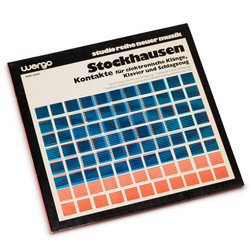
Karlheinz Stockhausen (1928 to 2007), born in Mödrath near Cologne, wrote more than three hundred works, from orchestral and chamber pieces to pure electronic music, and did more than anyone to shape the postwar avant-garde. His Studie I (1953) was the first piece composed entirely from sine waves, Studie II the first electronic score to be notated and published, and Gesang der Jünglinge (1956) and Kontakte (1960) remain the classics of the Cologne studio. Later came intuitive music, the vocal overtones of Stimmung (1968), the seven-opera cycle Licht (1977 to 2003) and his own publishing house, which keeps everything in print.
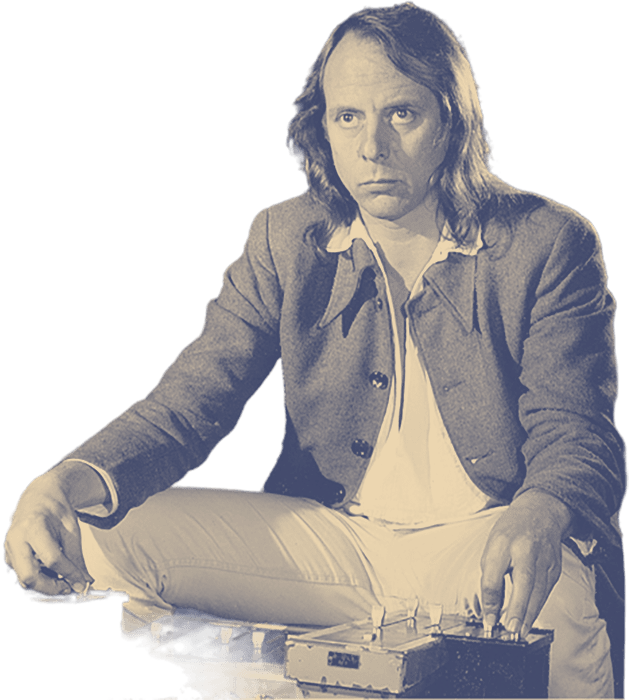
Karlheinz Stockhausen (1928 to 2007), born in Mödrath near Cologne, wrote more than three hundred works, from orchestral and chamber pieces to pure electronic music, and did more than anyone to shape the postwar avant-garde. His Studie I (1953) was the first piece composed entirely from sine waves, Studie II the first electronic score to be notated and published, and Gesang der Jünglinge (1956) and Kontakte (1960) remain the classics of the Cologne studio. Later came intuitive music, the vocal overtones of Stimmung (1968), the seven-opera cycle Licht (1977 to 2003) and his own publishing house, which keeps everything in print.