Various Artists
Prima Vista (LP)
condition (record/cover): NM / NM Gatefold sleeve. Insert included. | A thrilling and deeply eccentric record from the margins of the German new music scene. Pro Musica Da Camera was a small ensemble based in Würzburg and Wedemark, built around the cellist and gambist Klaus Hinrich Stahmer and the harpsichordist Ekkehard Carbow, with flautist Henner Eppel and violinist Klaus-Dieter Dassow. Their premise was unusual and productive: to bring the sonic world of early music instruments - harpsichord, viola da gamba - into direct contact with the most radical scores of the postwar avant-garde. The result is a programme that sounds like nothing else, the dry, precise timbres of baroque instruments illuminating these works from unexpected angles.
The title piece is Mauricio Kagel's Prima Vista (1962-64), originally scored for slide projections and indeterminate sound sources, here realized as a multiplay version for cello and harpsichord - Kagel's graphic notation translated into a dialogue between two instruments that might have been playing together in the eighteenth century but are now operating under entirely different rules. Two pieces from the New York School follow: Earle Brown's November 1952 and December 1952 from Folio, realized for flute, cello and harpsichord - Brown's open-form graphics, among the most beautiful scores ever drawn, here given a chamber-music warmth that the usual piano or percussion realizations rarely achieve. John Cage's Variations (1958), dedicated to David Tudor, appears in a multiplay version for solo cello. Roman Haubenstock-Ramati's Catch I (1968) is realized for harpsichord, synthesizer and tape - Carbow moving between historical and electronic keyboards, the harpsichord's mechanical action suddenly in dialogue with the hum and crackle of analogue electronics. The first side closes with Karlheinz Stockhausen's Spektren, Kommunikation und Übereinstimmung (1968-70), three texts from Für kommende Zeiten (Werk 33), his collection of verbal scores for intuitive music, realized for flute, cello and harpsichord - a rare recording of these elusive pieces.
Side B shifts the balance toward composed works that engage directly with early music. Wolfgang Fortner's New Delhi Music for flute, violin, cello and harpsichord is the most substantial piece on the disc - a theme and six variations with prologue and epilogue, over ten minutes of music from a composer who bridged the worlds of Hindemith and the serialists. Klaus Hinrich Stahmer's own Aristofaniada (1979), from his cycle Miti antichi, is a solo flute piece dedicated to Eppel - the ensemble's cellist and live electronics technician here revealed as a composer of real individuality. György Ligeti's Passacaglia Ungherese (1978) for solo harpsichord is a miniature masterpiece - Ligeti's characteristically witty engagement with historical form, the passacaglia pattern subjected to his signature micropolyphonic thinking, the harpsichord's inability to sustain sound turned from limitation into structural principle. The set closes with Henri Pousseur's Madrigal II (1961) for flute, violin, viola da gamba and harpsichord - a work that takes the instrumentation of a Renaissance consort and fills it with serial-derived material, the historical ensemble becoming a vehicle for the most modern of musical languages.
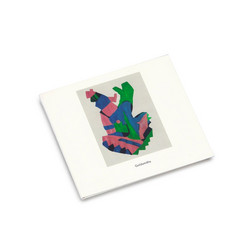
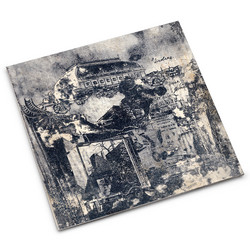
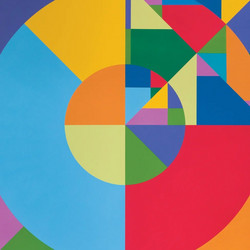
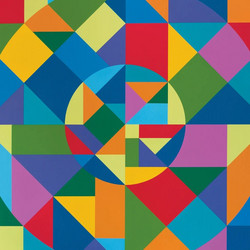
LP in gatefold sleeve with 12" insert, liner notes by Dr. Claude Ambroise. Cover design after a graphic from Kagel's Prima Vista score, by permission of Universal Edition. Recorded in Wedemark and Würzburg. Released on Thorofon, 1981. Manufactured by Teldec.