zeit(t)räume is the duo of the soprano Claudia Böttcher and the pianist Jovita Zähl in works by Karlheinz Stockhausen (1928-2007) and Luciano Berio (1925-2003). Its centre is Stockhausen's Tierkreis (Zodiac) in the version for soprano and piano, joined by Berio's Sequenza III, Stockhausen's Klavierstück IX and Berio's Quattro Canzoni popolari.
Böttcher and Zähl have worked together since 2008, with programmes centred on music of the 20th and 21st centuries. The recordings were made at the Loft in Cologne in September and November 2011 (the two solo works) and in February 2012 (the songs). Böttcher sings alone in Sequenza III, and Zähl plays Klavierstück IX on her own.
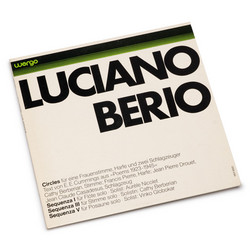
Tierkreis (1975) was first composed for music boxes. Its twelve melodies, on texts compiled by Stockhausen, stress the qualities of each star sign and link them to their seasons, times of day, genders, elements, planets and stages of growth; the cycle here starts with Capricorn and runs to Sagittarius. Sequenza III per voce femminile (1965), on a text by the Swiss writer Markus Kutter, is the only true vocal work in the series of sequences for solo instruments that Berio began in 1958. It grew out of his work on the voice with the mezzo-soprano Cathy Berberian, whom he married in 1950. It runs from singing and speaking to whispering, shouting, laughing and crying. Klavierstück IX (1961), one of eleven Klavierstücke written from 1952 to 1961, mediates between opposites in Stockhausen's serial manner, turning static, monotonous events into flexible ones and setting them side by side or mixing them.
Berio's Quattro Canzoni popolari (1947) for voice and piano show another side of his thinking, the link to tradition. Their charm comes from his careful new reading of old folk-song material, in four songs: Dolce cominciamento, La donna ideale, Avendo gran disio and Ballo. The cycle takes about ten minutes, against the 29 of Tierkreis, the 11 of Klavierstück IX and the nine and a half of Sequenza III.
CD, Wergo WER 6749 2, released in 2013.