Duo Berger & Friends
Asiago
FormatCDLabelWergoGenreComposition
Arriving from the supplier: On backorder (ships as soon as it reaches us)
Tracked express shipping from Italy, no customs or import VAT in the EU. Shipping costs
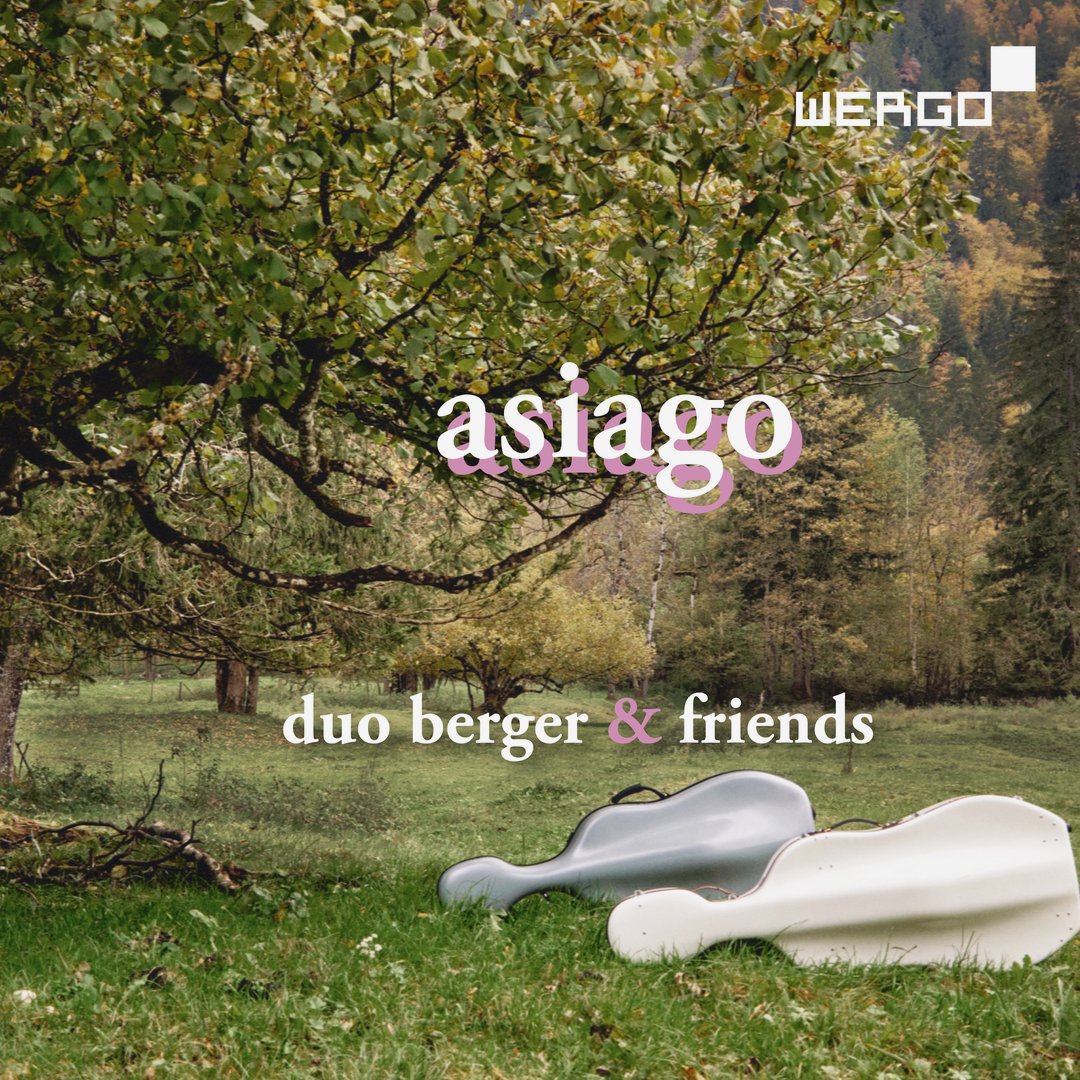
Asiago gathers new music for the cello connected to the Asiago plateau in northern Italy. This is the home of the Cimbri, a small community that came from the north centuries ago and still speaks its own language. Julius Berger built the programme around this find, moving from solo cello and cello duo to prepared piano, cello ensemble and chamber orchestra. Most of the pieces were first performed at the annual festival in Asiago, and all but two tracks are first recordings.
Berger shares the disc with Hyun-Jung Berger; according to The Strad, the cello-playing couple have led the Asiago festival for about half of its history. The composer Franghiz Ali-Zadeh plays the prepared piano in her own Habil Sajahi, taken from a 2012 concert at Palazzo Millepini in Asiago. The guests include the Südwestdeutsches Kammerorchester Pforzheim under Chungki Min, the Ensemble CelloPassionato with nine cellists, and others on harp, percussion and voice.
The disc opens and closes with arrangements for cello ensemble: Giuseppe De Marzi's mountain song Signore delle cime, arranged by Berger, and Valentin Silvestrov's Gebet für die Ukraine, arranged by Gustav Bafeltowski. Zsolt Gárdonyi's Duettini cimbri and Lutz Dreyer's Cimbrische Lieder set the community's songs for two cellos, with movement titles in the Cimbrian language. Giovanni Sollima contributes Arboreto salvatico, three duets named after the sequoia, the pine and the yew, with a reciter in the middle movement. His Lamentatio for cello and voice is performed by Hyun-Jung Berger alone. Markus Schmitt's Campanile, for strings, two solo cellos and harp, is the largest work, while Ali-Zadeh's Variazioni Asiago pairs the two cellos with percussion.
Schott describes the result as a large, suggestive and meditative new repertoire for the instrument, drawn from a corner of the Alps rarely linked with new music. In The Strad (January 2026), Carlos María Solare called the disc "well recorded and lovingly presented". In Campanile he heard "as strong a denunciation of war as any I've heard in music." The album qualified for the Opus Klassik 2026.
CD, Wergo WER 7415 2, released in 2025 in the series Julius Berger at Wergo, total time 78:44.
Release notes
© + ℗ 2025 WERGO Manufactured and printed in Germany First recordings (1-7, 9-12, 14, 15) Total time 78:44
| 1 | Signore Delle Crime (Arranged For Violoncello-Ensemble) | ||
| Duettini Cimbri Per Due Violoncelli | |||
| 2 | 1. Dar Hotar Summar Morgond (Der Angebrochene Sommermorgen) | ||
| 3 | 2. O Baip, Baip (O Weib, Weib) | ||
| 4 | 3. Trink Bain, Trink (Trink Wein, Trink) | ||
| Arboreto Salvatico Per Due Violoncelli E Recitatore | |||
| 5 | 1. La Sequoia | ||
| 6 | 2. Il Pino | ||
| 7 | 3. Il Tasso | ||
| 8 | Lamentatio Per Violoncello E Voce | ||
| Campanile Per Archi, Due Violoncelli Soli Obbligati E Arpa | |||
| 9 | 1. (ohne Satzbezeichnung) | ||
| 10 | 2. (ohne Satzbezeichnung) | ||
| Cimbrische Lieder Für Zwei Violoncelli | |||
| 11 | Nr. 1 Altes Kherchle | ||
| 12 | Nr. 2 Ave Maria | ||
| 13 | Habil Sajahi Für Violoncello Und Präpariertes Klavier | ||
| 14 | Variazioni Asiago Für Zwei Violoncelli Und Schlagzeug | ||
| 15 | Gebet Für Die Ukraine (Arranged For Violoncello-Ensemble) | ||