Songs and One Symphony sets two sides of Michael Mantler side by side. The first part has his settings of poems by the German poet Ernst Meister, sung in English by his Copenhagen group, the Chamber Music and Songs Ensemble. The second is One Symphony, a four-part orchestral work commissioned by German radio and written out in full, with no room left for improvisation.
Austrian-born, Mantler settled in Copenhagen in the early 1990s and formed the ensemble in 1993. It features singer Mona Larsen, guitarist Bjarne Roupé, who had played on Miles Davis's Aura, Kim Kristensen on piano and synthesizers, a string quartet and Mantler's trumpet. The songs were recorded on 11 October 1993 at Danish Radio in Copenhagen. The symphony, composed between March 1997 and August 1998, was recorded on 13 and 14 November 1998 at Hessischer Rundfunk in Frankfurt by the Radio-Sinfonie-Orchester Frankfurt under Peter Rundel. Mantler produced the album.
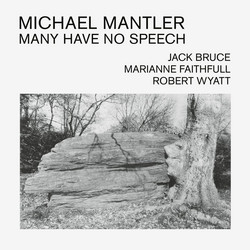
Mantler had first set these Meister texts in 1987, on Many Have No Speech, where they were sung in German. Two of the three song tracks join several short poems into a single sequence. The smaller forces suit the austere words, and in How Long Are Our Nights the cello carries the mournful line. Of the symphony he wrote that it was "symphony" in its most elementary form, "pure music" with no programme or message. In Jazzpodium, Thomas Wörtche described low strings and winds that rise almost like German Romanticism, with Orff-like percussion and bright trumpets laid on top.
Wörtche called the result "ziemlich geniale Musik", rather brilliant music, and heard jazz as an echo exactly where it should be furthest away. In the Tagesspiegel, Wolf Kampmann concluded that the former extremist and master of musical reason had become a secret Romantic. Writing for ECM Reviews, Tyran Grillo called the album "a subtle yet nonetheless smashing twofer". For a composer first known for the Jazz Composer's Orchestra in the late 1960s, it marks a move fully into written music.
This is the CD edition, catalogue number ECM 1721, first released in February 2000, in a jewel case with a 16-page booklet and O-card.