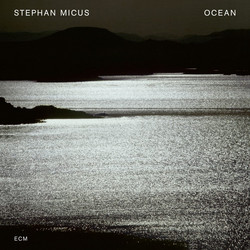
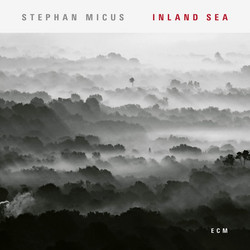
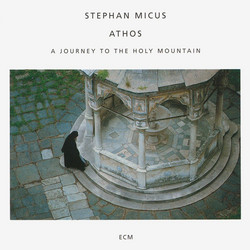
Stephan Micus, born in Bavaria but resident in Mallorca for over 30 years, composes music for instruments he’s collected from all over the world. This album features a dozen instruments from Borneo, Japan, India, Armenia, Ethiopia, Tanzania, Mozambique, Botswana, Morocco, Ireland, Switzerland and Bavaria. Celebrating the richness of the sea, it’s his 27th solo album for ECM.
Traces in the Sand opens with rhythmic flourishes on the steelpan-like hang and African kalimbas (thumb pianos) - almost like waves on a beach. These percussion instruments create a vigorous background for the two melodic instruments, Japanese shakuhachi and Armenian duduk. The shakuhachi is higher pitched than the duduk, but both have a characteristic breathy tone. Their melodies intertwine over the continuously shifting background - which occasionally becomes a foreground.
Many of the pieces on this album feature instruments which begin in a dialogue and then finally come together at the end. That’s true also of the Indian cane flutes of ‘Dancing Cranes’ played over an accompaniment of a kalimba from Mozambique. Actually it’s one cane flute overdubbed, but the first one played in a lower octave than the second. Their melodies alternate at first but after four turns they start playing simultaneously.
The titles of some of the tracks reflect this notion of two characters or instruments meeting, for instance ‘The Pearl Diver and the Mermaid’ in which a plucked sapeh duets with the reedy duduk. The sapeh is a beautiful lute from Borneo, with five metal strings, carved from a single piece of wood.
Micus has always been influenced by the natural world and his music has been inspired by deserts, forests, thunder and more. Traces in the Sand doesn’t attempt to depict the sea, but reflects on the feelings its continually changing state evokes.
A new sound emerges in ‘Light on Water’, the Japanese sho, a free reed mouth-organ with 17 pipes. The combination of instruments here - three sho, three bowed dilruba and two duduk creates an extraordinary sound. And, as with most of Micus’ tracks, a combination that hasn’t been heard before.
The closing piece, ‘Far Horizon’ seems to offer a more distant perspective with alternating solos on plucked sapeh and the reedy duduk. With his cast of 12 instrumental characters, Micus brings us an endlessly changing and surprising vision of the ocean and in a way that only he could do it.
CD, ECM 2871.