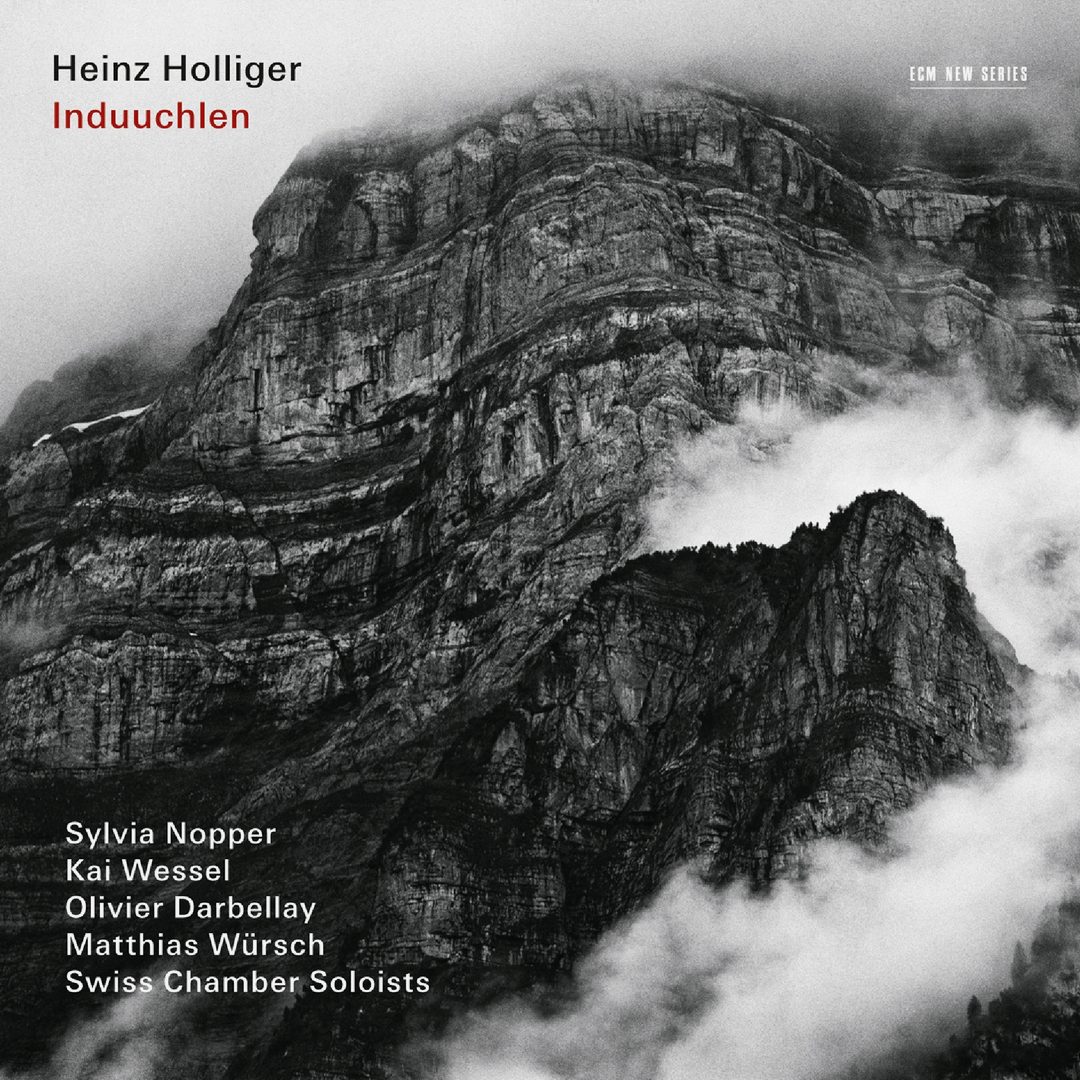
Heinz Holliger, Sylvia Nopper, Kai Wessel, Olivier Darbellay, Matthias Würsch, Swiss Chamber Soloists
Induuchlen
FormatCDLabelECM New SeriesGenreComposition
Arriving from the supplier (ships as soon as it reaches us)
Tracked express shipping from Italy, no customs or import VAT in the EU. Shipping costs
On Induuchlen the Swiss composer, oboist and conductor Heinz Holliger turns to very local sources: two Alpine dialects, one of them close to extinction, and the sound of a natural music of the mountains. The centre of the album is Puneigä (2000/02), ten songs with interludes on poems by Anna Maria Bacher, written in the endangered Walser German of the Pomatt valley. Around it stand the countertenor cycle Induuchlen and two ensemble works that frame the programme.
Holliger conducts the Swiss Chamber Soloists with soprano Sylvia Nopper in Puneigä, recorded in December 2007 at the Stadthaus Winterthur. Bacher herself reads the ten poems unaccompanied, recorded in June 2010 in Lugano. Induuchlen (2004), four songs on verse by Albert Streich in the dialect of Brienz, was recorded in Zürich in 2006 by countertenor Kai Wessel and Olivier Darbellay on natural horn. It is preceded by an old radio recording of Streich reading the title poem. Percussionist Matthias Würsch plays marimba, cimbalom and the solo part of Ma'mounia. Andreas Werner was the main engineer, and Manfred Eicher the executive producer.
Puneigä is scored for soprano, flute, clarinet, horn, viola, cello and percussion with cimbalom. Its short songs alternate with four instrumental interludes such as Umgiiri (Nachtgeister) and Ischu Koraal (Eis-Choral). "Holliger regards a word, like a breath or a heartbeat, as a physical impulse", writes Michael Kunkel in the liner notes, and the vocal writing follows that idea closely. In Induuchlen the singer drops into a baritone register while the horn player also sings, so the two voices keep blurring. Toronto-Exercises (2005) opens the disc, and Ma'mounia (2002), for solo percussion and instrumental quintet, written as a competition test piece, closes it.
In the Sunday Times, Stephen Pettitt found Holliger's "hyperactive, explosive music" in Puneigä immediately striking, and called Induuchlen "an evocative, haunting exercise in studied virtuosity and expanded sound fields". Michael Dervan in The Irish Times found Puneigä "almost hyperactive" and heard in it the theatricality of Ligeti's 1960s Aventures. The album was issued at the same time as Holliger's Bach recording Ich hatte viel Bekümmernis.
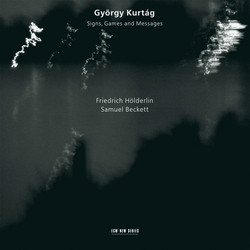
CD, ECM New Series 2201, first released in June 2011, with liner notes by Michael Kunkel.
Release notes
Toronto-Exercises (2005) für Flöte (auch Altflöte), Klarinette in B, Violine, Harfe und Marimbaphon Puneigä (2000/02) Zehn Lieder mit Zwischenspielen nach Gedichten von Anna Maria Bacher (in Pumatter Titsch) für Soprano, Flöte, Klarinette, Horn In F, Viola, Violoncello und Schlagzeug (mit Cimbalum) Induulchen (2004) Vier Lieder nach "Briensertiitsch Väärsa" von Albert Streich für Countertenor (mit Baritonlage) und Naturhorn in F und Es Ma'mounia (2002) für Schlagzeug solo und…
| Toronto-Exercices | |||
| 1 | I Monotonia | 2:46 | |
| 2 | II Moto Perpetuo | 3:13 | |
| 3 | III Harmonia | 3:31 | |
| 4 | IV Canon In Prolatio | 1:10 | |
| Gedichte Von Anna Maria Bacher | |||
| 5 | Der Wênter (Der Winter) | 0:26 | |
| 6 | ...Aber Wêr Si Fogla ! (...Aber Wir Sind Vögel!) | 0:28 | |
| 7 | Wen Mu Plangät (Wenn Man Sich Sehnt) | 0:30 | |
| 8 | Herbscht (Herbst) | 0:24 | |
| 9 | Der Letscht Flug (Der Letzte Flug) | 0:30 | |
| 10 | Hêlf ! (Hilfe!) | 0:27 | |
| 11 | Lengi Nacht (Lange Nacht) | 0:24 | |
| 12 | T Rosa Im Morgä (Die Rose Am Morgen) | 0:24 | |
| 13 | Dem Toot (Dem Tod) | 0:42 | |
| 14 | Dechä Un Werter (Gedanken Und Wörter) | 0:22 | |
| Puneigä | |||
| 15 | I Der Wênter | 1:59 | |
| 16 | II ...Aber Wêr Si Fogla ! | 1:10 | |
| 17 | Umgiiri (Nachtgeister) – Zwischenspiel I | 2:06 | |
| 18 | III Wen Mu Plangät | 3:35 | |
| 19 | IV Herbscht | 1:57 | |
| 20 | V Der Letscht Flug | 1:48 | |
| 21 | Z Fingerschädru (Das Fingergetuschel) – Zwischenspiel II | 1:01 | |
| 22 | VI Hêlf ! | 0:58 | |
| 23 | Z Rêtschkuts (Das Geknarre) – Zwischenspiel III | 0:54 | |
| 24 | VII Lengi Nacht | 2:24 | |
| 25 | VIII T Rosa Im Morgä | 1:17 | |
| 26 | Ischu Koraal (Eis-Choral) – Zwischenspiel IV | 1:54 | |
| 27 | IX Dem Toot | 3:57 | |
| 28 | X Dechä Un Werter | 3:36 | |
| 29 | Induuchlen Von Albert Streich | 0:28 | |
| Induuchlen | |||
| 30 | Uf Steinigem Boden | 4:56 | |
| 31 | Zitronefalter | 3:12 | |
| 32 | Induuchlen | 5:40 | |
| 33 | Der Stäg | 4:37 | |
| 34 | Ma'mounia | 12:12 | |
- François Benda
- Clarinet (1 to 4)
- Elmar Schmid
- Clarinet, Bass Clarinet (15 to 28, 34), Contrabass Clarinet (34)
- Heinz Holliger
- Composed By (1 to 4, 15 to 28, 30 to 33), Directed By (1 to 4, 15 to 28, 34)
- Kai Wessel
- Countertenor Vocals (30 to 33)
- Sascha Kleis
- Design
- Andreas Werner
- Engineer [Tonmeister] (1 to 28, 30 to 34)
- Marco del'Avo
- Engineer [Tonmeister] (5 to 14)
- Swiss Chamber Soloists
- Ensemble (1 to 4, 15 to 28, 34)
- Manfred Eicher
- Executive-Producer
- Felix Renggli
- Flute [Bass Flute] (15 to 28), Flute, Flute [Alto Flute] (1 to 4, 15 to 28, 34), Piccolo Flute [Piccolo] (15 to 28, 34)
- Olivier Darbellay
- French Horn [Horn] (15 to 28, 34), Horn [Natural Horn] (30 to 33)
- Ursula Holliger
- Harp (1 to 4)
- Louis Soutter
- Illustration [Back Cover: "Foire. Le Boucan" (Pen In Ink, 1930/1937)]
- Caroline Lake
- Liner Notes [English Translation]
- Michael Kunkel
- Liner Notes [German]
- Matthias Würsch
- Marimba [Marimbaphone] (1 to 4), Percussion, Cimbalom [Cimbalum] (15 to 28), Percussion, Soloist (34)
- Fridolin Walcher
- Photography By [Cover Photo]
- Priska Ketterer
- Photography By [Liner Photo (1)]
- Dániel Vass
- Photography By [Liner Photo (11)]
- Bahar Dördüncü
- Piano (34)
- Anna Maria Bacher
- Read By [Recitation] (5 to 14), Words By [Poems] (5 to 16, 18 to 20, 22, 24, 25, 27, 28)
- Sylvia Nopper
- Soprano Vocals (15, 16, 18 to 20, 22, 24, 25, 27, 28)
- Jürg Dähler
- Viola (15 to 28), Violin (1 to 4)
- Daniel Haefliger
- Violoncello (15 to 28, 34)
- Albert Streich
- Words By [Poems] (29 to 33)