Soft Machine
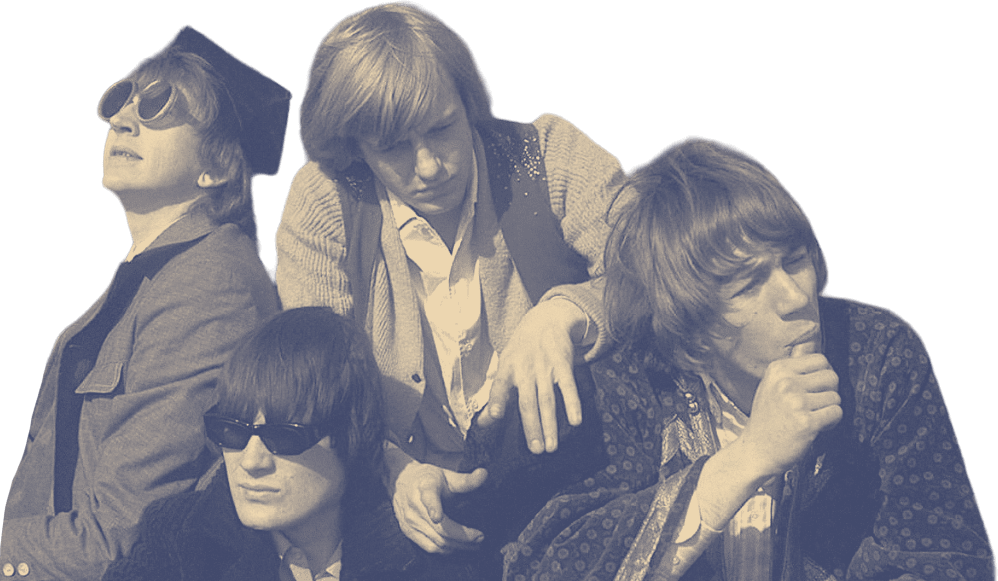
Soft Machine were, with Caravan, the founders of the Canterbury school of British progressive rock. They grew out of the Wilde Flowers, the mid-1960s group that also seeded Caravan, when Robert Wyatt, Kevin Ayers, Hugh Hopper and the Australian Daevid Allen split off in 1966 and took their name from a William Burroughs novel. The psychedelic pop of the first albums gave way, as Wyatt, Mike Ratledge and Elton Dean steered the band, to a fluid jazz-rock built on repeating keyboard figures and long instrumental stretches; Third (1970), a double album of four side-long pieces, is the landmark.
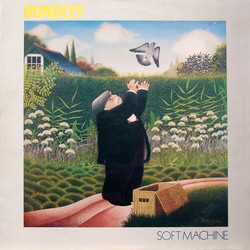
Bundles
Soft Machine's 1975 album, the first with guitarist Allan Holdsworth and the last full studio album with Mike Ratledge, in a 2CD Japanese edition that adds a radio recording from Nottingham University in October 1975.
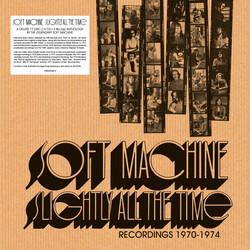
Slightly All The Time, Recordings 1970-1974
Between 1970 and 1973 Soft Machine recorded five albums for CBS, and across those five records the band changed almost beyond recognition. Third still had Robert Wyatt singing on one side of it; by Seven there were no vocals, no Wyatt, no Elton Dean and no Hugh Hopper, and the group was playing a dense, written, riff-driven music that had more to do with Miles Davis's electric bands than with anything else coming out of England. This box follows that arc in detail. All five albums are here, rema…
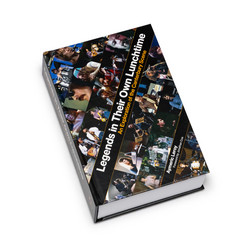
Legends In Their Own Lunchtime : An Exploration Of The Canterbury Scene (Book, Hardcover)
Hardcover, 648 pages, Hardcover! This book looks back on the golden years of the music scene that emerged out of Canterbury, Kent, in the late 1960s, spearheaded by Soft Machine and Caravan and their various offshoots, including Gong, Kevin Ayers and the Whole World, Robert Wyatt's Matching Mole, Hatfield and the North and National Health, and related bands like Egg and Gilgamesh.
Musically at the meeting point between pop, progressive rock, electric jazz and modern classical, it brought togethe…
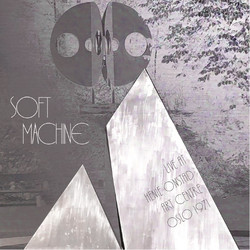
Live At Henie Onstad Art Centre 1971
*2026 repress* Recorded on February 28, 1971, at the Henie Onstad Art Centre in Høvikodden, Norway, this remarkable document captures Soft Machine at the height of their creative powers—performing two continuous sets that blur the boundaries between composition and improvisation.
On this evening, the British avant-garde ensemble unleashed an unbroken flow of sound—dynamic, exploratory, and charged with the band’s signature blend of jazz, rock, and experimental electronics. All instruments—exce…
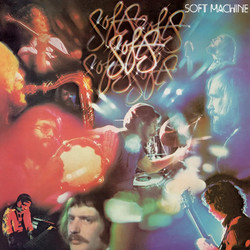
Softs
New remastered vinyl release of the classic 1976 album by Soft Machine. Cut at Abbey Road Studios. The album was the band’s second for EMI’s Harvest label and featured a line-up of Karl Jenkins (Piano, Electric Piano, Synthesisers), John Marshall (Drums), Roy Babbington (Bass) and new members John Etheridge (Guitar) and Alan Wakeman (Tenor & Soprano saxophones). An accessible collection that followed the band’s first album for Harvest, ‘Bundles’. ‘Softs’ featured John Etheridge’s considerable gu…

The Soft Machine
The first two albums by England's legendary Soft Machine, originally released in 1968 and 1969, remain among the most innovative and influential releases of that musically fertile era. These seminal LPs offered a visionary psychedelic-progressive-jazz-rock mix that helped to make the Soft Machine one of Britain's first significant underground bands, as well as a key force in the birth of both progressive rock and jazz-rock. A product of the same fabled Canterbury scene that spawned such beloved …
Sold Out
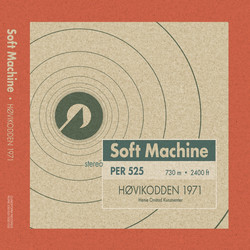
Høvikodden 1971
Tip! This well recorded and carefully mastered set captures the most famous version of the band (the ‘classic quartet') on their final European tour on two consecutive nights on February 27 and 28, 1971. While the two sets from the second night (February 28, 1971) have been released before, this is the first time that the entire two-night stand has been released. So half of this is previously completely unreleased.
This is a excellent, stereo recording of the band performing in a relatively smal…
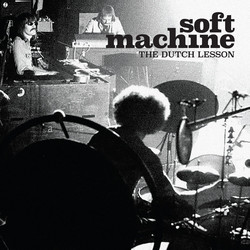
The Dutch Lesson
By 1973 Soft Machine already had a long history of playing in Rotterdam, appearing at major festivals such as Hippy Hippy Fair (1967), Kralingen (1970) and AHOY (1971, Phil Howard’s debut), and no less than four times at the city’s most prestigious venue, De Doelen, most recently (in September 1972) on a double bill with Robert Wyatt’s Matching Mole. This time, however, they were booked in a smaller venue, which they filled to capacity at around 400. Part of an arts complex originally known as O…

Paris 1970
Soft Machine, live from the Théâtre de la Musique, Paris on March 2nd, 1970. Despite their gradual dissolution in the late '70s, Soft Machine's stock has never been higher thanks to a steady stream of archival recordings that continue to surface and throw light on the importance of varying line-ups. The quintet version of the band, captured at the Théâtre de la Musique, Paris on March 2nd, 1970 for France's Pop Deux TV show features that short lived and often lamented line-up of Lyn Dobson and E…
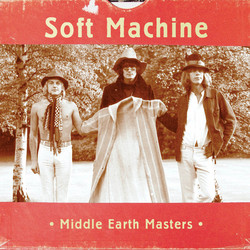
Middle Earth Masters
*2022 stock* The Soft Machine were one of England's original and best psychedelic bands, emerging out of the same "UFO Club" London scene at the same time as Pink Floyd. While the band would always undergo constant personnel and stylistic change, their best known lineup in their psychedelic days was the trio of Kevin Ayers-bass, guitar, vocals, Mike Ratledge-organ and Robert Wyatt-drums, vocals. They played many shows and built an audience in “swinging London” and beyond. A link with Jimi Hendri…
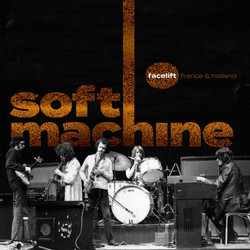
Facelift (France & Holland)
From their beginnings as a psychedelic rock band in 1966, sharing stages with Pink Floyd and the Jimi Hendrix Experience, to being one of the originators of electric jazz/rock by early 1969, Britain’s Soft Machine were restlessly creative. Facelift France and Holland captures them at a pivotal moment in the first quarter of 1970 as a short-lived quintet, just before they recorded and released their breakthrough album, Third. As broadcast on the French TV programme Pop 2, the film of Soft Machin…
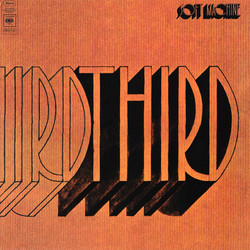
Third
*180 gram audiophile vinyl. Gatefold sleeve* The Soft Machine plunged deeper into jazz and contemporary electronic music on this pivotal release, which incited the Village Voice to call it a milestone achievement when it was released. It's a double album of stunning music, with each side devoted to one composition -- two by Mike Ratledge and one each by Hopper and Wyatt with substantial help from a number of backup musicians, including Canterbury mainstays Elton Dean and Jimmy Hastings The Ratle…
Sold Out

Live At Royal Albert Hall, London 13th August 1970
Classic Soft Machine performing live at the prestigious Royal Albert Hall, right after the release of the milestone Third on CBS. Classic line up with Hugh Hopper (bass), Mike Ratledge (keyboards), Robert Wyatt (vocals / drums) and very special guest Elton Dean on alto saxophone and saxello. Canterbury goes to heaven!

Top Gear Live In London 1967-1969
These Soft Machine recordings for John Peel's Top Gear programme took place in December 1967 and June 1969 when the band was at the peak of their psychedelic revolution and during their first transition towards an unprecedented form of Psych Rock Jazz. These historical sessions, including a great version of Wyatt's masterpiece Moon in June, show the great potential of the band's early line ups featuring Hugh Hopper - bass, Kevin Ayers - vocals, guitar, bass, Robert Wyatt - vocals, drums and Mike…

Live In London In The Early Sixties
The early mythical Soft Machine featuring the trio line up of Kevin Ayers, Mike Ratledge and Robert Wyatt, captured live in the full swinging London atmosphere. These were the band's psychedelic days, when their original magic potion was composed of unconventional songs and freaky organ, bass and drums improvisations. The group was literally exploding throughout the London club scene. One of the most innovative and influential sounds of that musically and culturally fertile era

Jet-Propelled Photographs
Soft Machine formed in August 1966, although gigs under the name of Mister Head had been underway since May of that year. The band split up in December 1968, re-formed again in February 1969 and continued to perform throughout the 70’s. The original line-up (1966) consisted of Robert Wyatt on drums and vocals, Mike Ratledge on keyboards, Daevid Allen on guitar and Kevin Ayers on bass and vocals. For a brief time, American guitarist Larry Knowlin was also a member, but left after only a handful o…

Seven (remastered) LP
180 gram audiophile vinyl pressing, clear vinyl. Seven is the seventh studio album by Soft Machine, released in 1973. Roy Babbington, who had previously contributed to Fourth [MOVLP1601] and Fifth [MOVLP1599] on double bass as a session musician, replaced Hugh Hopper on bass guitar, who left to begin a solo career. Their unique take on jazz rock was groundbreaking. Seven is a highly diverse album combining minimal, spacey elements and some great instrumental jamming. It was also the last of thei…

Six (remastered)
180 gram audiophile vinyl pressing. While the instrumental Fourth had forayed deep into jazz-rock territory, Fifth found Soft Machine working almost completely in the jazz idiom. As Soft Machine moved further away from rock on Third [MOVLP183] and Fourth [MOVLP1602], drummer/vocalist Robert Wyatt's dissatisfaction with the band's direction grew and, by the time sessions started for Fifth in late 1971, he had left permanently to form Matching Mole. Wyatt's replacement Phil Howard's propulsive rhy…

Fourth (remastered) LP
180 gram audiophile vinyl pressing. Fourth (from 1971) or 4 is the Soft Machine's first all-instrumental album and features a mix of Free Jazz, straight-ahead Jazz, and gong-like psychedelia. It was also the last of their albums to include drummer and founding member Robert Wyatt."Soft Machine's collective skill is hyper-complex and refined, as they are extremely literate in all fields of musical study. Fourth is the band's free purging of all of that knowledge, woven into noisy, smoky structure…

Fifth
While the instrumental Fourth had forayed deep into jazz-rock territory, Fifth found Soft Machine working almost completely in the jazz idiom. As Soft Machine moved further away from rock on Third [MOVLP183] and Fourth [MOVLP1602], drummer/vocalist Robert Wyatt's dissatisfaction with the band's direction grew and, by the time sessions started for Fifth in late 1971, he had left permanently to form Matching Mole. Wyatt's replacement Phil Howard's propulsive rhythms make a vital contribution to me…

Volume Two
2016 restock. Soft Machine's legendary second album, originally released in 1969, bridging the gap between avant-rock, psych, jazz and stream-of-consciousness weirdo absurdism. "The Soft Machine plays music for the mind. In its strictest sense, it may impose some cerebral responsibility on the listener, because you can't really hum along or have the tune pass through head as you walk in the streets. But the ultimate good feeling that the Machine generates will always remain with you, and …
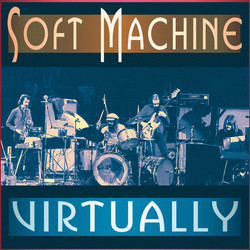
Virtually
The previously unreleased show captured on Virtually, recorded 3/23/71, presents the classic quartet Softs [Elton Dean/Mike Ratledge/Hugh Hopper/Robert Wyatt] during their final European tour & just 4 months before their dissolution. The recording [licensed from German radio & taken from the master tapes] is superb for the time period, & the performance really sparkles, with everyone shinning, although special note must be made of Robert's drumming, as he plays with more gusto on this show than …
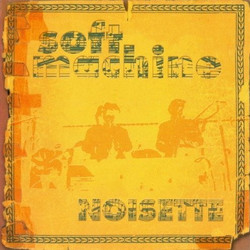
Noisette
Noisette is the third in Soft Machine series, recorded January 4th, 1970 at the same concert as "Facelift" on Third, by the short-lived quintet formation of the group: Elton Dean & Lyn Dobson-reeds, Hugh Hopper-bass, Mike Ratledge-keyboards & Robert Wyatt-drums & vocals. Noisette features the rest of the concert, & showcases a band in transition from their earlier psychedelic/ progressive sound towards the jazz rock sound of Third & Fourth. It features the quintet performing versions of material…
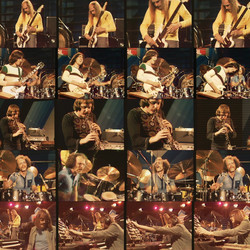
Switzerland 1974
Soft Machine were one of the greatest UK avant/jazz-rock bands of all time and their work, whether their earliest performances as a psychedelic band, who were contemporaries of, and shared stages with Syd Barrett's Pink Floyd and the Jimi Hendrix Experience, all the way to being one of Europe's best known 'fusion' bands, their work continues to be name-checked by today's hip experimentalists. By mid 1973, Soft Machine had gone through a tremendous amount of personnel turnover and a shifting in t…
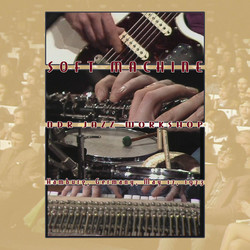
NDR Jazz Workshop - Hamburg, Germany 1973
Released for the very first time here is the Soft Machine's television broadcast, recorded for Germany's famous "NDR Jazz Workshop" on May 17, 1973. This performance was one of the earliest shows by the quartet of Roy Babbington (electric bass), Karl Jenkins (oboe, baritone sax, soprano sax, electric piano), John Marshall (drums) and Mike Ratledge (electric piano, organ). This was a very high profile appearance by the group and for this performance Soft Machine made it a special show. They perfo…
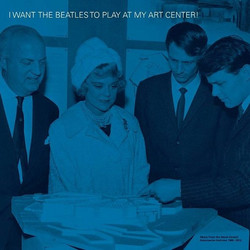
I Want the Beatles to Play at my Art Center
Music From the Henie Onstad Kunstsenter Archives 1968-2011. This 2LP presents seminal works of music from the nearly 50-year history of Henie Onstad Kunstsenter (HOK). When HOK founder Sonja Henie exclaimed that she wanted The Beatles to play at her art center, in essence she expressed its founding ambition to produce and stage a lively cross-artistic program that captured the contemporary spirit of the day in live form. This release is filled with previously-unreleased material recorded at H…
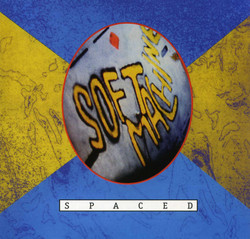
Spaced
1996's SPACED sees the release of long-forgotten tapes that Soft Machine had made in 1969 to accompany a staged "happening" in London. The seven pieces are improvisations of varying length, centered on the electric piano and organ of Mike Ratledge, ... Full Descriptionthe electric bass of Hugh Hopper, and the drumming of Robert Wyatt. The recordings also feature appearances by saxophonist Brian Hopper. Ratledge and Hugh Hopper pioneered innovations that added depth and breadth to the sounds o…
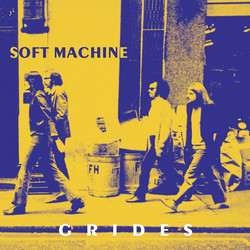
Grides
Previously unreleased live concert from 10/25/70 & DVD from their final European tour w/Robert Wyatt in '71, a multi camera crew shot 20 minute set. Both feature the classic SM quartet line up of Wyatt, Dean, Ratledge & Hopper.