Back in stock
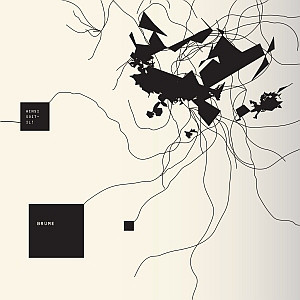
Ainsi Soit-il!
Limited edition of 250. Alone, you have to listen to Brume alone, and lie down far from the neon lights, traffic, and gossip, with your lights filtered. In the dominating dark and night, Brume carries an atomized reality to a world where chaos rhymes with spatial waverings, where atmosphere is devoid of impurity, rich with rhythms and sonorities, and dense with emotions, for a mysterious -- but undoubtedly innovative -- energetic trip. Rich, complex, and experimental Ainsi Soit-il!envelopes us. …
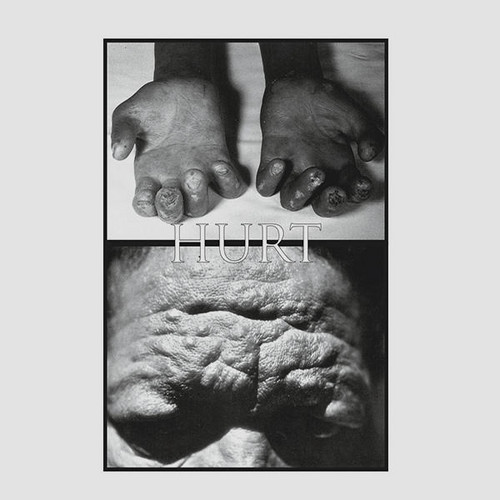
Hurt
Limited edition of 100 numbered copies with razor blade attached (!) First ever official re-issue of this rare Murder Corporation (the musical project of Moreno Daldosso) tape from 1996. Originally published on tape in 1997 by Self Abuse Records, US, as SAC-23. Recorded at The Murderhouse in January 1996 - Murder Corporation uses tapes, noises, short waves and distorted voices, along a sampler Akai S01 and tone generator. Remastered from original tape.

Scenery
LP version. Mastered at half speed. 180 gram vinyl; Stoughton tip-on
sleeve. We Release Jazz (WRWTFWW Records' new sister-label) presents its
first release, the official reissue of Ryo Fukui's highly sought-after masterpiece Scenery, originally released in 1976. Unquestionably one of the most important Japanese jazz albums ever recorded, Scenery
reveals Ryo Fukui as a miraculously brilliant self-taught pianist
fusing modal, bop, and cool jazz influences for a very personal,
dexterous, and g…
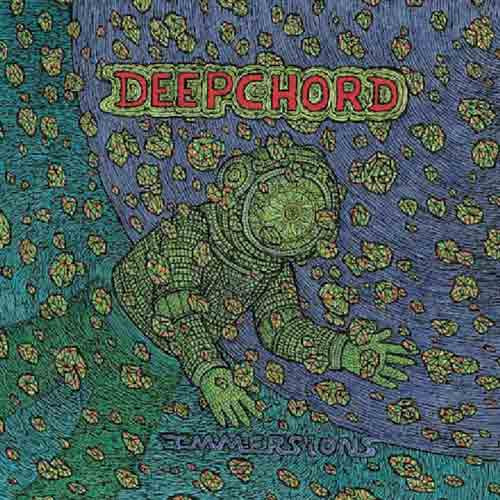
Immersions
Rod Modell returns as Deepchord for his first solo release on Astral Industries since inaugurating the label with his sought-after ‘Lanterns’ EP. Consisting of two stunning long-form pieces split on one side each, 'Immersions' captures the emotive, halcyon sound that Rod has long become synonymous with. Opening with glistening ambient textures, ‘Immersion I’ grows into an 18-minute piece of deep rolling dub techno. On the other side ‘Immersion II’ paints pristine soundscapes of soft, lapping wav…

Fullness of Harmony
*Beautiful artist record, limited edition of 120 copies, with hand-stamped labels* Whatever was that sound coming from the records it returns now back on the record. "Fullness of Harmony" presents the sound work of Panos Charalambous, collector- artist, born in 1956, Aetolia- Acarnania, Greece. This very limited edition presents a document of his performances when he takes up the task of dJing with vinyl and shellac records, in which he is intensely involved in the "exhumation" of voices and me…
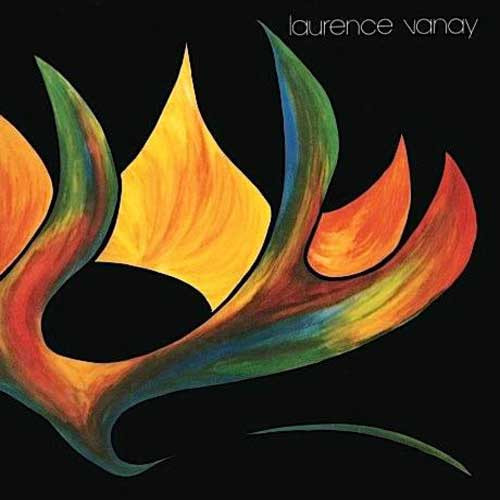
Galaxies
Laurence Vanay is the pseudonym for Jacqueline Thibault, wife of producer and musician Laurent Thibault (Magma). Her debut album "Galaxies" (1974) is pure genius: almost all instrumental, with gorgeous keyboards of many types, acoustic/electric guitar, even a little Zeuhl bass. There are wordless vocals on many of the tracks, although she occasionally sings in a soft, seductive manner. Incredible, spacey “avant-garde progressive chanson,” a Holy Grail for most collectors of 70's underground Fren…

FMP - Free Music Production Box
The first volume of the box "FMP - Free Music Production Box" brings the listener back to the 1977 into the FMP studio in Berlin where Alexander von Schlippenbach recorded the album "Piano Solo '77" (FMP 129): a fascinating album of music improvisation for piano solo. The second volume of the box "No Comment" (FMP 133) is dedicated to the trio of Stefan Keune (sopranino sax, high baritone), Hans Schneiber (bass) and Achim Krämer (percussion) appreciated for their always direct expressiveness wit…
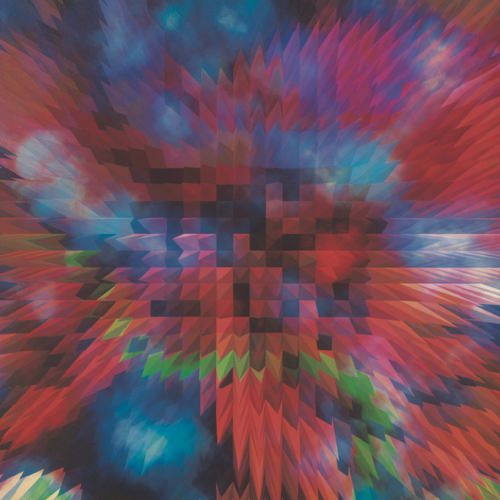
Elph vs Coil: Worship The Glitch
Coil’s cultishly acclaimed Worship The Glitch features the group in dialogue with the ghost in the machine, an element they named ELpH and considered as much a part of the group as any physical member. Aye, you’d probably be right in assuming they were taking a lot of drugs during the creation of Worship The Glitch, and consequently the results stand out among their trippiest releases, comparable with the rugged space of early Pan Sonic and slightly later Mika Vainio releases as much as Philip J…

Polyphonies
Deluxe edition 12 x CD boxset with remastered audio and 112 page booklet. The CD wallets reproduce Pierre Henry’s “concrete paintings” and the booklet features repertoire notes, written mostly by the composer himself.The 12 CD boxset Polyphonies is a mind-blowing summation of more than 50 years work by restlessly pioneering composer, Pierre Henry (9th December 1927 - 5 July 2017) - the undisputed godfather of musique concrète, who laid the groundwork for much of electronic music as we now know i…
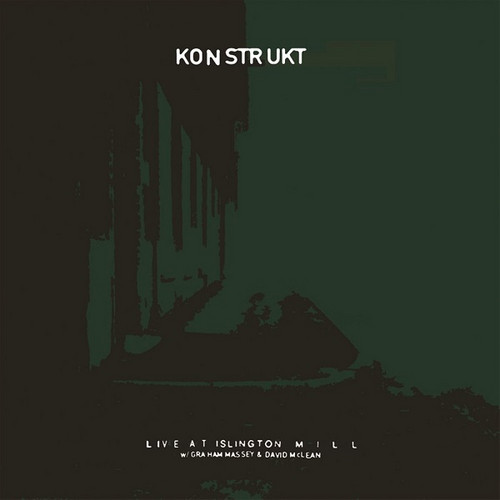
Live At Islington Mill
Backwards proudly presents a new Konstrukt vinyl release! Live at Islington Mill finds Konstrukt working with 2 amazing guest artists Graham Massey (of 808 State) and David McLean (of the Tombed Visions label). This live recording from last year finds the Turkish group and their guests filtering free jazz through a 70’s era-Miles approach. Konstrukt has been making a name for themselves for a quite a while now with an incredibly impressive discograpy of LP’s featuring a who’s who list of guests …

INUIT 55 Historical Recordings Traditional Music From Greenland
Double LP version. 55 Historical Recordings Of Traditional Music From Greenland 1905-1987 features historical recordings of traditional Greenlandic music recorded between 1905 (by the British ethnologist William Thalbitzer) to 1987 and collected by the Danish ethnomusicologist Michael Hauser. It was published in Greenland by Ulo. Sub Rosa took the decision to enlarge the distribution of this tribute to traditions and roots of the Inuit culture. This is more than an hour of ultra-rare documents, …
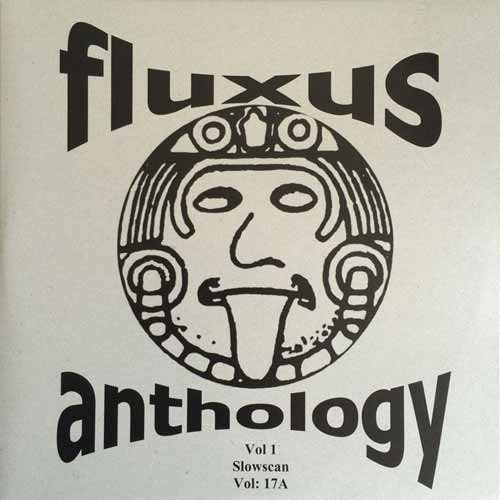
Fluxus Anthology Volume 1
2004 release; essential overview of the various fluxus artists’ dabblings w/ sound, covering work recorded between 1961 and 1995. Highlights include: Dick Higgins’ 1961 “in memorian” (”the piece was made by assembling loops of a dub of a phonograph record of 16th century dance music. the dance is heard, simultaneously, up the 16 times as slow as the original, backwards as well as forwards, giving a sort of cinematic effect”). Robert Watts’s 1969 “string record composition” (simply astounding ear…
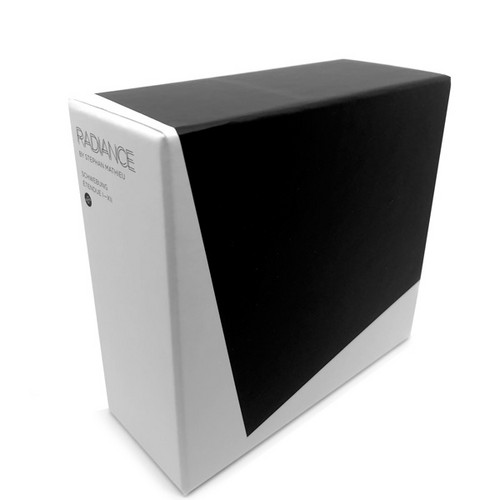
Radiance
**few copies back in stock, very last around** It hardly needs to be said that the context of experimental music is defined by incredibly ambitious efforts. But there’s ambitious, and then there’s ambitious. The German composer and musician, Stephan Mathieu, might have taken the cake. Back in 2016, he began issuing his sprawling Radiance project, the culmination of a decade of work, in the end amounting to twelve thematically linked album length pieces, built around the concepts of stasis, unfol…

Club Years
Johanna Went is a pioneering performance artist who began performing as
part of a street theater troupe that traveled America and Europe in the
1970s. Following her years on the road, she settled in L.A. in the late
'70s and began transforming her street theater performances into what
would become her signature style. Using found props and hand-sewn
costumes, she developed a wild stage act that included live musical
backing from legendary performers such as Z'ev and KK Barret of the
Screa…
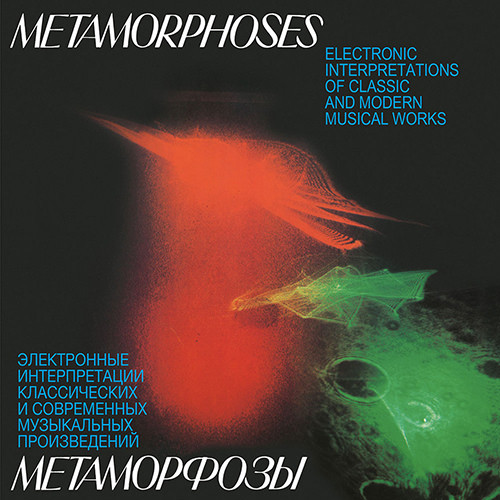
Metamorphoses
Unusual Russian library LP of electronic interpretations of ‘classical’ pieces by Claude Debussy and Monteverdi among others. Yuri Bogdanov features on every track, on some tracks together with Edward Artemiev, composer for Andrei Tarkovsky and others. Other tracks feature Vladimir Martynov. The record is made on the basis of a kaleidoscope: it interspersed with pieces of various styles, genres and eras. For example, these pieces the authors wanted to show a variety of ways to use a synthesizer,…
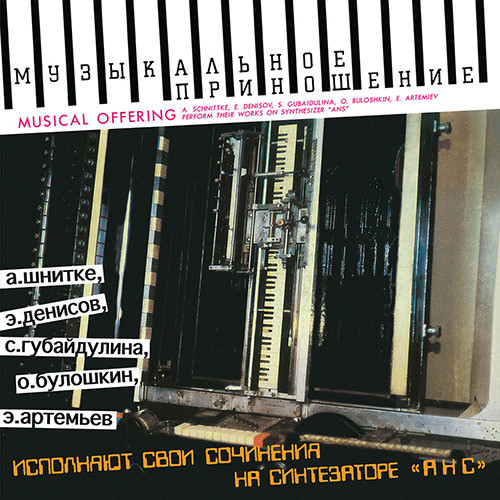
Musical Offering
Much-needed reissue of a Melodiya Lp appeared in 1990 - although the recordings date from the 1960s and 1970s - featuring electronic works perfomed at the (legendary) ANS syntheiszer by: Oleg Buloshkin, Sofia Gubaidulina, Eduard Artemiev, Edison Denisov and Alfred Schnittke."Please, try to imagine a score sounding by itself without a conductor, orchestra even without musical instuments. This magic is possible by using musical synthesizer “ANS”. “ANS” is an instrument with which a composer can no…
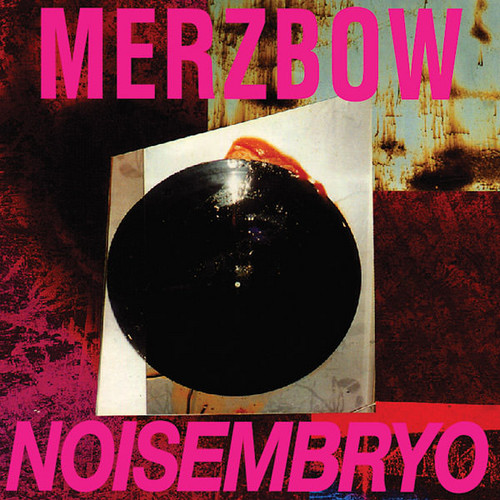
Noisembryo
Hospital Productions present a vinyl reissue of Merzbow's Noisembryo, originally released on CD by The Releasing Eskimo in 1994. Noisembryo is a holy grail, not only of Merzbow's obsessive discography, but of the entire '90s noise movement. You've heard the stories surrounding the infamy of this release, but beyond that stands the depth and wild energy that Noisembryo encapsulates over two decades later. High-speed loops, roving automotive bass, and cacophonic drum machines gel together with the…
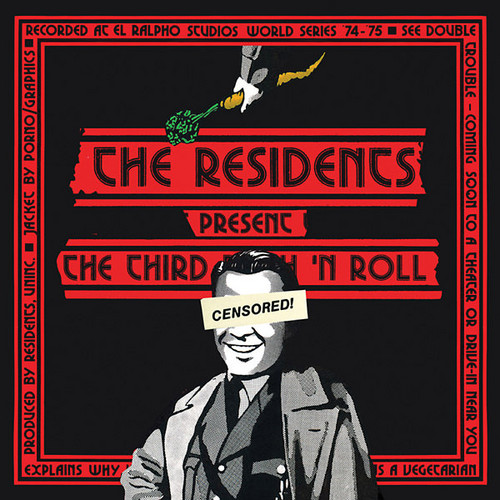
The Third Reich 'N' Roll
The classic 1976 album remastered from the original tapes plus 11 unreleased recordings! Formed in the early 1970s, The Residents have been charting a unique path through the musical landscape for over 45 years. From far-out, experimental curiosities to highly conceptual, multi-album projects, the band has refused to stand still, and continues to move in several different directions at once. Produced with the involvement of The Cryptic Corporation, and with full access to the band's extensive ta…
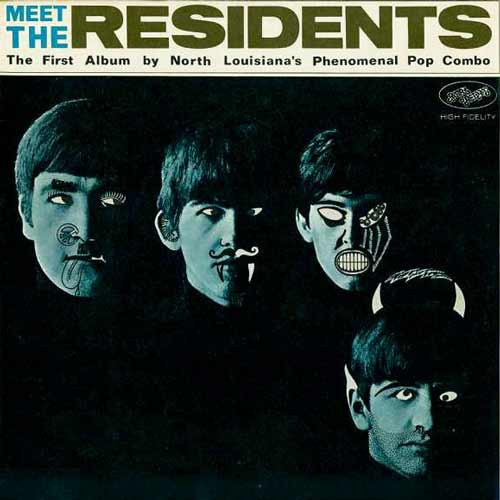
Meet The Residents : preserved edition
2 disc special edition of the classic debut album in both mono & stereo mixes plus over 20 previously unreleased tracks! Expanded reissue of the Residents' classic debut originally released on Ralph Records in 1974. The whole, bizarre Residents trip started here (at least officially). Mixing everything from Frank Zappa and Captain Beefheart to Raymond Scott and Sun Ra in the world's most bizarre blender, this one is the place to start in the wild and weird world of the Residents. Produced with t…

Symphony No. 2
2015 repress, originally reissued in 1992. Atavistic has quietly erected the near complete recorded works of Glenn Branca, whose vision of guitar-generated power-symphonic sound is, in simple terms, one of the most exhilarating and important musical gestures of the contemporary era. First issue of this '82 performance; 10 guitars (including Thurston Moore & Lee Ranaldo on special Branca-engineered "mallet guitars"), plus the massive force of Zev's bass drum & metal