Back in stock
Roads to ruin
restocked / Jenks "Horseback, Mount Moriah" Miller and James "Wooden Wand" Toth share a lot of the same musical influences in addition to being two of the most unique voices in underground music over the past decade. Every release from these gentlemen individually shares DNA with what came before but always takes the listener on an exciting new twist. Both Miller and Toth greatly admire the work of the other and ecstatically wanted to share a record where they could combine their own material in…
Ensemble
Over the course of various releases, the self-titled debut Death Blues (Hometapes/Taiga), Here (Rhythmplex), Non-fiction (SIGE), as well as the text only Death Blues manifesto, drummer and percussionist Jon Mueller’s Death Blues project has used sound, performance, and concept to explore ideas around presence and experience. This work culminates in the release of Ensemble, an elaborate book/LP/digital release that features seven essays about our vulnerability, the rawness of our inner lives, and…
Reveries
Brooklyn's Sarah "Noveller" Lipstate and Montreal's Eric "Thisquietarmy" Quach join forces here for a long-player containing four meditative duets. The two guitarists' style seems almost tailor-made for a collaboration such as this, since both of them specialise in slow-oozing drone'n'tone compositions which mix a shimmering angelic lightness with subtle drawn-out sadness.
It doesn't take a scientist to figure out what'll happen when these two come together. Drones, that's what. Achingly beautif…
Docteur Faust
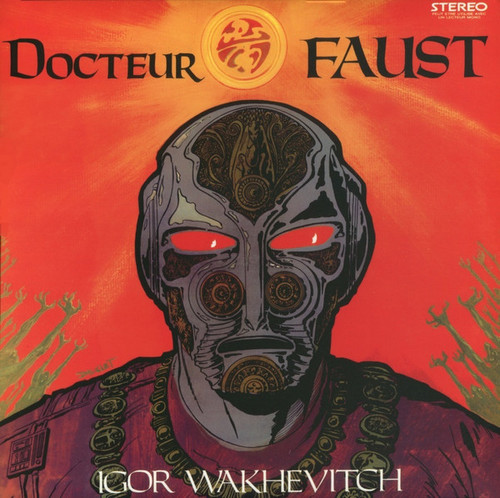
Housed in a fantastic and menacing sci-fi cover courtesy of Druillet and bearing the famous dedication: "A mes grands amis Robert Wyatt et Mick Rattledge", Igor Wakhevitch's second album was a step beyond it's predecessor into a music alchemy that defies categorisation and the one that started to define his trademark sonic collage of styles and moods. Like the previous record, this was the music for a Norbert Schmucki ballet "Ergonia", premiered at Festival D'Avignon 1971, and featured top frenc…
The Twelfth Spectacle
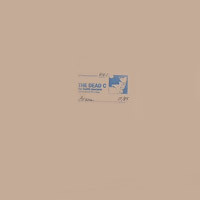
A whopping new release from New Zealand no technique trio The Dead C is finally ready. Morley, Russell and Yeats's The Twelfth Spectacle has just arrived, and collects live recordings from the last ten years onto four LPs for Grapefruit records's subscription series.The Twelfth Spectacle includes: Arena, Recorded at La Dynamo Pantin, Paris and Les Ateliers Cl, April 2013; Permanent LSD, recorded at London's Luminaire in December 2006; This Century Sucks, recorded at The Smell, Los Angeles, March…
Recount
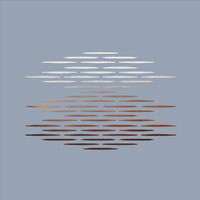
"Deaf Center is seemingly never of the times. whether it's the nostalgic component often associated with Pale Ravine and Owl Splinters, or the time between releases, waiting and remembering are part of the experience. Recount is a bridge between full albums, where time and familiarity are mesmerizingly suspended. recorded during rehearsal sessions in 2012 and 2008, follow still and oblivion make full use of the deaf center spectrum. In the direction of a live performance, recount plays off of ex…
Yeah
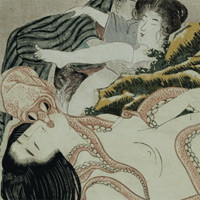
Restocked Side A: recorded and mixed in 1993 by John Duncan and Jim O'Rourke at Christoph Heemann's studio in Aachen. Final mix in 2013 by Jim O'Rourke in Tokyo. Side B: Stay alive recorded live with Oren Ambarchi and Joe Talia on 9 March 2013 at SuperDeluxe, Tokyo; mixed by Joe Talia.
YEAHJim and I worked fast and furiously in Christoph Heemann's studio to record this, working in shifts, day and night, three days later had it all but finished -- then Jim said 'Let me do just a couple of t…

Einstieg
The debut album by this multinational outfit, originally released by Wergo in 1971. A groundbreaking fusion of diverse sources and traditions: from ancient and medieval to avant garde, free improvisation or eastern meditation. A unique mixture that will blossom in their follow up And The Waters Opened. With Roberto Detree (guitar, motocello), Peter-Michael Hamel (piano, organ), Robert Eliscu (oboe, vocal), Cotch Black (percussion), Ulrich Stranz (viola) plus a young James Galway on flute…

Hamel
First ever reissue of Peter M. Hamel's debut album, originally released by Vertigo in 1972. An extended trip through meditative and minimalist territories that has its roots both in western avant-garde and Indian classical music. Organ and synthesizer drones mix with natural sounds in a flowing, ever-changing soundscape. For fans of Terry Riley, La Monte Young, Popol Vuh, Taj Mahal Travellers, Deuter and anyone into ambient and meditation musics. With Peter Michael Hamel (organ, voice, el…
Nothing Changes No One Can Change Anything
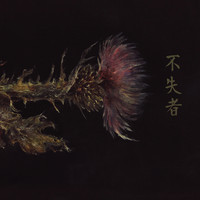
Recorded at H sei University, Tokyo, April 26, 1996.
'No band on Earth has ever sounded like Fushitsusha. Sure, there are antecedents to their mind-scraping, soul-searing roar: Blue Cheer's in there, as is Hendrix circa 1970, when he'd given up the showmanship of 1967 and '68 and aimed himself straight at the heart of the music, but nobody ever exploded the rock power trio form the way Keiji Haino, Yasushi Ozawa and Jun Kosugi did. Clad in black, impassive and stoic, the bassist and drummer buil…
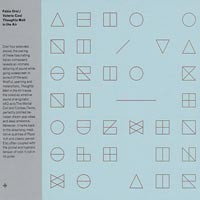
Thoughts Melt In The Air
The Preservation label presents Thoughts Melt In The Air, the second album from the pairing of Italian composers Fabio Orsi and Valerio Cosi. Both Orsi and Cosi have become recognized widely internationally for their prolific solo output and kindred spirits in creating momentous soundscapes that ring with lyrical feeling. Still in his early 20s, Valerio Cosi has released a seemingly endless stream of work that swirls around giddily in a sweep of heady free-jazz (his main instrument is tenor saxo…

Lost & Found Volume III: The Ambient Records
*** 3 copies back in stock*** Dead stock find of some incredible original editions of the best ambient / suspence / dark atmospheric flavor library Piero Umilani LPS. Each one is worth already some money, but here's your chance to get them as a beautiful handscreened box made especially for this occasion in order to give 'new life' to this wonderful ageless music.After the first appreciated edition of the two boxes (containing his ethnic compositions and his weird electronic music), we are glad…
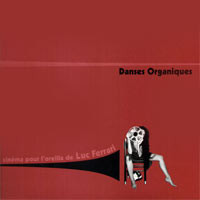
Danses Organiques
***Very last copies*** "Luc Ferrari is one of the most important and intriguing figures of the last forty years, a pioneer of musique concrète at the beginning of the Groupe de Recherche Musicales in Paris, and perhaps 'the only real artist among many excellent researchers' as someone suggested. With a very peculiar sensibility he creates his own musical world in which wit, sensuality, extreme sound realism, playful analytical abilities, social concerns, and love for good food are important a…
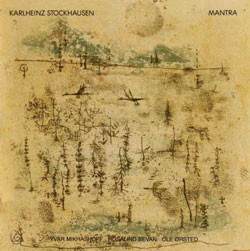
Mantra
Composed in 1970, Stockhausen's Mantra is a duet for piano written for the Donaueschingen Festival. It is Stockhausen's first completely scored piece after a long string of largely improvised compositions. Here both pianists play ring-modulated pianos, cymbals, and a wood block. One player is also controlling a recording of Morse code. The purpose of this composition was to explore the idea of a musical 'mantra.' The repetition of sounds are intended to place both the audience and the mus…
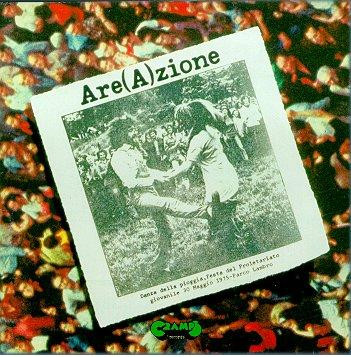
Are(A)zione
The 4th album from the band that I consider to be possibly the finest Italian progressive rock band of the 1970's, & certainly a band in the top tier of all early 1970's progressive bands worldwide! Area combined jazz/rock/stolen ethnic music (mostly from Eastern Europe and the Middle East)/the avant garde and more. Superb playing from all (vocals/organ, guitar, electric piano/synths, bass & drums). This includes a thick booklet with rare photos, notes, etc. While everyone shines, the vocalist, …
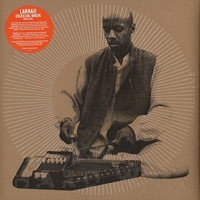
Celestial Music 1978 - 2011
The first ever career-spanning collection of the music of legendary electronic mystic, Laraaji. Featuring rare early tape works, plus collaborations with Brian Eno, Bill Laswell and Blues Control, this triple vinyl edition houses each LP in its own printed inner bag and is presented in a specially made kraft board printed sleeve. 'Celestial Music' is a long overdue career retrospective documenting the highlights from over 30 years of spiritual music by Edward Larry Gordon aka Laraaji. Like many …
Electroacoustic Sludge Dither Transformation Smear Grind Decompo
Electroacoustic Sludge Dither Transformation Smear Grind Decomposition nO!se File Exchange Mega Edit is the long-awaited collaboration from two of the world's finest purveyors of noise, electroacoustics, and top-shelf audio mayhem. Having met at the legendary Tokyo venue 20000 Volts in 1997, Russell Haswell and Pain Jerk (Kohei Gomi) stayed in touch with the intent to collaborate at some point in the future. This was eventually realized in 2012 when they were offered a gig to play together at th…
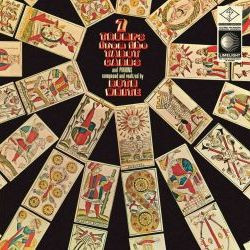
Seven trumps from the Tarot Cards and Pinions
Mindblowing first ever vinyl reissue of Ruth White’s dark experimental electronic masterpiece ‘7 Trumps From The Tarot And Pinion’. Originally issued in 1969 on Limelight and now available in an edition of 500 copies through French label Black Mass Rising, who many of you will know were responsible for reissuing Ruth White’s ‘Flowers of Evil’. If you were fortunate enough to score a copy of that record, then make some space on the shelf for its evil twin. This is proper holy grail stuff for his…

Vole lotta love
Insane Bobetomagus wax! Full-Blast-Borbeto jazz/noise recorded live in Helsinki Finland in 2005... Mix-maximized by Tommi Keränen. Beautiful 2 color silkscreened and hand-glued covers by Sami Pekkola. Titled inspired by the romantic M. Apsa video included with the gigs opening act. Those in the know will know. Grab it! Edition of 300."Thunderous new limited to 300 copies live LP from the killingest trio of horn/guitar thinkers this side of judgement day: recorded live in Helsinki in…
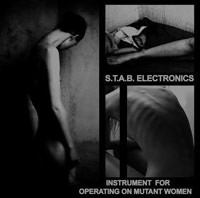
Instrument for operating on mutant women
Is the fourth full installment of a body of work from Keith G Finnan who resides in the shithole south east of the U.K. with releases on such labels as Filth and Violence , Unsound Recordings , Corrosive Art Records and various compilations. S.T.A.B. originally was going to be a one off project as a tribute to the Italian master of harsh nightmarish electronics Marco Corbelli ! S.T.A.B. thought it would be a fitting tribute to carry on the project with themes based on sex , death , the body poli…