Back in stock
Hotel paral.lel
"Re-mastered at Piethopraxis in Köln, July 2007. "Hotel Paral.lel", originally released in September 1997 by Mego, was Christian Fennesz's debut solo album. Following up from the EP "Instrument", it was an investigation into the sonic possibilties residing in guitar based digital music, recorded just before mobile computing devices became the norm. A far more darker and experimental work than what was to follow. Freeform noise, sliced techno beats and subtle ambient textures create a time…
Sold Out
Music For Mandolin And Guitar
The minor forms represented on the present recording range from the principles of the ars nova in the Sonata piccola to the weird waltzes in the Movimenti per chitarra. With the exception of the Préludes, the pieces are to be performed as cycles. The Sonata Piccola, composed in 1986 and revised in 1996, is really based on medieval compositional principles. The names of the movements of the Movimenti per chitarra and of the Partita then suggest Baroque forms of the suite. At the same time, a logi…
3 Liederzyklen
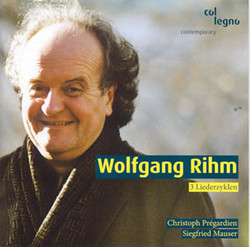
In the three song cycles of this recording, Wolfgang Rihm stays faithful to the text and its meaning while paying close attention to melodic line. In choosing to do so, Rihm has a deep lineage in the great tradition of Romantic art song that stretches back to the distinguished names of Schönberg, Berg, Brahms and Schumann. Approaching the text both from the perspective of the singer and from that of the accompanying pianist, Rihm is able to reach tremendous heights of expression. While the eleve…
Sold Out
Olson III
A piece of unrelenting intensity, Olson III may be one of the most powerful compositions from minimalist composer Terry Riley. Based on the same phasing principals of In C, Olson III is filled with short motives that each ensemble member must play and repeat before moving onto the next. A chorus singing "To begin" joins into the droning fray of string instruments, sawing away à la In C. For 53 minutes here, Riley (on soprano saxophone) and a teenage student orchestra at the Nacka School of Music…

Realites Servomecaniques
CD album, high-end Super Jewel Box limited edition of 500 copies. “Réalités servomécaniques” is an improved version faithful to the original recordings with visuals specially reworked, answering to a categorical assertion, theoricaly and practicaly on Vivenza's bruitist point of view, who presents sounds, « noises », under their rawest and genuine aspect: sounds are machines / machines are sounds. Thus Vivenza captured the essence of factories with a strong sense of austerity, radicality, vertic…
Sold Out

Oboe Concertos
The oboe more than suited Maderna's partiality for clear structures and sensual-concrete sounds. It was not without good reason that at a time when the supply of music dedicated to the oboe was anything but plenty, Maderna wrote, not one, not two, but three concertos (besides several other works for oboe) for this "nasal" sounding member of the woodwind family. The first oboe concerto (1963) seems almost classical in its character, in the interplay of oboe and orchestra, or involving other instr…
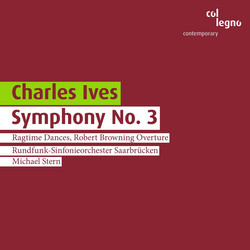
Symphony No. 3
Charles Ives (1874-1954) earned his living by selling insurance policies to his contemporaries. Besides, he took a great interest in literature, philosophy and, first and foremost, music. And what came of it? The most original modernist music one could imagine. Ives's Third Symphony was inspired by his memory of camp meetings, the Christian "evangelistic gatherings" common in his youth. However bizarre these meetings may appear to us, they were a familiar feature of rural America especially duri…
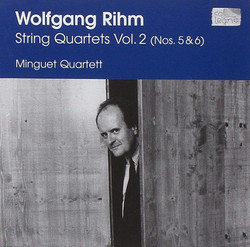
String Quartets Vol. 2 (Nos. 5 & 6)
That the two single-movement string quartets No. 5 (“Ohne Titel”) and No. 6 (“Blaubuch”), composed in 1981/83 and 1984, belong to the most passionate of Rihm’s quartets is due to their restless vigor. This impulsive approach is of course always present in his music. But even the tempo indications “fast, restless” and “fast und free” suggest a certain stringency - which is fully realized in the pieces. A sense of inner disquiet pulls the listener like a maelstrom into a sea of commotion, of stru…
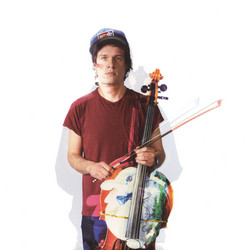
Calling Out Of Context
Now I know what it's like to assume you know what Arthur Russell sounds like. Back in the day, those comfortable with his modern classical accomplishments were baffled by his acetates of loopy leftfield disco. Likewise, lovers of these dance tracks were confounded by their beatless, beatific recasting on World of Echo. And then there were listeners astounded by the intimacy of his voice and cello work, stymied by both the pop songs and the classical works, all spinnin…
Sold Out
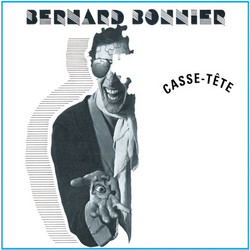
Casse-tete
Composed in 1979 and edited on LP in 1984 by Amaryllis. Reissue on cd by Oral, 2008. Contrary to an electronic music delighting itself in soaring above reality in self abstraction, the concrete music of Bernard Bonnier has a down on earth hearing, and a dancing too, altough now and then out of beat. Bernard Bonnier has defined chameleon-music as: '...a mime* trying to beat its parth through the puzzle (casse-tête: literally 'head-breaker') of soliciting madness, sundowns, violence, science, love…
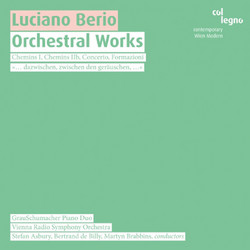
Orchestral Works
The second CD of col legno's Wien Modern Edition is dedicated to Luciano Berio, who throughout his life kept on searching for new sounds, and new instrumental and orchestral organizing principles in his work. His Sequences for solo instruments are among the most important landmarks in recent music; later on, Berio decided to "comment" on some of these notoriously complex solo works from an orchestral perspective. Chemins and Chemins IIb are adaptations of the Sequences for harp and viola. "The b…
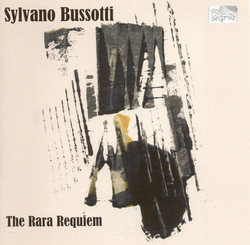
The Rara Requiem
Added to these are bits and pieces of first names of real people and opera characters, and numerous quotes from older works by Sylvano Bussotti – who combines it all to a work that is also a grand opera: The Rara Requiem was written as the third part (acts 4 and 5) of Lorenzaccio (1968-72), the story of a renaissance man. A pandemonium of sounds, the subtotal of Bussotti's previous oeuvre – and the celebration of a proud renaissance man who confronts death with the courage of contempt. "The musi…
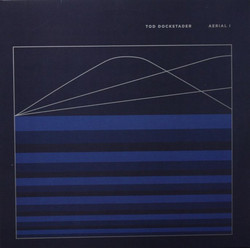
Aerial
Tod Dockstader is one of the all-time great figures in the world of musique concréte composition, with his "organized sound" works from the 1960s being amongst the most radical ever conceived -- in league with Schaeffer, Henry, Stockhausen, and Varese. Aerial is a rare new work in the realm of shortwave radio, from one of America's most experimental composers. This release is the first (Volume 1) in a three-part series. "I've written before of my interest in shortwave radio. When I was ve…
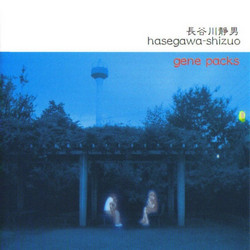
Gene packs
Hirotomo Hasegawa : ichiriki, voice, loops. Shizuo Uchida : bass, ichigen, loops. Debut album by a new improvisation group consisting of Hirotomo Hasegawa and Shizuo Uchida. Both have a leather-bound folder full of underground back-story. Hasegawa was the lead singer of seminal early eighties Japanese punk hardcore group Aburadako (Greasy Octopus), while Uchida was a long-term member of Haino's Nijiumu medieval dream-drone unit. The group's instrumentation is highly unorthodox, placing Uchida's …
Eclipse
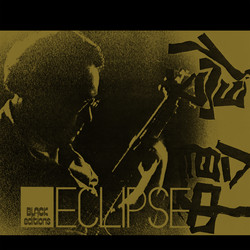
Originally released in 1975 as an LP on Iskra Records (ISKRA-001). 'First session 1: Gradually Projection'. 'First session 2: Gradually Projection'. 'Second session: Mass Projection'. New Direction Unit are Masayuki Takayanagi: electric guitar. Kenji Mori: alto saxophone, flute, recorder. Nobuyoshi Ino: bass. Hiroshi Yamazaki: drums, percussion. Recorded by Mikio Aoki in Tokyo, March 14, 1975. Includes liner notes in English by Alan Cummings.
Sold Out
The Bird And The Giant
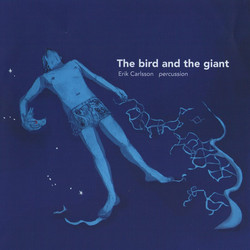
restocked: Swedish percussionist Erik Carlsson in a solo work using multi-tracking to create a set of composition ranging from ominous environments to quirky abstractions, an excellent collection of modern percussion pieces. "This is a fine album of carefully constructed, but also somehow partly unconsidered works by a finely talented musician. The six pieces each make clear musical statements, separate to one another and yet they form a well rounded, nicely balanced suite when brought tog…
Whitehouse
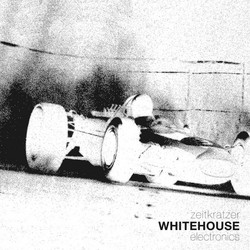
This project involves the unique German avant-garde orchestra performing a selection of tracks from the Whitehouse catalogue. The rehearsals and mixing were done in collaboration with William Bennett but he doesn't actually perform on the recordings. Anyone familiar with Zeitkreitzer's Rendition of Lou Reed classic Metal Machine Music will be fully aware that these guys can magnificently translate noise music and in this case electronic music through acoustic interments. Bennet's compositions h…
Sold Out
Fanfare For The Warriors
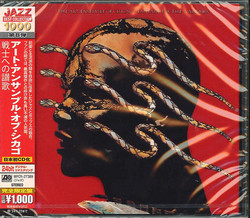
Fans of the A.E.C. and cutting-edge-music rejoice! Long unavailable in this country, the Art Ensemble of Chicago's landmark album recorded in 1974 for the Atlantic label is back in print. Though not "easy listening" to be sure, the A.E.C. present challenging music that's worth the effort. Witness the relentless, Louis Jordan/Louis Prima-rooted swing of "Barnyard Scuffel Shuffel" and the sublime African/Japanese/Javanese-influenced rhythmic soundscape of "What's To Say." The eerie, pensive, breat…
s/t
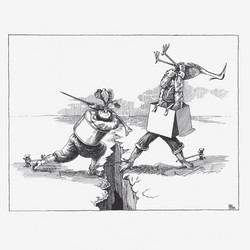
Recorded live at Verity's 1972, this CD represents possibly the finest duo performance of Derek Bailey and Han Bennink. Reissue of the rare LP on Incus
Arabbox
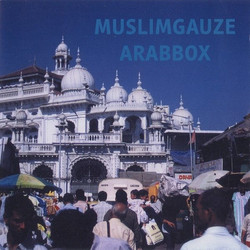
recorded in 1993 following the first Gulf War. 10 years later, following the second Gulf War, Soleilmoon is pleased to finally release this important Muslimgauze album. On April 15, 2003, we issued it in an expensive limited edition of 500 copies, packed in a hand-made metal box. This second edition, in an edition of 1000 copies, is released without the box but has a friendly price. It's commonly known that Bryn Jones, the late musician behind Muslimgauze, was driven by the passion of th…
Way Out
The Books have a terrific sense of humor-- and it makes The Way Out, an album built on eccentric vocal samples, a good-natured discovery instead of a cheap piece of mockery. Imagine if a blog had posted these clips of goofball hypnotherapist and meditation consultants, or found a tape of a boy and a girl swapping violent threats with each other: You'd chuckle and move on. But when the Books use these samples, they give them integrity. You find yourself engrossed with people …
The boys
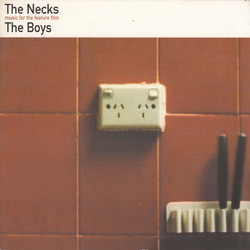
Sound-track to the prize-winning movie. The Necks break with convention here and put several shorter pieces on one CD. All gems and all pared back to the reiterative imperfection that is the Necks' unique and glorious signature. This a band that seems to be coming into its golden age. Prodigious music and highly recommended.
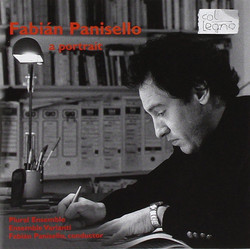
a portrait
Karl-Heinz Stockhausen is only one out of several composers with whom the conductor Fabián Panisello has worked. Panisello, among others, has conducted the premiere of Stockhausen’s Hoch-Zeiten. Having studied with composers as diverse as Elliot Carter, Brian Ferneyhough and Luis de Pablo, Panisello was able to draw inspiration from them for his own compositional work, while never allowing them to leave visible footprints. His style developed entirely independently. The present recording brings …
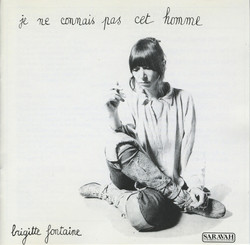
Je Ne Connais Pas Cet Homme
Beautiful duets between Brigitte Fontaine and Areski -- and an album that's filled with loads of short little tracks that stand with some of their greatest work ever! Instrumentation is spare, but incredibly haunting -- a bit jazzy at times, slightly experimental at others -- but always quiet enough to allow the slightly-whispered vocals of the pair dominate the record. There's a strong sense of poetry here -- but without any of the stiffness or pretension that might imply -- and the re…
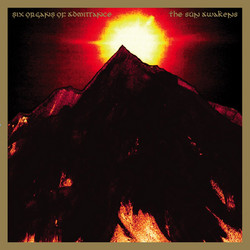
Sun Awakens
Ben Chasny has busied himself releasing a solid run of outsider folk records for some time now; ‘The Sun Awakens’ is his eighth full-length outing and thankfully it shows no signs of Chasny letting his quality control wane. As he explored on his last Drag City release ‘School of the Flower’, Chasny has again employed a handful of collaborators to fill-out his unique sound with percussion and odd instruments – yet this doesn’t distil the fact that the record is totally his own. "The Sun Awakens" …
Darmstadt 2004
The "devil's organist" in action: if you really want to know what the "Queen of Instruments" is all about, make sure to experience Wolfang Mitterer play it live.Mitterer's organ event at Darmstadt in 2004 included not only works for organ solo but also synthetic sounds. In the piece mixture V (1995) he adheres to the principle indicated in the title, the mixture, in various respects – on the one hand in terms of organ technique and sound, on the other hand by his way of combining organ and elect…
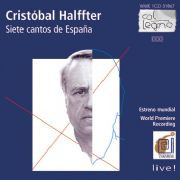
Siete Cantos De Espana
The three cultures at the center of the songs on this recording make a joint appearance in the finale of the Siete cantos de España. They are formed into a unified whole in Ensalada, as the soprano and the baritone begin singing together texts of Castilian, Sephardic and Arabic origin. The poems’ subjects are love, agony and death; and in order to bring them to life Halffter requires a large orchestra of about 100 musicians and two soloists with the baritone singing Spanish texts and the soprano…
Adlib
He lives in Rostock, Germany and studies informatics. Petters combines perfectly the software computer culture with intensity. His music reflects so much emotion through electronic wires -- you start wondering why more electronica people don\\\'t succeed in the same way. Everything is done with a detailed precision which makes it difficult to relegate this to the background. Even if its \\\'ambient\\\', it still turns your brain around and hits you. Adlib is another moniker from the young Kristi…
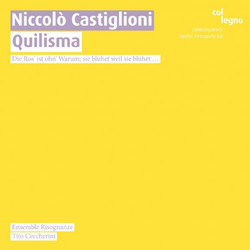
Quilisma
The succinctness of his work will first become fully apparent when it becomes possible to view the second half of the twentieth century from something more like a bird’s-eye view.

Red Rainbows
Last copies, nice price....Debut CD from Brooklyn musician and film maker Sarah Lipstate. Red Rainbows is full of growing tonal drones that evoke visions of menacing multicoloRed skies alongside tracks full of beautiful minimalistic structures that shoot straight for the heart. Sarah uses double-neck guitar and various electronics to create breathtaking atmospheres with an intensity that works on both a cognitive and emotional level. These tracks are either really beautiful or really dirty when …
For Bunita Marcus
For Bunita Marcus was written in 1985. "This work, which I have dedicated to Bunita Marcus, [...] deals with the death of my mother, and with the notion of a slow death. I simply didn't want the piece to die. So I used this unwillingness compositionally in order to keep the piece alive, like a patient suffering from an terminal disease, for as long as possible." (Feldman) It is not the loud raging, the last furious revolt of a dying human being that Feldman depicts here, but a slow nodding off a…
Sold Out

Cathédrale
Concert music for solo harp: The harp, whose ancestor belongs to the most ancient musical instruments, is usually associated with impressionistic sound. But Roman Haubenstock-Ramati - the most visionary inventor of sounds among contemporary composers, according to Wilhelm Sinkovicz – has never been satisfied with the status quo. So, while teaching composition and investigating new forms of musical notation, he succeeded in his endeavor to explore new possibilities of musical expression again and…

Icarus
This 1972 classic captures saxophonist Paul Winter and his ensemble at the height of their improvisational powers. Winter was one of the first artists to incorporate such exotic instruments as the sitar and tabla into his music and the result was memorable chamber jazz-folk played in the wonderfully experimental, post-hippie way only Winter and his merry band could. The title track, one of guitarist Ralph Towner's compositions, became famous for its pensive melody and soaring soprano sax. "Whole…
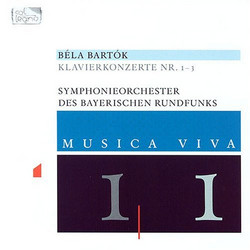
Musica Viva 11
Today, the piano concertos by Béla Bartók are regarded as works of classic modernism and are considered suitable even for conservative audiences. Musica Viva, the concert series for contemporary music in Munich, included the piano concertos in their program back in 1957, a time when it was by no means a matter of course to hear this music in established concert halls. The man at the piano was one of the greatest of his trade: Géza Anda, a fervent and uncompromising advocate of Bartók's oeuvre, w…
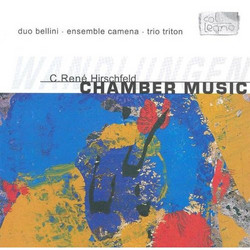
Chamber Music
“Art can give us a sense of the infinity of existence, the singular unity of all beings and phenomena as the apparent dualism between the inner and the outer is dissolved. Art can allow us to experience what it means to be alive. It can lead us back to our own sensuality, spirituality, and emotionality - to the very core of our selves,” said Caspar René Hirschfeld. This distinctive conception of art also informs Hirschfeld’s compositions, which are probably best described as objects of immediate…
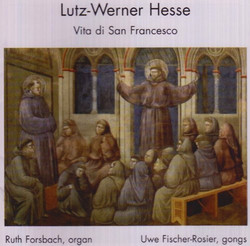
Vita di San Francesco
When, in the summer of 1992, Lutz-Werner Hesse visited St. Francis’s hometown in Umbria, he was deeply moved by Giotto’s frescos in the Basilica. Using prints of the frescos, Hesse later developed a dramatic sequence, which was meant to serve as the basis for a composition revolving around the life of the saint. Gongs had always held a special fascination for Hesse. So, for this piece, he pitted 13 gongs against one organ: “The organ, I thought, is a particularly suitable partner for the gongs s…
In Stereo
'Written and performed by Christian fennesz, Jim O'Rourke & Peter Rehberg. Recorded and mixed at Studio GOK Sound, Tokyo, October 2009. Mastered at Piethopraxis, Köln, December 2009. 'Thats right, they're back! After a hiatus of almost 9 years the legendary trio of Christian fennesz, Jim O'Rourke and Peter Rehberg have returned with a new studio album. Technically the first studio album as previous releases were edits of live performances. They spent a week in Studio GOK Sound, Tokyo to lay down…
Sold Out
Glissando n.1
Restocked “A trance-tape piece, constituting the entirety of the genre called Illuminatory Sound Environment, composed in the 70s in response to Catherine Christer Hennix’s “Electric Harpsichord. ” John Berdnt’s enthralling liner notes explain ISE as “an unfurling sound field of overwhelming but far from gratuitous sensuality, a highly “tuned” texture where all of the aspects are coordinated to make a deeply unusual “whole”, a new kind of perceptual gestalt... The piece has a disorienting flow t…
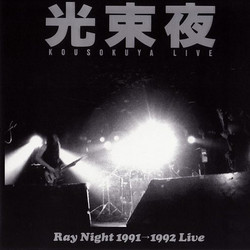
Ray Night 1991-1992 Live
First ever CD by this legendary and ultra-obscure Japanese psychedelic rock group. Kousokuya are from Tokyo, have donated some spectacular tracks to the first two volumes of the Tokyo Flashback compilation series on the PSF label, and self-released an extremely ltd. LP in 1991. The band has been around for quite some time; I originally was under the impression they formed around 1984, but was recently informed that an edition featuring Nanjo and Narita from High Rise existed going back to the l…
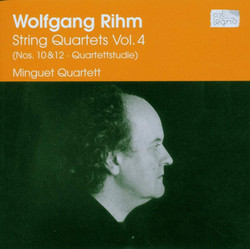
String Quartets Vol 4
The most recent of his compositions which Rihm called “string quartets” date back a few years already, with a gap in the enumeration still waiting to be filled (the eleventh quartet is missing). Even a cursory comparison of the three works’ beginnings reveals Rihm’s “ability to find new and distinctly characteristic solutions for each piece, which, each in their own way, put a stamp on what is to follow.” (R. Frisius) The gentle pizzicati of Quartet No. 10 and the muted, shadowy chord of No. 12 …