Music from United States
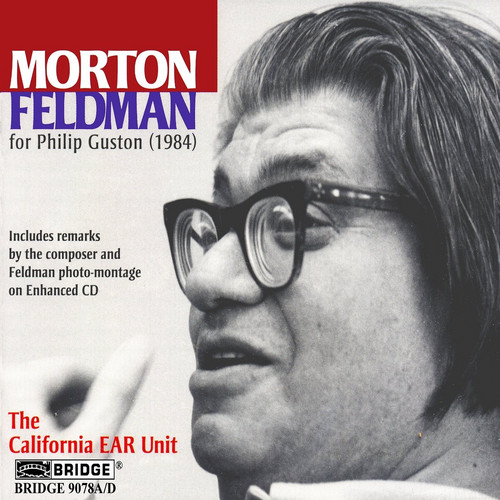
For Philip Guston
Here is the California EAR Unit’s recording of the late Morton Feldman’s monumental, 4 hour long For Philip Guston (1984). Included in this discount priced, 4 disc-set is an enhanced multimedia track, which includes Feldman’s remarks as well as a photo montage of the composer. Morton Feldman stands as one of our century’s darkest and quietest musical poets. His music seems a muffled yet spiritually inspired reaction to the speed, noise and horror of the events of the 20th c…
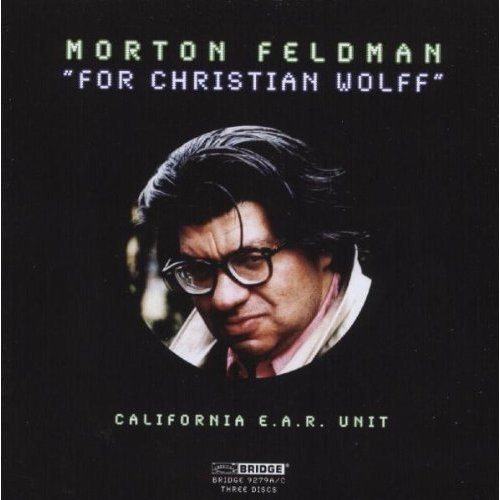
For Christian Wolff
For Christian Wolff is one of Morton Feldman's final compositions, and stands alongside the four-hours-plus For Philip Guston, the 70-minute For John Cage, and the six-hour String Quartet II. Writing about hearing this work, Christian Wolff says that 'I found the experience of listening to it beautiful and interesting -- it moves away partly from our (Morty's, John Cage's and mine) original preoccupation with just sound and sonority into areas of self-awareness about listening, being a listener,…
Sum things
the new album by the über-prolific and often esoteric Z'ev sees this musician leaves the drums aside and focus on long, slightly noisy and constantly rumbling low-frequency drones. Dark and brooding, but clearly grittier and dirtier as, let's say, Lustmord, "Sum Things" is a decidedly atmospheric album in the truest sense of the word, but will also appeal to anybody interested in dense, carefully laid and deep drone works."Through an element darkly… In the fall of 2005 Z’EV began dipping deep in…

Bust This!
This is an original copy of "Bust This", by far one of the best Z'ev albums,chosen in 1988 by The Wire as one of the greatest 50 percussion albums of all time. His brand of scrap-metal/found object percussion originates in intense musical training and background. Beginning with his days at the California Institute of the Arts, Z'EV has studied techniques such as Balinese Gamelan, EWE (Ghana), Tala (south India), and Vou Dun (Hati).

Poextensions & Contexts
One of the earlier Z'ev recodings, under his real name (Stefan Weisser) this amazing artist records develops a personality all it's own, a wonderfully crafted noise product to be played at any speed, depending on the mood, drugs, or time at hand. Pioneered by Lou Reed's "Metal Machine Music," the only comparison to be found. Complete of all the instert, hand signed
Homage To The Sine Wave
Already out of print, Eleh resurfaces from the depths with a new full-length release on TAIGA records. Homage to the Sine Wave is the second release in the sound wave series following 2008's sold-out LP, Homage to the Square Wave. In a fashion similar to Square Wave, the elemental approach to construction of the pieces on Sine Wave is influenced by Josef Albers, the visual artist best known for his color studies embodied in paintings of
geometric abstraction. Both faces feature sidelong composi…

Instrumentals For The Broken Hearted
As sold on recent tour - Limited to 500 copies on clear green vinyl with all handpainted covers. This record features 5 instrumental mixes of songs from the latest kranky lp (songs for the broken hearted). These mixes are completely different & in some cases hardly sound like the kranky version. There is also a sixth song which is unreleased. The covers were made using recycled lp jackets, all white washed & then painted on. Some have concrete designs & some are very free form. Photocopied tour …
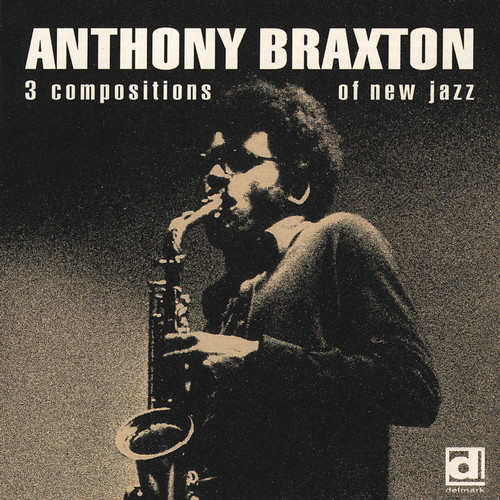
3 Compositions Of New Jazz
The mid-'60s formation of Chicago's musician collective, the Association for the Advancement of Creative Musicians (AACM), proved a watershed event for jazz, providing a springboard for some of the next few decades' most influential performers, including the Art Ensemble of Chicago, Muhal Richard Abrams, and Anthony Braxton. In many ways, Braxton's Three Compositions of New Jazz is that movement's manifesto. Seeking a new degree of abstraction and purity, Braxton opted to eschew drums or bass on…
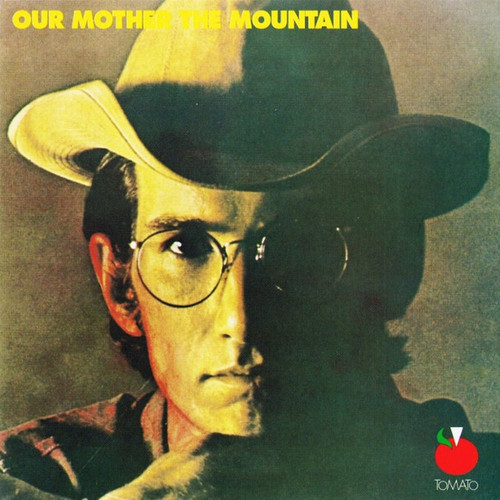
Our Mother The Mountain
Fat Possum's reissue of Townes Van Zandt's first four albums, along with 1978's Flyin' Shoes, squanders the opportunity to re-envision and expand an understanding of the songwriter in simply replicating the originals. Neither new liner notes nor bonus tracks accompany the series, which, weighed against the benefit of hindsight and existence of more popular live recordings, lends the albums little new significance other than their availability. The lack is particularly telling on Van Zandt's firs…
No Magic Man
Finally, we have managed to track down copies of one of the most revered Sunburned Hand of the Man records in existence. Originally pressed up by the prestigious Arthur magazine's own imprint, this handmade reissue (straight from the Sunburned Men themselves) takes the factory made cd and plonks it in a very plush gatefold hard-cover with handprinted artwork. 'No-Magic Man' was the first time that the band submitted a truly coherent album, prior to this their cds although insanely good were more…
Olson III
A piece of unrelenting intensity, Olson III may be one of the most powerful compositions from minimalist composer Terry Riley. Based on the same phasing principals of In C, Olson III is filled with short motives that each ensemble member must play and repeat before moving onto the next. A chorus singing "To begin" joins into the droning fray of string instruments, sawing away à la In C. For 53 minutes here, Riley (on soprano saxophone) and a teenage student orchestra at the Nacka School of Music…
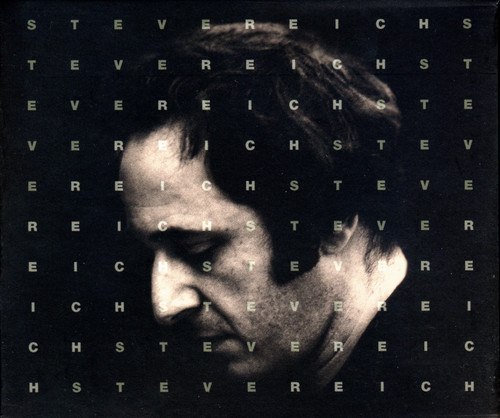
Works, 1965-1995
Massive and essential! This box set gives the listener all of Reich's major works. I can't even attempt to describe them individually, but every one of these 10 CDs is compelling. For the totally uninitiated, take out "Music for 18 Musicians" (presented here in a crystalline new recording) to get an idea of what the core of this guy is all about. From there, you might want to listen to "Different Trains," "Electric Counterpoint" and "Six Marimbas" to get an idea of the pointillistic pulse minima…

Magnificence In The Memory
Early archival recordings: brand new release of never-before-heard material from the heyday of Ya Ho Wha 13, featuring the legendary Father Yod and his sons playing improvisational, psychedelic spirit music recorded in the wee hours of morning meditation. Father was a wealthy man, with a rich inner life, a family of disciples that loved him, many, many women and seemingly unlimited power. So why at the height of his success, did he choose to spend his time playing rock and roll? Having a band in…
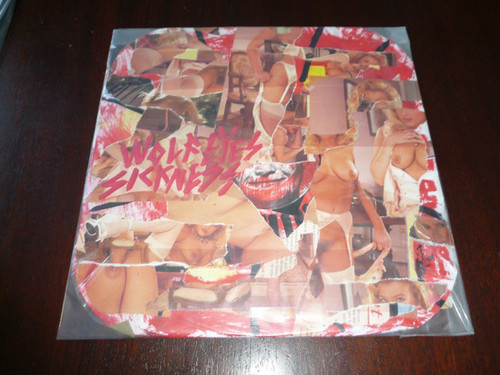
There Is A Part Of Me That You Will Never Know
Already out of print, this is the first-ever collaboration between these two legends, Wolf Eyes and Sickness. This is not haphazard but a symbiotic collaboration bridging distant roads. This full length LP is a dark casket of scorched earth sounds, the remains of the cracks at the after shock of discovery. Reminding us of the peaks in either artists' catalog, There Is A Part Of Me That You Will Never Know processes the deepest sounds of these four masters in a haze of lone atmosphere and true no…
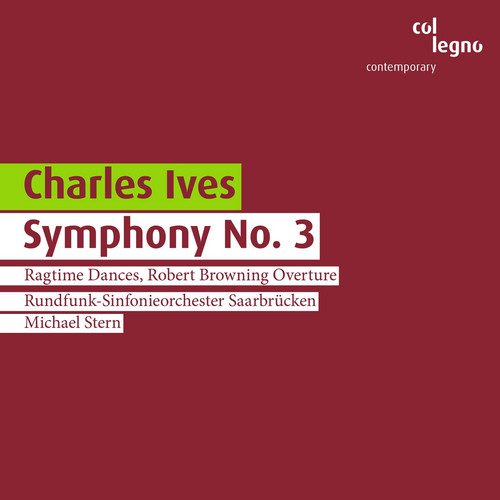
Symphony No. 3
Charles Ives (1874-1954) earned his living by selling insurance policies to his contemporaries. Besides, he took a great interest in literature, philosophy and, first and foremost, music. And what came of it? The most original modernist music one could imagine. Ives's Third Symphony was inspired by his memory of camp meetings, the Christian "evangelistic gatherings" common in his youth. However bizarre these meetings may appear to us, they were a familiar feature of rural America especially duri…
Universe Symphony / Second Symphony
The most ambitious and grandest of his projects would of course never see completion. For over forty years, Ives continued to supplement the material for his Universe Symphony, adding both notes and details. At some point, the scenario he envisaged got somewhat out of hand, Henry Cowell reported. “Several orchestras and large parties of singers, male and female, were to be placed in valleys, on mountain slopes and on summits,” and “6 to 10 different orchestras on several mountain tops, each movi…
Music for a Summer Evening / A Little Suite for Christmas / Five
Music for a Summer Evening (1974) is the third part of the "cosmic drama" Macrocosmos, which investigates the relations between the innermost human soul and the vastness of the cosmos; relations that also determine the temporal, dynamic and tonal dimensions of the composition. Its immense material extravagance is reflected by a range of some 70 percussion instruments; in addition, the two pianists are required to perform a variety of different techniques, such as pizzicatos, flageolets, etc. A s…
Gnomic Variations / Processional / Ancient Voices of Children
On reading the title Gnomic Variations, lovers of piano music might fancy themselves to be in a kind of "Grieg's World," but the truth is far from it: the title of the piano solo, completed in 1981, does not refer to any thieving Irish gnomes but solely to the conciseness of the structure of the work. "Gnomic" here means expressing an idea in brief words, or, simply, describing a maxim as accurately as possible. The Gnomic Variations consist of three parts, comprising a total of 18 variations. A…
Concerto for Prepared Piano and Chamber Orchestra / Sixty-Eight
For each of his compositions for prepared piano Cage created a specific piano preparation chart, setting out in meticulous detail the strings to be prepared, and the materials and manipulations to be used for preparing them. For the Concerto for Prepared Piano and Chamber Orchestra (1951), 53 tones of the keyboard must be prepared; and in this case Cage himself was astonished at the complexity of these preparations. The range of sounds is further expanded by an extra bridge installed in the pian…

Works For Prepared Piano
John Cage was a student of Henry Cowell and Arnold Schönberg and made use of innovations of both of his teachers, promptly integrating them into his own creativity – and turning them into something completely different. He adopted Henry Cowell's idea of altering the sound of a piano by interfering with the strings, thereby expanding the instrument's range of expression to a downright undreamed of extent. And as for Schönberg's twelve-tone system, Cage playfully extended it to a 25-tone system, o…