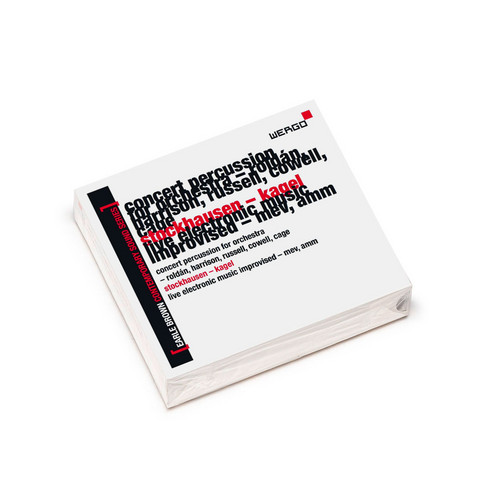
Earle Brown Contemporary Sound Series Vol. 1
Few figures of the American avant-garde wore as many hats as Earle Brown. Composer, graphic notation pioneer, member of the New York School alongside John Cage, Morton Feldman, and Christian Wolff - but also, and crucially, a record producer whose ear shaped one of the most important document series in 20th century music. Between 1960 and 1973, working first for Time Records and then Mainstream Records, Brown curated the Contemporary Sound Series - 18 LPs presenting works by 49 composers from 16…
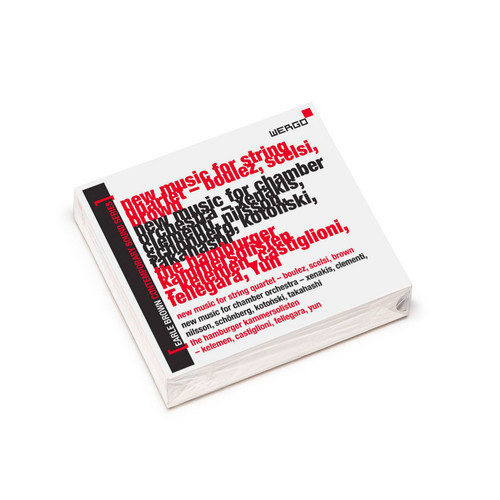
Earle Brown Contemporary Sound Series Vol. 4
"Wergo's reissues of the legendary Earle Brown Contemporary Sound Series have been a big hit with fans of contemporary music around the world. Each set is a treasure-trove of works by a wide range of composers, performed by some of the finest musicians of the time. The three CDs of volume four feature string quartets by Boulez, Scelsi and Earle Brown, works for chamber orchestra by Xenakis, Aldo Clementi, Bo Nilsson, Wlodzimierz Kotonski and Yuji Takahashi and works by Milko Kelemen, Niccolo Cas…
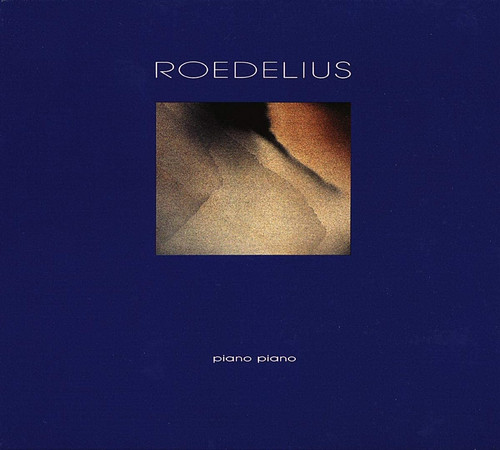
Piano Piano
Bureau B reissues Piano Piano by German keyboardist Hans-Joachim Roedelius, originally released in 1991 on the Italian label Materiali Sonori. In classical music, "pp" (piano piano = pianissimo) is a dynamic indication of particularly soft music. And Piano Piano is a very soft, quiet album. Roedelius assumes the role of a fairytale character with his piano music, transported to a strange, fantastical landscape where, filled with awe and amazement, he tries to get his bearings. What he see…
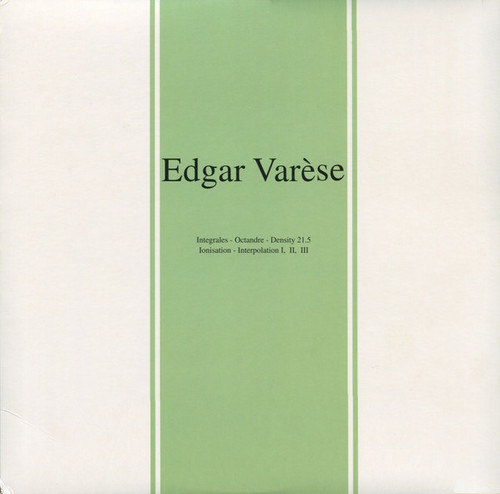
Early Works
Indispensable 180g vinyl pressing of eight super-important compositions by the "Father of Electronic Music" dating back to 1923! Most notably - for us at least - it includes the incredible percussion pieces 'Ionisation' and 'Integrales' played by the Julliard Percussion Ensemble which are worth the admission alone - but then you've also got the three tape pieces 'Interpolations I, II, III' from 'Déserts' circa 1950-54 which seals the deal: ESSENTIAL** "The French-born Edgar Varèse (1853-1…
Kompositionen 1950 - 1972
A portrait of Christian Wolff, documenting the composer's early activity through recordings made close to the time of their composition from artists including Cornelius Cardew, Frederic Rzewski, David Tudor
Sirenes
Works from Volker Heyn, an outsider artist interested in acoustic process, tone gestures, friction, discontinuous movements
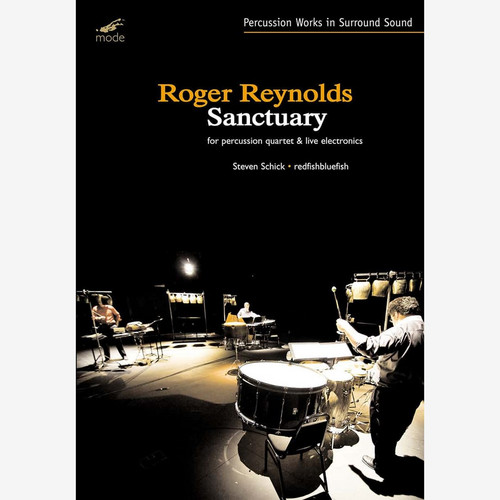
Sanctuary
Roger Reynolds's Sanctuary for spatially distributed percussion ensemble and live electronics, presented in three versions on a double DVD: a studio performance, a live performance at the National Gallery of Art and excerpts from the Salk Institute.
Iconicities
3 amazing pieces for Percussion and Live Electronics by Chris Brown’s (b. 1953) whose music has evolved within the intersections of many different traditions and styles. Following early training as a classical pianist, he was influenced by studies of Indonesian, Indian, Afro-American, and Cuban musics, and then took off on branches provided by the American Experimentalists in inventing and building a personal electronic instrumentation. Collaboration and improvisation have been primary in …
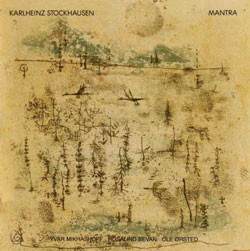
Mantra
Composed in 1970, Stockhausen's Mantra is a duet for piano written for the Donaueschingen Festival. It is Stockhausen's first completely scored piece after a long string of largely improvised compositions. Here both pianists play ring-modulated pianos, cymbals, and a wood block. One player is also controlling a recording of Morse code. The purpose of this composition was to explore the idea of a musical 'mantra.' The repetition of sounds are intended to place both the audience and the mus…
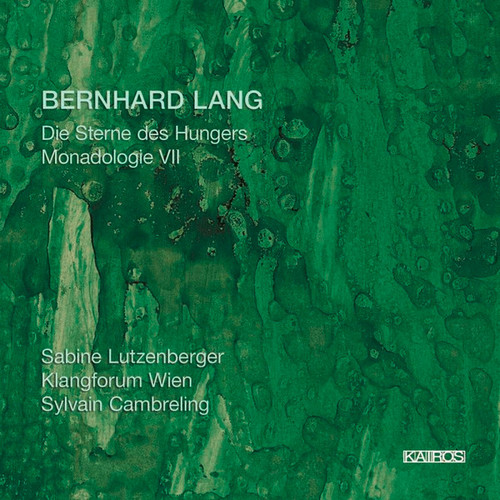
Die Sterne des Hungers
The Stars of Hunger, was composed in 2007. It is based on three poems by the Austrian poet Christine Lavant: “Im rueckgrat aufwaerts glimmt ein licht,” “So also geht erleuchtung vor,” “Zeig an mir die kräuter welche bestärken” and “Lösch aus mein gesicht und führe mich blind.” Rather than set the poems themselves to music, Lang used the text generation program Abulafia to produce from them a cut-up in the tradition of William S. Burroughs. The composition contains only fragments of the po…
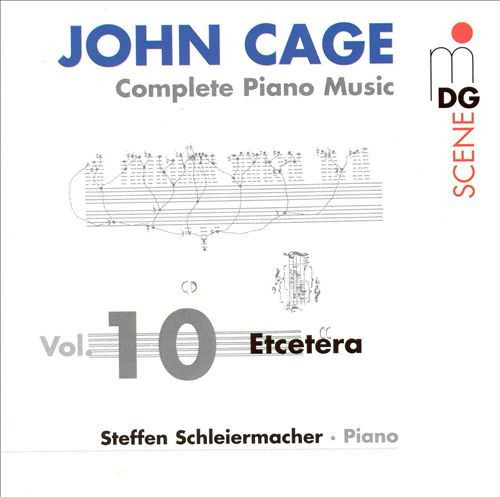
Complete Piano Music Vol. 10 - Etcetera
“The interpreter is a very important person indeed in Cage’s piano music, and a top international expert like Steffen Schleiermacher is a must for a complete recording such as this one: he knows the nuts and bolts and all the fine nuances.”

Il lungo treno di Cage
* In Italian * L’arte contemporanea raccontata con lo sguardo di un’artista orientale che da anni studia la cultura occidentale, esplorando le sinergie tra arte e musica.L’autrice parte da Kandinsky e Schönberg, segue con passione le tracce di Duchamp, Cage e degli artisti di Fluxus, l’intreccio delle loro storie artistiche e personali. Giunge fino a Nam June Paik, padre della videoart.Con sguardo minimalista, in linea con i principi di Fluxus, disegna, attraverso gli incontri e le amicizie tra …
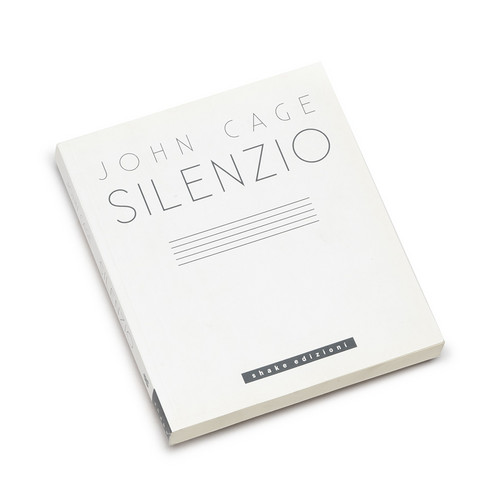
Silenzio
*Italian language edition* This volume presents fully translated into Italian the landmark texts of the post-World War II musical avant-garde. Master John Cage revolutionized the traditional and academic concept of music and pushed into new frontiers of sound experimentation by applying the method of composition through consultation of the I Ching. And without forgetting to fascinate the reader with the narration of episodes from his life, which rise to the role of Zen parables.
Night Studies
Somewhere between Alex- ander Rodchenko, Jackson Pollock and Charles Ives: Marino Formenti's piano studies based on an instal- lation by Florian Pumhösl as a listening experience! The brilliant Italian pianist has placed compositions by Charles Ives (»Thoreau« from the Concord Sonata, the song »Tom Sails Away«, and »Study 11«) under his magnifying glass and studied them, has taken them apart, searched them for resonances, assonances and silences, and confronted the results with Ives’ own methods…
Kontinent Varèse
On"Kontinent Varèse" col legno has assembled seven major works of a pioneer of electronic music, performed e.g. by the Ensemble Modern Orchestra, the RSO Vienna and Martin Grubinger!Edgar Varèse is regarded as one of the pioneers of New Music, and with good reason. His piece “Ionisation” was the first-ever composition written exclusively for percussion ensemble to be performed in a traditional concert hall setting; and he explored and searched intensely for sonic experiences. Varèse integra…
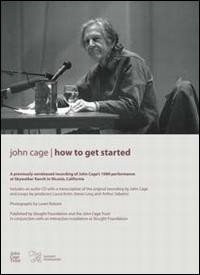
How To Get Started
"John Cage conceived How To Get Started almost as an afterthought -- a performance substituting for another that was previously planned in 1989 for delivery at 'Sound Design: An Invitational Conference on the Uses of Sound for Radio Drama, Film, Video, Theater and Music' presented by Bay Area Radio Drama at Sprocket Systems, Skywalker Ranch, in Nicasio, California. In his introduction, Cage talks about the difficulty of initiating the creative process, while exploring the usefulness of im…
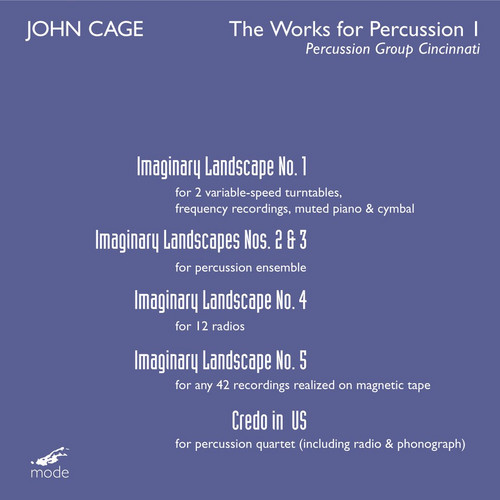
The Works for Percussion I
The complete Imaginary Landscapes 1-5 and Credo in US by John Cage, with radios, phonograph records and percussion, played by Percussion Group Cincinnati in the first volume of the Mode Cage percussion works.
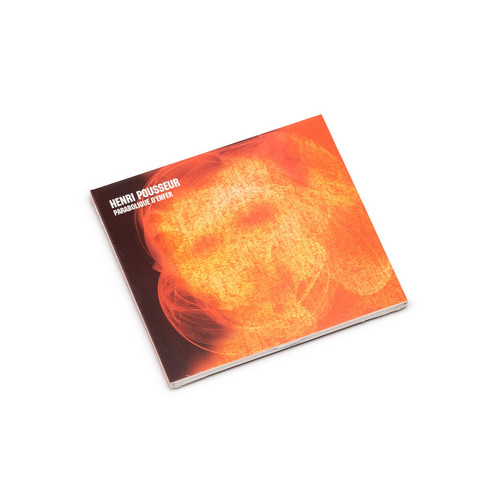
Parabolique d'Enfer / Paraboles-Mix avec Leons d'Enfer
This recording will be Sub Rosa's first posthumous recording of Henri Pousseur. It is the sixth release (out of eight) in their catalog devoted to this composer's experimental and electronic works. It also marks the end of the trilogy of the Parabolic works (following the 1972 unreleased recordings and the 2001 collective performance). This time around, we have a piece built through another major Pousseur work: Leçon d'Enfer (composed in 1990-1991 around Arthur Rimbaud). This previously-unreleas…
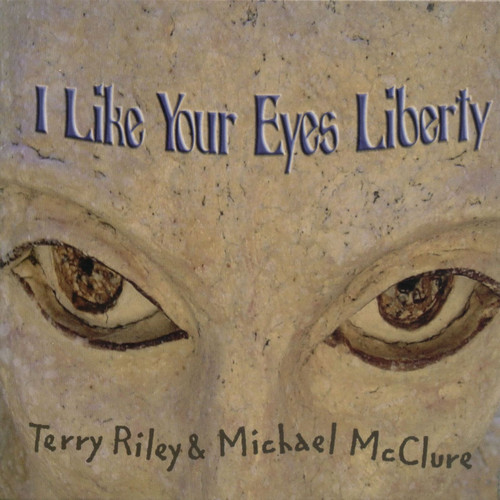
I Like Your Eyes Liberty
"A new collaboration by poet Michael McClure and Terry Riley recorded at the Sri Moonshine Ranch (2003-2004) features the mesmerizing voice of McClure on his own Plumstones: Cartoons Of No Heaven and Ghost Tantras. Riley creates a spellbinding counterpart on his Yamaha Midi Grand piano improvising an effortless undulating sound current which sensuously embraces the rich imagery. A real marriage of two masters of psychedelia."
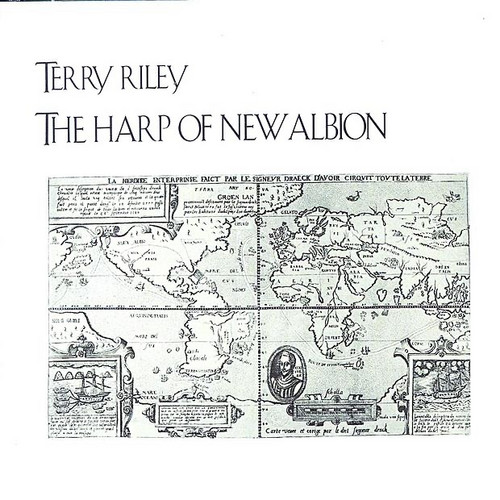
The Harp Of New Albion
The Harp of New Albion is a transfixing solo piano recording, conceived and performed by world-renowned minimalist composer, the ever-innovative Terry Riley. His inspiration for this work came from a legendary harp, left behind in the New World in 1579, on the shores of Nova Albion, which is now called San Francisco Bay. A Native American medicine man is said to have found the harp and placed it on a cliff where the westerly winds played upon it and temperature and humidity changes created an ev…