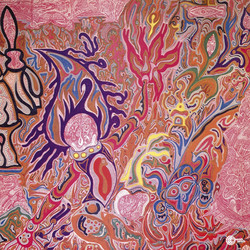
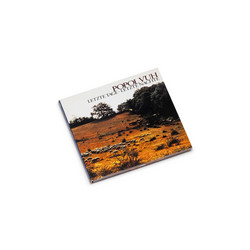
Among the most luminous records ever issued by Popol Vuh, and one of the high points in the singular spiritual arc traced by Florian Fricke across more than three decades of work. Esoteric, reissuing the album on vinyl on July 31st, 2026 in a fresh cut prepared at AIR Studios, London, returns to print one of the essential statements of 1970s German music.
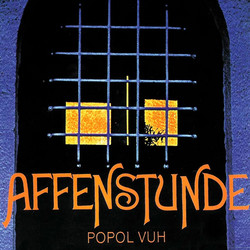
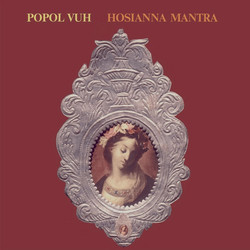
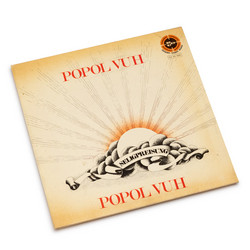
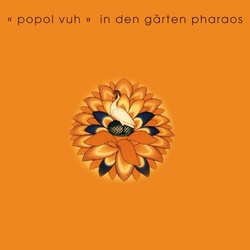
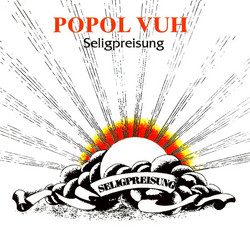
By the time Fricke entered the studio in Munich in 1974 with Daniel Fichelscher on guitars and percussion, Djong Yun on vocals, and Olaf Kübler of Amon Düül II as guest flautist, Popol Vuh had already left behind the Moog-driven kosmische territory of Affenstunde and In den Garten Pharaos and crossed, with Hosianna Mantra and Seligpreisung, into the acoustic, devotional ground that would define the rest of the band's life. Einsjäger Und Siebenjäger belongs to that second arc but stands a little apart, its register more pastoral, more interior, its five shorter pieces opening onto a side-long meditation that gathers everything before it into a single quiet horizon.
The title gestures toward the Mayan sacred text from which the band took its name, naming Hun Hunahpú and Vucub Hunahpú, the One-Hunter and the Seven-Hunter whose descent into Xibalba sets the cosmology of the Popol Vuh in motion. Fricke does not narrate the myth. He receives it. The five movements on the first side, Kleiner Krieger, King Minos, Morgengruß, Würfelspiel, and Gutes Land, fold piano, twelve-string and electric guitar, voice, and flute into something that breathes more than it asserts, song forms loosened into prayer, the rhythms pliant. The side-long Einsjäger Und Siebenjäger on the flip lifts that material into longer cycles, Fichelscher's guitar figures spiralling against Fricke's piano with a patience that brushes against minimalism without ever quite arriving there. Yun's voice, when it enters, is less a vocal line than a clarification of the air around it.
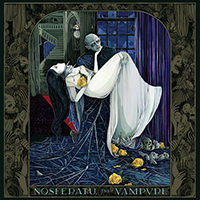
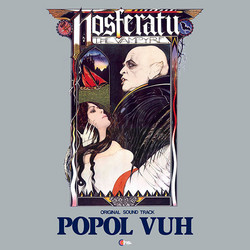
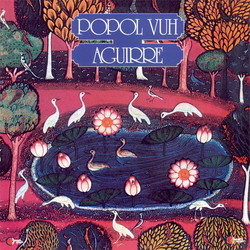
The album sits at the heart of the run of records, alongside the soundtracks composed for Werner Herzog's Aguirre, der Zorn Gottes and the later Nosferatu and Fitzcarraldo, that established Popol Vuh as one of the unrepeatable voices of European post-war music, drawing in equal measure on the German romantic tradition, on early Christian and Eastern devotional forms, and on the experimental ambitions of their kosmische peers without ever sounding like any of them.
Esoteric's new cut, prepared at AIR Studios, makes available again, in superb sound, a record whose beauty has only deepened with the passing of half a century.