Sarah Davachi
From the Ruins of the Literal: Critical Organology, Timbre, and the Poetics of Affect (Book)
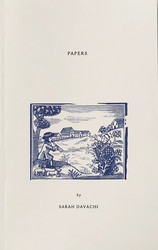
Sarah Davachi's first book, From the Ruins of the Literal: Critical Organology, Timbre, and the Poetics of Affect, published by her own Late Music imprint. The title is borrowed from Paul Ricoeur, whose account of metaphor locates meaning at the point where literal sense gives way. Davachi turns that idea on the study of instruments and timbre, disciplines she sees as long governed by empirical, neuro-cognitive and modernist assumptions. Her objection is not that measurement is wrong but that it stops short: acoustics can describe a spectrum without saying anything about how a sound is inhabited, and the poetic and affective dimensions of listening, which are phenomenological by nature, fall outside its reach.
What she proposes instead is timbre as an emergent construct, a "sound-of" with its own time and space rather than a property attached to an object. To get there she works through theories of affordance, actor-network and dialogic interaction, arguing for mediation, worldmaking and thickness as the terms in which timbral experience actually occurs. The instruments under discussion are not only the traditional ones; anything that can be met timbrally is admitted. Embodied knowledge comes first, ontology second.
The conclusion is less a paradox than an irony. Follow timbral thinking all the way round and you return to the prosaic, to the ordinary business of hearing, but with the ground shifted underneath it.
First edition. 148 pages, perfect bound softcover, royal format (156 x 234 mm).