Ahmed is the quartet of Pat Thomas (piano), Joel Grip (double bass), Antonin Gerbal (drums) and Seymour Wright (alto saxophone), a group that since 2014 has been tunnelling through the music of Ahmed Abdul‑Malik as if it were both archive and prophecy. Their project has never been about tribute in the narrow sense. Instead, they excavate and re‑imagine Abdul‑Malik’s work as a set of coordinates for “future music”: a way of thinking about rhythm, modality, history and struggle that can be reactivated in the present. Records, concerts and long, searching performances are one side of that practice. Ahmed – Writing reveals the other: the dense, ongoing conversation in words and images that has grown up around the band as they work.
Described as a gathering of the group’s “paper” over the last decade, the book brings together liner notes, record covers and essays by the band members themselves. Thomas, Grip, Gerbal and Wright appear here as thinkers as much as players: Antonin and Joel contribute new, previously unpublished texts; Seymour’s writings, which have accompanied the LPs as liner notes and inserts, are recontextualised; some of Pat’s pieces come from long before Ahmed’s formation, tracing the prehistory of ideas that would later feed into the quartet. Around them are crucial outside voices - Robert Levin, James G. Spady, John Chantler, Edward George, Fred Moten - whose contributions place Ahmed’s work in conversation with wider discourses on Black music, diaspora, improvisation, politics and listening.
Wright’s own description of the project gives a sense of its internal logic. These texts, he suggests, are a way of showing “what we have done, do, think together (and apart) in living music, how our different ways come together, and how, together, we learn through be‑doing [Ahmed].” The etymology of “text” as “to weave” becomes more than a neat aside. Writing presents itself as a fabric of enquiry: a collaborative weaving of different backgrounds, languages and vantage points into something that, while not seamless, holds together as a whole. Musical questions - about pulse, about scales, about how to treat Abdul‑Malik’s themes - are never separated from questions about race, class, tradition, labour, or where and how this music gets played.
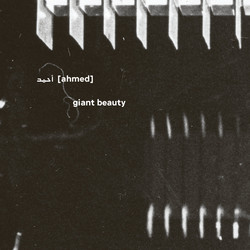
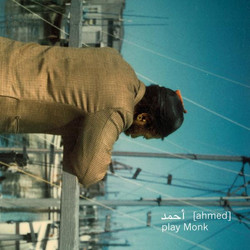
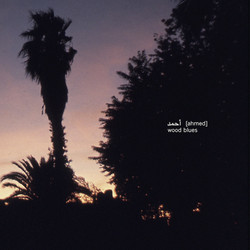
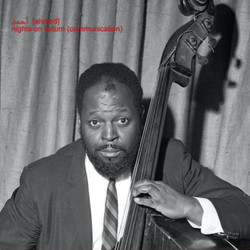
The book also traces, indirectly, how Ahmed’s recorded output has been framed visually and materially. Covers and design elements from the LPs reappear in this new context, acknowledging the original work of Maja Larsson while folding it into a new production and design by Will Holder. In doing so, Writing makes clear that for this group, “the music” is not just what happens between the run‑in and run‑out grooves. It includes the decisions about how records look, how they are titled and annotated, how they travel through labels, venues and listeners’ shelves. The series editors - Stoffel Debuysere, Jef Lambrechts and Holder - help frame this as an ongoing editorial practice rather than a static anthology.
Published by In vitro and KASK School of Arts, Ahmed – Writing stands as an extension of the quartet’s musical method into the realm of print. It is not a tidy retrospective, nor a piece of academic musicology. Instead, it reads like a working notebook collectively kept over ten years: overlapping entries, divergent emphases, recurring obsessions. For listeners already deep into the Ahmed albums, the book offers a way of tracing how those sounds were thought through, argued over, and refracted by others. For new readers, it can act as an unruly gateway into Abdul‑Malik’s legacy and into a band that has made that legacy an engine for ongoing invention.



![[AHAD]/[WAHID]](https://cdn.soundohm.com/data/products/2022-12/-AHAD-jpg.jpg.250.jpg)
![Super Majnoon [East Meets West]](https://cdn.soundohm.com/data/products/036/ahmed-super-majnoon-east-meets.jpg.250.jpg)