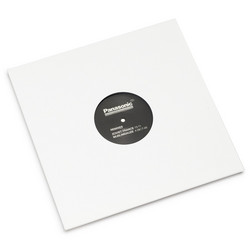
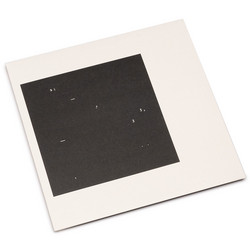
** 2026 Repress ** Kantamoinen marks a quiet but decisive pivot in Mika Vainio’s work as Ø. Long his longest‑running pseudonym, Ø predates even Pan Sonic’s recorded history, with the first Ø album appearing on Sähkö in 1994 and sketching out an ultra‑minimal language of pure voltage, pulse and negative space. Where Pan Sonic tended to treat minimalism as a blunt, physical force aimed squarely at the body, Ø has often been the more abstract twin: colder atmospheres, more diffuse structures, sound as weather rather than weapon. Kantamoinen doesn’t abandon that sparseness, but it does tilt the frame. Vainio describes it as a move “from abstract to concrete,” and you can hear that shift in the way the record allows personal and even romantic undercurrents to seep into its circuits.
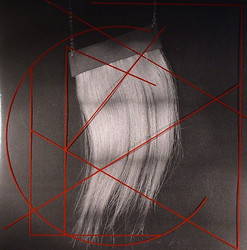
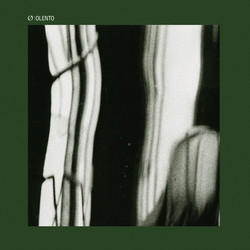
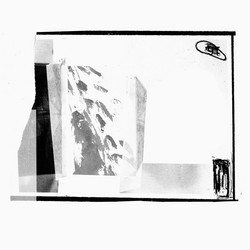
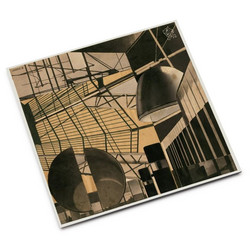
The title itself feels like a place name or a remembered condition, and several tracks draw on Vainio’s childhood memories. The cover’s summery photograph of his grandmother’s house in Artjärvi, Southern Finland, is not a mood board afterthought but a clue to the record’s internal logic. Where earlier Ø releases often evoked unspecified industrial or cosmic environments, Kantamoinen nudges those same sonic materials toward lived spaces: the hum of an old appliance, the muffled thump of footsteps in another room, the way a rural silence is never truly silent but full of hiss and distant interference. Tones remain economical – single frequencies, short gestural bursts, carefully placed bursts of noise – yet they seem to carry narrative residue, as if each sound had a specific remembered room or weather attached.
Despite that autobiographical tint, Vainio resists framing Kantamoinen as a concept album. There is no explicit storyline, no track‑by‑track mapping of memories. Instead, the personal element surfaces in subtler ways: in the choice of timbre, in slight softening of edges, in progressions that feel less like process and more like emotional arcs. For a musician long associated with iron discipline and austere structures, the word “romantic” may raise eyebrows, but here it signals a willingness to let warmth and melancholy into the frame without diluting the core of his practice. Certain pieces linger on gently beating tones that feel almost like heartbeats; others introduce fragile melodic contours that would have been unthinkable in the more severe Pan Sonic-era Ø.
What remains consistent is Vainio’s commitment to minimalistic expression. There are no lush pads, no harmonic thickets; the power still lies in reduction. Yet the reduction now feels geared toward revealing something human rather than stripping it away. Silence is used not as a brutal cut but as a breath; bass weight presses less like machinery and more like memory’s dull ache. Even in its most restrained passages, Kantamoinen feels deeply physical: you sense the speakers moving air, but you also sense the landscape behind the sound – the summer light on wood, the simple geometry of a farmhouse, the specific quiet of Southern Finland.