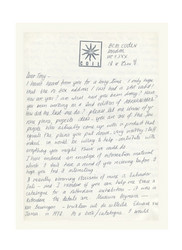
Hardcover, 527 pages, 21×27 cm! In the mid-1990s, four thick, annual issues of Ongaku Otaku magazine were published. Operating from San Francisco, California, the goal was to spread the word about the compelling independent music being produced in Japan. With dozens of interviews and articles, and many hundreds of reviews, the magazine was an influential voice, sharing words about Aube, Cornelius, Yamamoto Seiichi (Boredoms, Rovo, Omoide Hatoba), Shizuka, Jojo Hiroshige (Hijokaidan, Alchemy Records), Melt-Banana, Ruins, KK Null, and many more. This facsimile edition brings the original pages to readers several decades later.
The 1990s in Japan were a remarkably fertile period for independent music, propelled by the booming bubble economy and by a small network of fiercely independent labels - Alchemy, God Mountain, P.S.F., Tag Rag - whose output had begun to circulate well beyond the archipelago. Breadth was the scene's defining quality. Punk shared bills with pop. Noise and grindcore appeared alongside psychedelia, jazz, hip-hop, and the unclassifiable hybrids - Tipographica, Demi Semi Quaver, Optical*8, Koenji-Hyakkei - that the Japanese underground produced with such fluency. Ongaku Otaku tracked all of it. The first issue arrived in Winter 1994/95 as a gritty photocopied zine; by the fourth, in 2001, the magazine had grown into a full-bleed periodical with refined typography and accomplished live photography. Across the run, the editorial sensibility remained singular - in-person interviews conducted during touring visits to Japan, dense tour diaries (backstage conversations at the Bears in Osaka, late-night noise sessions with Mikawa and Kosakai of Incapacitants), label profiles of Monellaphone and Japan Overseas, and an unfailingly idiosyncratic stream of ephemera: manga, photographs of Katan Amano's ball-jointed dolls, capsule reviews of canned iced coffee and chewing gum, and a guide to Tokyo's record stores and venues that now reads as a time capsule of a city in flux. The second issue carried an essay attempting to articulate what made the Japanese approach to noise distinct from its European and American counterparts - a less intellectual, more cathartic music that C.C.C.C.'s Mayuko Hino linked explicitly to butoh.
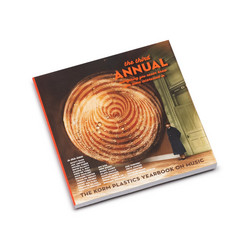
The Korm Plastics hardcover, designed by Studio Bertin, reproduces all four issues across 524 pages, advertisements and layout quirks intact. The imprint - whose recent archival volumes include Steve Underwood's Even When It Makes No Sense - The Broken Flag Story, Hal McGee's Electronic Cottage, and Frans de Waard's America's Greatest Noise - has established itself as one of the indispensable forces in underground music documentation. Ads for tiny bedroom labels long since dissolved sit beside reviews of releases that have entered the canon: the print archaeology of a scene at full intensity. Publisher and editor Mason Jones has run the Charnel Music label since 1988, and has recorded many albums solo, as Trance, and as a member of SubArachnoid Space, Numinous Eye, and Collision Stories. He began visiting Japan regularly in the early '90s and arranged U.S. shows for many artists from Japan. Ongaku Otaku was a labor of love aided by many contributors to whom he remains grateful.