Before the internet collapsed distances and democratized distribution, the international noise underground operated through an intricate web of mail-order catalogs, hand-dubbed cassettes, and photocopied fanzines. Labels emerged from bedrooms and basements, their catalogs circulating through postal networks that connected isolated outposts of extreme sound across continents. Few figures navigated this world as actively as Frans de Waard, and few labels embodied its uncompromising spirit as purely as Opus De Society.
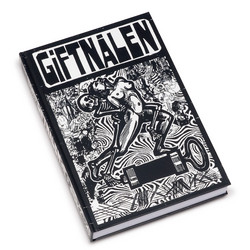
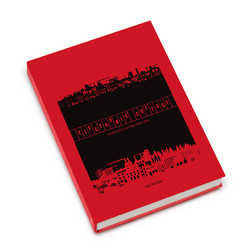
We Know How To Hate documents the brief, intense life of De Waard's harsh noise cassette label, which released 23 tapes between 1985 and its dissolution. The roster reads like a roll call of European power electronics and industrial noise at its rawest: Con-Dom, THU20, Kapotte Muziek, Odal, Death Pact Internal, Nails Øv Christ, Experiment Incest, Birth of Tragedy, names that circulated through tape-trading networks and appeared in the classified sections of underground zines, their releases now commanding serious collector interest.
De Waard, who had already founded Korm Plastics and launched Kapotte Muziek in 1984, with Christian Nijs joining shortly after - approaches this history with the obsessive documentation of a true archivist. Each of the 23 releases receives detailed treatment: context, circumstances, the personal connections that made obscure international collaborations possible in the pre-digital era. The book functions simultaneously as label history, scene documentation, and memoir of a particular moment in underground culture.
Interspersed throughout are interviews with key figures who shaped the Dutch and Belgian noise scenes: Vidna Obmana, Don van Dijk, David Padbury, Eriek van Havere, Stef Windelinx, and Ameury Perez offer their perspectives, while Peter Zincken contributes autobiographical notes. Reprinted interviews with Con-Dom and THU20 provide period documentation, and additional texts cover Nijs's own label venture Disbuse Transmissions and the early works of Peter Zincken under his Odal guise.
The cassette underground of the 1980s produced some of the most uncompromising, confrontational music ever recorded—work that deliberately positioned itself outside commercial structures, that circulated through networks built on personal correspondence and mutual enthusiasm. Much of this history risks disappearing as participants age and physical artifacts deteriorate. We Know How To Hate preserves one crucial corner of this world with the care and attention it deserves.
There's even a recipe.
Soft cover, 88 pages, 17×24 cm