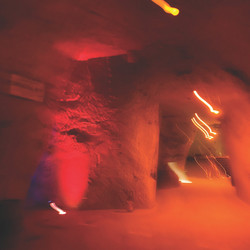
Somewhere in the Chukotka tundra, at the coordinates N 66°37' W 172°40', September 2006. A Vezdekhod tank - the all-terrain vehicle that remains, across much of Siberia, the only viable means of transport - moves through a landscape that resists every other form of passage. Carlos Casas is inside, recording. The noise is overwhelming: the resonance of the engine inside the cabin so intense, so physically present, that the only music capable of cutting through it, the only sound that could exist alongside it without being obliterated, was Merzbow, Pan Sonic, and Prurient.
That experience - part endurance, part revelation - became the generative logic of Vezdekhod. Casas, born in Barcelona in 1974, had already spent the better part of a decade mapping the planet's most extreme environments through film and field recording: Patagonia, the Aral Sea, Siberia. His END Trilogy - Fishing in an Invisible Sea, Solitude at the End of the World, Hunters Since the Beginning of Time - placed him at a rare intersection of documentary cinema, visual art, and sound ethnography, his field recordings functioning not as illustration but as primary material, equal in weight to the image. The Siberian Fieldworks, developed alongside the films, pushed further: VLF radio signals, aurora borealis frequencies, raw environmental capture treated as composition. From this body of work, Vezdekhod emerged as a specific and extreme case - the tank itself as instrument, its acoustic mass as the subject.
Dominick Fernow's Prurient project, rooted in Hospital Productions and a decade of power electronics and noise, proved to be the only adequate collaborator. From Casas's Siberian recordings, Fernow constructed seven dense works - Target, Awaken the Soil, Industrial Tank Tread, Grinding, Acoustic Dead Torture, Wash and Surge, Tank Soul - that treat the field material not as texture or atmosphere but as structural mass. The tank's resonance becomes harmonic architecture; the tundra's silence, when it appears at all, functions as negative space against which the noise presses. The result is as much geological document as music - the sound of a landscape that does not yield, rendered through a practice that refuses to soften it.
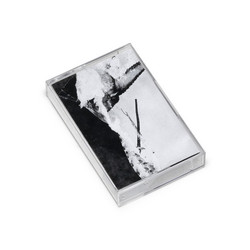
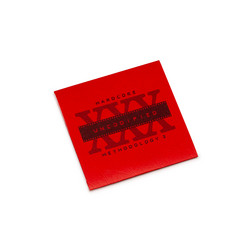
Vezdekhod is an audiovisual work: the DVD format places image and sound in direct confrontation, the 36-minute double-screen projection inhabiting the same logic as Casas's live Fieldworks performances - field recordings mixed in real time against the visual field, the two systems running in parallel without resolving into illustration. An audiovisual experiment at the crossover of documentary and sound exploration, issued by the Italian imprint Von as VON008 in a limited edition of 500 copies.







![Sous-sol [na podvale]](https://cdn.soundohm.com/data/products/2026-10/73291-jpg.jpg.250.jpg)