
Phase Patterns / Pendulum Music / Piano Phase / Four Organs
"What I'm interested in is a compositional process and a sounding music that are one and the same thing" (Steve Reich, 1968). Minimal music, which numbers Steve Reich among its founders and as one of its most significant representatives, existed for hardly more than ten years. The Ensemble Avantgarde presents a wonderful survey of Reich's minimal music-compositions. The conceptional concentration in the musical work on the structurally simple means of its creation is seen especially in Reich's "…
s/t
Yiran Zhao makes use not only of musical elements but also of objects, bodies, movements and light-sources as compositional material. Many of her pieces inhabit the various boundary states between instrumental music, performance, sound-installation, and video-art. Leonie Reineke describes the composer in the CD-booklet as a “prudent researcher“, who encounters the sonic cosmos of her environment with great earnestness, and comes microscopically close to things.
In the composition “Piep“ she focu…
Earthing
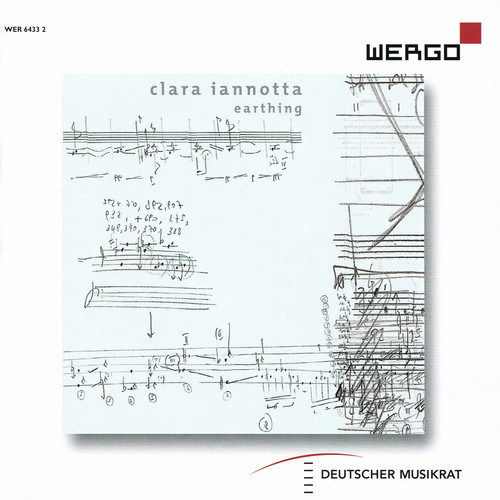
"String quartet” seems a rather reductive way of describing any of the four utterly compelling works by Clara Iannotta that the Jack Quartet play here. For as well as demanding that the string players employ every conventional technique, the Italian composer extends their sound world farther, both with electronics and with “found objects” applied to the strings and bodies of the instruments.
The four pieces all date from the last seven years. The earliest, A Failed Entertainment, borrows the wor…
Mantra
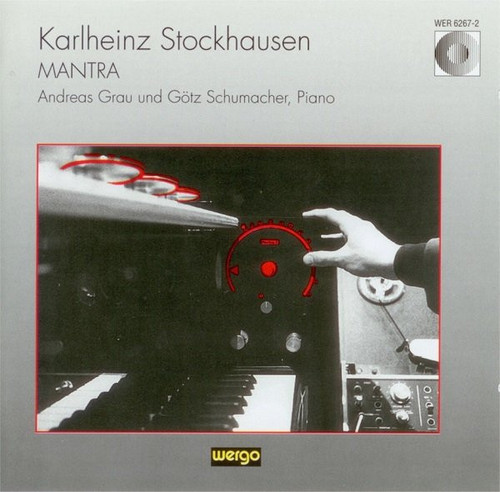
'Composed in 1970, Mantra, for two pianos and ring modulation, was one of the decisive turning points in Karlheinz Stockhausen’s career. The 70-minute piece not only signalled a break with the text-based intuitive works, relying heavily on improvisation, that had come to dominate his output towards the end of the previous decade and a return to fully notated scores, but also introduced the idea of melodic formulae, the “mantra” of the title, which Stockhausen would eventually develop into the or…

Musica Da Camera
*2022 stock* The Polish composer Krzysztof Penderecki used to write chamber music even as a student in Krakow. He was writing the chamber music works for himself, then already an accomplished violinist, and his fellow students (The title "Sonata for Violin and Piano" from 1953 has only recently been published.). A specialty of these early works are Penderecki's inventions with which he altered the sound of the stringed instruments, indeed almost to the point of being completely unrecognizable. W…
Palimpsest | Épéi | Dikhthas | Akanthos
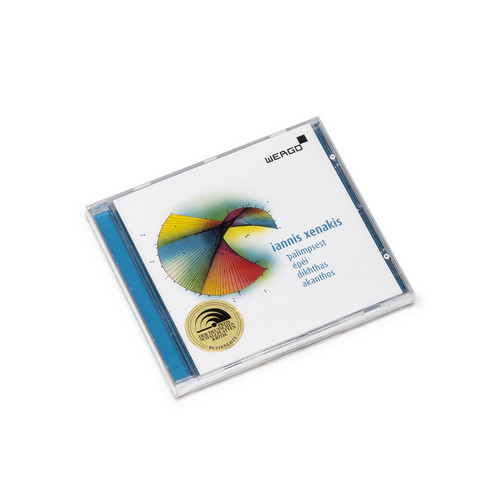
*2022 stock* 'This collection of ensemble works, six altogether, ranges across the last two decades of Iannis Xenakis's life. It includes the last two pieces he composed, Zythos, for trombone and six marimbas, and O-Mega, for percussion and ensemble, both written in 1997, four years before his death. They are striking, small-scale examples of the bareness and drastic compression of his late style, but the finest music here is a bit earlier. In Échange, from 1989, a bass clarinet painstakingly un…

For Franz Kline · For Frank O'Hara · De Kooning · Piano Piece To Philip Guston
*2022 stock* Wergo presents Moton Feldman's compositions For Franz Kline · For Frank O'Hara · De Kooning · Piano Piece To Philip Guston. Performed by Ensemble Avantgarde.
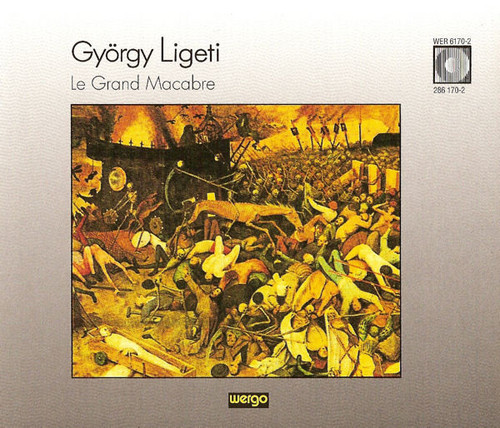
Le Grand Macabre
György Ligeti's only opera, Le Grand Macabre, is an entertaining, taut piece of musical theatre that sits somewhere between parody and ominous seriousness, between clowning and wisdom. Based on Michel de Ghelderode's play and set in the imaginary land of Breughelland, it follows Nekrotzar, alias the Grand Macabre, who has not only ambitions to suck blood but apocalyptic visions: he wants to bring about the end of the world personally, and fails.
Ligeti himself said its bizarre, exaggerated music…
Sonata XIII / Music For Marcel Duchamp / Song Books I-II / Empty Words III
*2022 stock* John Cage's first manifesto, written in 1937, was called The Future of Music: Credo, and the future it described was an "all-sound music" open to every kind of noise. This volume of Wergo's Edition John Cage follows that idea across three decades, from the prepared piano of the 1940s to the vocal and spoken works of the 1970s.
Sonata XIII, from the Sonatas and Interludes, and Music for Marcel Duchamp are pieces for prepared piano, played by Peter Roggenkamp: screws, bolts and rubber…
Works For Piano, Toy Piano & Prepared Piano · Vol. III
*2022 stock* It may come as a surprise but one of the leading creators of keyboard music in the twentieth century is a composer by the name of John Cage. Cage’s reputation is so deeply associated with the avantgarde, with chance music, graphic notation, performance art, technology and Zen Buddhism that is early, conventionally-notated music for percussion ensemble and keyboards is sometimes neglected. Or was until recently. In the last few years – with the advent of performances and recordings l…
Circles · Sequenza I · Sequenza III · Sequenza V
Circles is one of Luciano Berio's most captivating works: a setting of three poems by e.e. cummings for female voice, harp and two percussionists, in which the words are gradually taken apart into their sounds and the singer moves physically among the instruments, so that voice and percussion end up trading roles. It was written for Cathy Berberian, the "Callas" of new music, and her performance here remains the reference.
Around it are three of the Sequenzas, Berio's lifelong series of virtuoso…

Kammerkonzert / Ramifications / Lux Aeterna / Atmosphères
*2022 stock* Several of György Ligeti's best-known and most characteristic pieces, in recordings made within a few years of their composition by the musicians closest to them. Atmosphères for large orchestra without percussion and Lux aeterna for sixteen-part mixed choir a cappella are the two works that Stanley Kubrick used in 2001: A Space Odyssey, and they are still the purest examples of Ligeti's micropolyphony: dense webs of lines that merge into slowly shifting clouds of sound.
Atmosphères…

Continuum / Zehn Stücke Für Bläserquintett / Artikulation / Glissandi / Etüden Für Orgel / Volumina
*2022 stock* This CD of works by the Hungarian composer György Ligeti represents an extremely interesting combination of several of his serene works for harpsichord, organ, and wind quintet with two electronic compositions from the late 1950s.
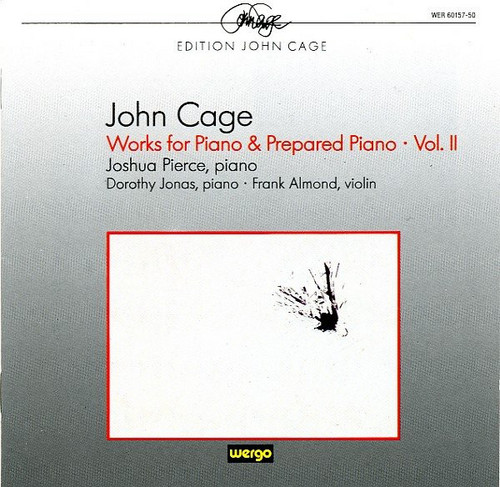
Works For Piano & Prepared Piano · Vol. II (1944-1958)
*2022 stock* This recording deals with works composed between 1944 and 1958, including several of Cage's lovely and masterful prepared piano pieces, which will come as a major surprise to those familiar only with his chance compositions. Joshua Pierce is the principal pianist (assisted by Dorothy Jonas on the Three Dances, written for two pianos) and attacks the pieces with a nice balance of delicacy and aggression, although compared to the earlier Angel recording of the abovementioned Three Dan…
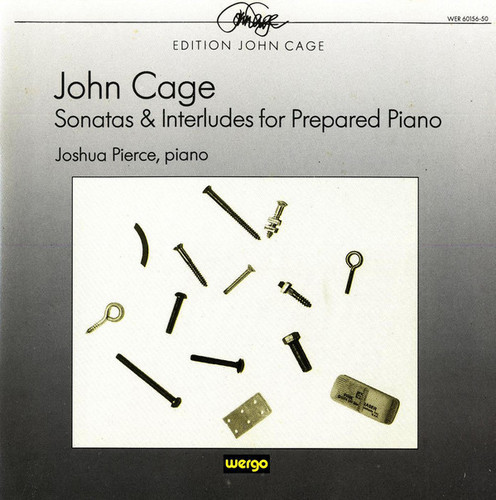
Sonatas & Interludes For Prepared Piano
*2022 stock* Sonatas and Interludes for Prepared Piano, a cycle of 20 short pieces for prepared piano (a piano modified by inserting nuts and bolts and other objects between the piano strings in order to produce percussive and otherworldly sound effects) by American composer John Cage. Created in 1946–48 after the composer had been introduced to Indian visual and performing arts, the cycle was intended to represent the so-called permanent emotions—the heroic, the erotic, the wondrous, the comic,…
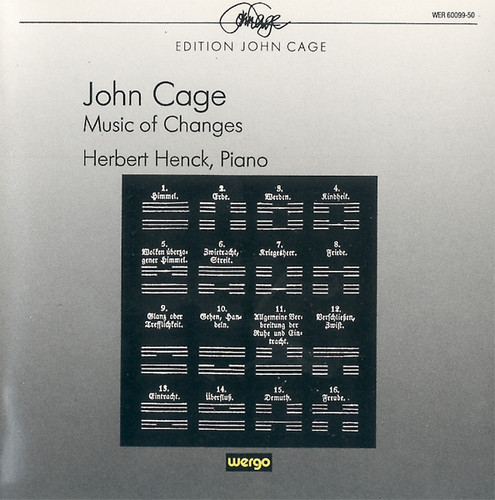
Music Of Changes
*2022 stock* It's over 70 years since John Cage wrote his pivotal Music of Changes, and it's beginning to show its age. It feels very much of its time, with its uncompromising adherence to the 64 hexagrams of I-Ching, the Chinese book of changes, determining the direction of the piece and its use of sudden, percussive attacks on the strings or the body of the instrument. But for all that there is no denying the extreme stamina and concentration required of the performer, and here Herbert Henck e…
Four Organs / Phase Patterns / Pendulum Music
Three early compositions (1968-1970) by Steve Reich, one of the most prolific exponents of minimal music, in stunning interpretations by the critically acclaimed Ensemble Avantgarde. Available on vinyl (180gr, gatefold sleeve incl. download code) for the first time ever!
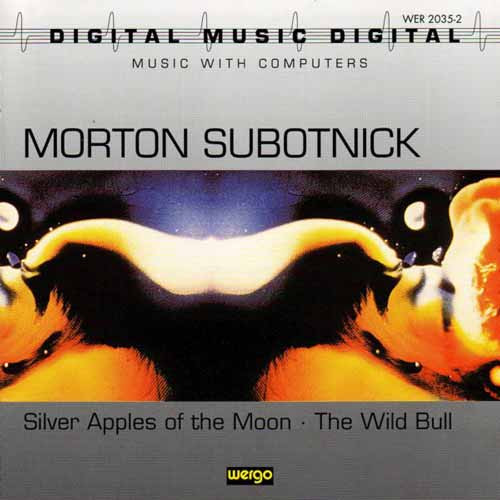
Silver Apples of the Moon / The Wild Bull
Silver Apples of the Moon' is without a doubt the best known work from influential composer and electronic music pioneer Morton Subotnick. It was originally commissioned by Nonesuch records back in 1967, when electronic music was more of a series of ideas than a recognised art form, and since then it has achieved well deserved classic status, influencing so much that would come after it is impossible to conceive. Subotnick's instrument of choice was the Buchla modular synthesizer, a gigantic pat…
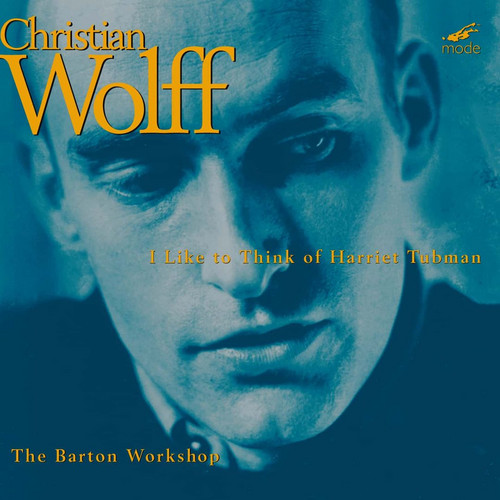
I Like To Think Of Harriet Tubman
Chamber works by Christian Wolff from 1950 to 1987, mostly first recordings, including the Serenade written at sixteen, the Harriet Tubman setting for voice and trio, and For Morty, played by The Barton Workshop under James Fulkerson.
Tempi Agitati
Katharina Rosenberger's Tempi Agitati, a vocal work for Neue Vocalsolisten Stuttgart that sets Petrarch's texts alongside madrigals by Willaert and Rore, using extended vocal techniques. Complete Petrarch texts are included.