Music from Hungary
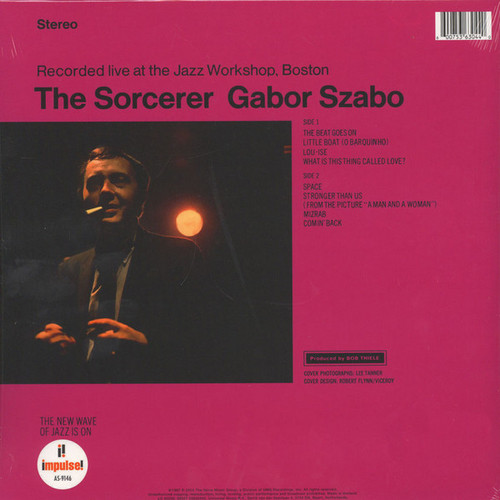
The Sorcerer
Gábor Szabó was one of the most original guitarists to emerge in the 1960s, mixing his Hungarian folk music heritage with a deep love of jazz and crafting a distinctive, largely self-taught sound. This evocative 1967 set for Impulse! features nine live tracks recorded at Boston's Jazz Workshop, capturing Szabó and his finest working group at their peak.

Soft Samba Live! Jazz From The Penthouse
From the great cache of tapes recorded at Seattle's storied Penthouse nightclub comes The Gary McFarland Quintet, recorded live in the summer of 1965. McFarland could usually be found in the recording studios of New York arranging for everyone from Stan Getz to Lena Horne, but his 1964 bossa-jazz classic LP Soft Samba was such an unexpected hit that it afforded McFarland the opportunity to hit the road with fellow Berklee School of Music alumni Gabor Szabo on guitar and Sadao Watanabe on flute a…
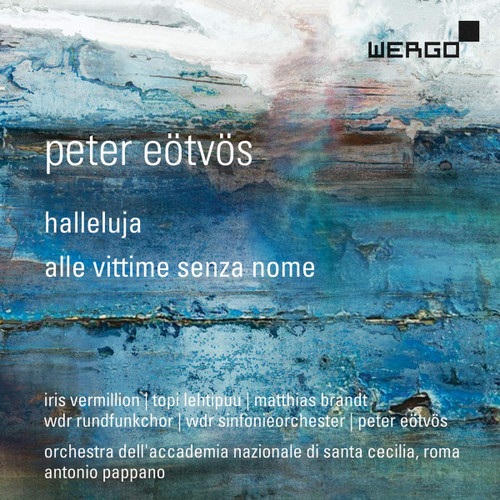
Halleluja / Alle Vittime Senza Nome
*2022 stock* 'Halleluja, Peter Eötvös’s “stuttering oratorio”, with a text by the novelist Péter Esterházy, was first performed in 2016. It’s built around the historical figure of Notker Balbulus, Notker the Stammerer, a ninth-century Benedictine monk who was a chronicler and composer. But, Eötvös insists, “It is not so much a portrait of Notker as of the times in which we live … At first the choir represents a society that says ‘hallelujah’ to everything: they have to be satisfied with everythi…
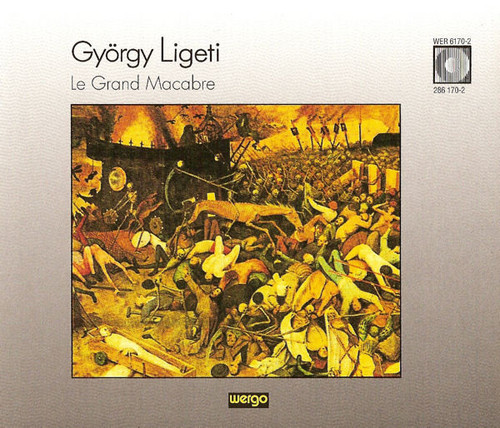
Le Grand Macabre
György Ligeti's only opera, Le Grand Macabre, is an entertaining, taut piece of musical theatre that sits somewhere between parody and ominous seriousness, between clowning and wisdom. Based on Michel de Ghelderode's play and set in the imaginary land of Breughelland, it follows Nekrotzar, alias the Grand Macabre, who has not only ambitions to suck blood but apocalyptic visions: he wants to bring about the end of the world personally, and fails.
Ligeti himself said its bizarre, exaggerated music…

Kammerkonzert / Ramifications / Lux Aeterna / Atmosphères
*2022 stock* Several of György Ligeti's best-known and most characteristic pieces, in recordings made within a few years of their composition by the musicians closest to them. Atmosphères for large orchestra without percussion and Lux aeterna for sixteen-part mixed choir a cappella are the two works that Stanley Kubrick used in 2001: A Space Odyssey, and they are still the purest examples of Ligeti's micropolyphony: dense webs of lines that merge into slowly shifting clouds of sound.
Atmosphères…

Continuum / Zehn Stücke Für Bläserquintett / Artikulation / Glissandi / Etüden Für Orgel / Volumina
*2022 stock* This CD of works by the Hungarian composer György Ligeti represents an extremely interesting combination of several of his serene works for harpsichord, organ, and wind quintet with two electronic compositions from the late 1950s.
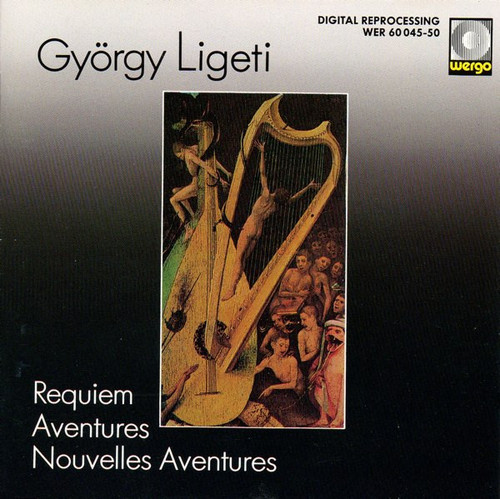
Requiem / Aventures / Nouvelles Aventures
György Ligeti's "Requiem" for soprano, mezzo-soprano, two mixed choirs and orchestra is one of his most impressive compositions - especially, when directed by Michael Gielen - and at the same time "the" requiem of the 20th century: Sound which is chromatically layered moves gradually from the lower registers to the higher, thus changing from mourning sounds into the promise of the eternal light. In the Kyrie the polyphonic net which was previously static begins to move gently. It was a part of t…

Bacchanal
*New edition 2022, new repress from new master! In process of stocking* The long-awaited reissue of rare Eastern and psychedelic Jazz LP by the famous Hungarian guitarist, originally released in 1968. The first time, extended Edition with four bonus tracks: radio version from singles 7” 1968. Deluxe Gatefold Vinyl comes with long, exclusively written inner notes by the famous researcher and biographer Douglas Payne. Gabor Szabo was at his creative peak at the end of the 60s, when he recorded hi…

Live in Cleveland 1976
"Hungarian guitarist Gabor Szabo (1936-82) issued only three live recordings during his lifetime. Significantly, the first of these, The Sorcerer (1967), remains the most popular album in the guitarist’s all-too abbreviated discography. But there were also More Sorcery (1968) and Gabor Szabo Live with Charles Lloyd (1974), offering Szabo totally in his element and at his bewitching best. Several more of Szabo’s concert recordings have surfaced in the intervening years, including this one, superb…
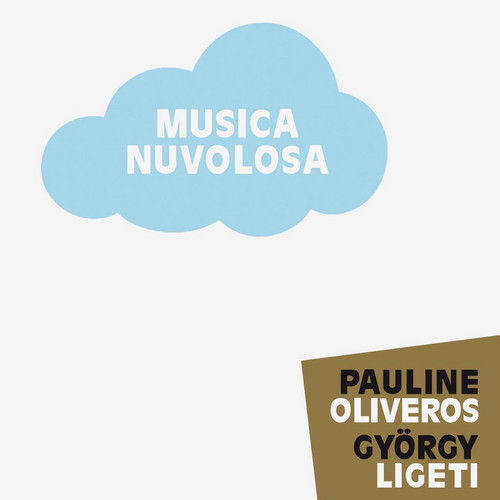
Musica Nuvolosa
Tip! After its reading of Julius Eastman's Feminine, released in 2021, the Ensemble 0 revisit the repertoires of Pauline Oliveros and György Ligeti from another angle. From the works of Oliveros, they exhumed a deeply meditative piece for accordion and voice, giving it a new life in the form of vaporous, cloud-riding chamber music. With Ligeti, the piano radicalism of the Musica Ricercata miniatures crops up again in a new and as yet unreleased orchestration.
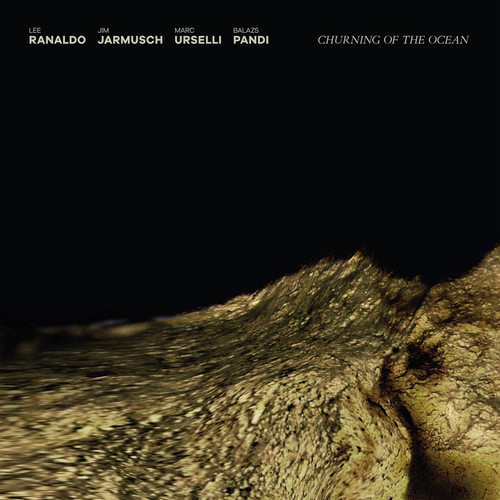
Churning of the Ocean (LP)
* CD version includes one additional track * Extended instrumental tracks from the nocturnal studio session of director and musician Jim Jarmusch, Sonic Youth's Lee Ranaldo, Balázs Pándi (Keiji Haino, Venetian Snares, Merzbow) and producer Marc Urselli (John Zorn, Mike Patton, Laurie Anderson, a.o). All was recorded live and analog, and in the moment. Mixed, mastered, recorded and produced by Marc Urselli at EastSide Sound Studios, NYC, 2019. Artwork by Italian artist Sara D'Uva. Press quotes f…
Sold Out
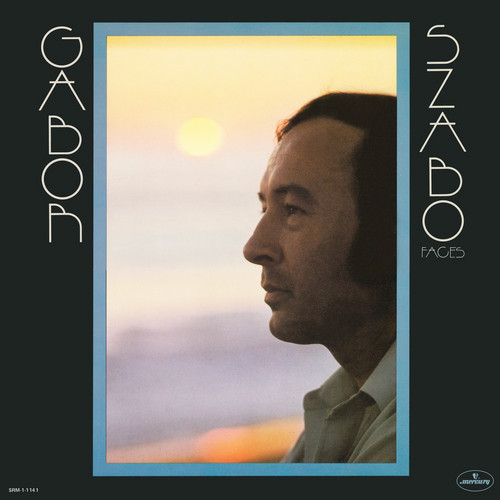
Faces (1977) & Bonus Tracks
Gabor Szabo's Faces, recorded for Mercury in 1977, is a distinctly jazz-fusion album. It was produced by trombonist and former Crusaders member Wayne Henderson, with the rhythm section coming from the soul-jazz-funk band Pleasure, with whom Henderson was working for the Fantasy label at the time. Built on gripping rough funk grooves, the music leaves plenty of room for Szabó's elegant guitar lines and meticulously constructed solos. The album, which was rather neglected when it was released, can…

Dreams
The long awaited reissue of this rare eastern and psychedelic jazz LP by the famous Hungarian guitarist Gabor Szabo, originally released in 1968. This extended edition comes with 2 bonus tracks: the radio versions of "Fire Dance" and "Ferris Wheel" released as 7" single in 1969. Comes with long, exclusively written liner notes by the famous researcher and biographer Douglas Payne. Remastered by Martin Bowes at Cage Studios (UK).
Sold Out

The Best of Gabor Szabo
**Red vinyl, gatefold sleeve** Exotic jazz guitar mastery! Gabor Szabo’s singular style and authentic sound is on full display across a set of originals and choice covers highlighted by unusual instrumentation and ingenious arrangements. From the sitar-starring adaptation of Paint It Black to the Latin rhythms and bossa nova beats, Szabo’s savvy jazz guitar innovations shine throughout."Gabor Szabo was one of the most original guitarists to emerge in the 1960s; mixing his Hungarian folk music he…

S/T
New York based producer Marc Urselli had the idea to bring people together who had never met before and let that meeting of minds create beautiful soundscapes. Film director and musician Jim Jarmusch, Sonic Youth co-founder and guitarist Lee Ranaldo shared space with versatile drummer Balázs Pándi for a night session at Urselli's EastSide Sound studio in downtown NY. These are the unfiltered results. Absorbing instrumental patterns of cinematic sounds and improvised rhythms. No overdubs, no edit…

Terreng
Long-form duo work between Balázs Pándi (percussion) and Jon Wesseltoft (electronics), shaped as an open landscape of contrasts articulating space in both time and depth. The two players alternately trade and merge their instrumental identities, generating zones of improvised openness alongside densely constructed electroacoustic narrative. The vocabulary moves between quiet, ritually framed rhythmic space and saturated information, held as deliberate counterweights.
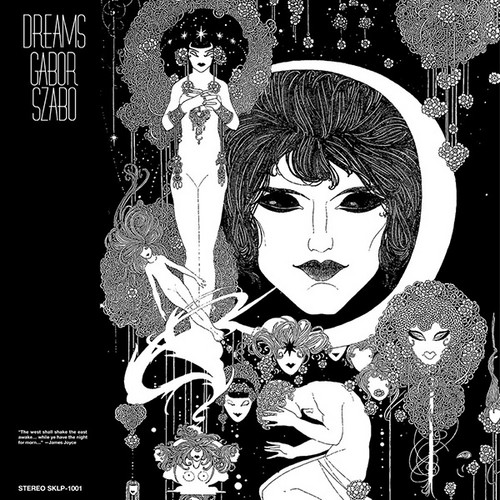
Dreams
Gabor Szabo was something of an irresistible force. His upbringing in Communist Hungary was difficult but edifying. Music was his escape. He grew up to be a man of strength with a fatal weakness. In his early years, he voraciously consumed all the exciting and exotic jazz sounds coming from the Voice of America broadcasts. By the time he fled Budapest in 1956 as the Russian tanks hit the streets, he was well versed in all styles of guitar playing including classical.It was his jazz virtuosity, h…

Live Electronic
After a long winter-hiatus, Creel Pone returns anew in fine form w /a reproduction of this 1979 Hungaroton-label burner, covering a series of "Live Electronic" pieces composed by Laszlo Dubrovay during the mid-late 70s. After an extended "Modern Composition" -leaning ensemble-bleep venture - i.e. heavily filtered / ring-modulated piano, strings, cimbalom, and percussion playing in a sparse, pointillist manner - the album progresses into deeper waters, first with a sorted piano / synthesizer due…

Cuts
If jazz, as the eminent critic Whitney Balliet once wrote, is the “sound of surprise,†Cuts, an intensely cathartic, fiercely turbulent collaboration between Japanese noise purveyor Masami Akita (aka Merzbow), Hungarian drummer Balazs Pandi and Swedish saxophonist Mats Gustasfsson, is the “sound of shock and awe.†A sonic assault of epic proportions, it blends the bombast of Merzbow’s grinding white noise barrages with Pandi’s thunderous pulse on the kit and Gust…
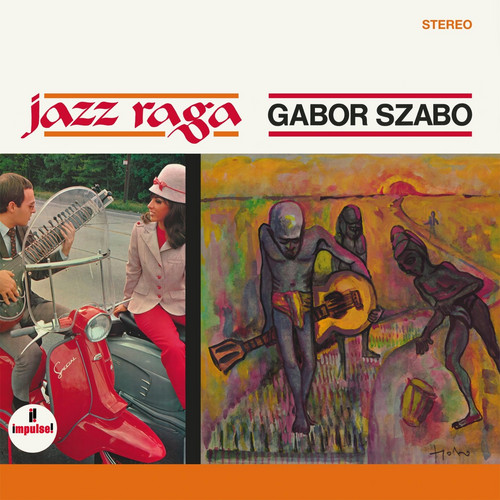
Jazz Raga
Awesome reissue! The world famous Impulse jazz catalogue is so cavernous you truly need a music-minded flashlight to uncover its deepest and darkest secrets. Thankfully Light In The Attic has recently acquired such luminescent technology and the first discovery is Hungarian guitarist GABOR SZABO’s 1967 Indo-fusion landmark, Jazz Raga. combines Szabo's distinctive 6-string touch & open-minded ideas. It brings together jazz, pop-rock & his native European influence, along with hypnotic sitar, st…