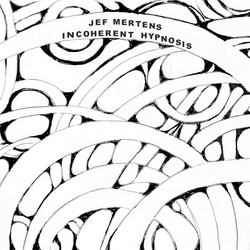
Double Amps emerged from a very specific situation. In early February 2025 a short tour through Belgium and the Netherlands took place with Dietrichs. For those concerts a dedicated stereo setup using two amplifiers was developed. Around that configuration a structured set with taishōgoto was built – a framework that allowed space for improvisation and for the sound to unfold freely on stage.
A few weeks after the tour, circumstances created the opportunity for a concentrated week of recording. The live taishōgoto material already existed, and during that period the same set was translated to the soprano taishōgoto, leading to a different sonic outcome. At the same time the desire arose to return to guitar, an instrument long central to Jef Mertens’ practice – not as a vehicle for melody, but as a tool for scraping, bowing, droning and sculpting texture. The entire approach was adapted to guitar as well, always routed through the same two-amplifier system.
That stereo configuration became the conceptual and sonic core of the album: two amplifiers, simply panned left and right. All mixing was carried out directly through the amps themselves, without additional processing. Nothing fundamentally new, yet essential for this music, the way the two channels react to one another, complement each other or create friction. The record searches for a sense of inner duality, expressed through resonance, space and subtle interaction.
This method is characteristic of Jef Mertens’ broader body of work. Active for more than two decades on the fringes of Belgian experimental culture, he has moved fluidly between music, film, visual art and small-scale publishing. Trained originally as a photographer and filmmaker, he began his creative life documenting the European underground, touring with Sonic Youth and later directing the documentary Dronevolk (2007), followed by a portrait of free-noise pioneers Borbetomagus in 2016. Parallel to this visual work he developed a personal musical language, releasing rough, intimate recordings through the Dadaist Tapes imprint and later under his own name and the alias Many Chants A Trapped Secret.
Across albums such as No Mathematics, Rammel and Orchid Alto, Mertens has consistently focused on slow, tactile soundmaking: shruti boxes, zithers, taishōgoto, found objects and heavily treated guitar. His pieces are rarely “songs”; they function instead as sonic environments – minimal, tense and patient, built from decay and vibration rather than composition in any traditional sense. Double Amps continues that trajectory, emphasizing physicality and presence over polish.