Various ArtistsFeaturing: Ragnar Johnson
Ethiopian Musics 1971 (2CD)
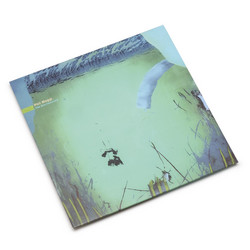
2CD / digipack + 12 page booklet For nearly four decades, since its founding during the mid 1980s, the Belgian imprint, Sub Rosa, has continuously plumbed the depths of numerous, radical creative histories, assembling a catalog of releases that has almost no equivalent, while remaining nearly impossible to nail down. That said, for most of its run, Sub Rosa has been primarily recognized for its rigorous explorations of the lesser explored shadows of experimental sound practice (sound-art, sound-poetry, early electronic and electroacoustic music, free-improvisation, etc.), delivering a remarkable body of artifacts that have collectively helped to rewrite history in their wake. While it's always been impossible to anticipate where the label might take us next, threading their catalog are plenty of releases that throw further wrenches in the cogs, expanding our understanding of what they pursue, as in the case of a handful of titles, appearing as early as the 1980s, dedicated to ethnographic field-recordings from various parts of the world. Among the most striking and celebrated of these was 2017's Ethiopian Urban And Tribal Music: Mindanoo Mistiru / Gold From Wax, comprising an astounding body of recordings made by Ragnar Johnson and Ralph Harrisson in Ethiopia during 1971, reissuing material originally released by Lyrichord the following year. Now, Sub Rosa returns to the incredible work embarked upon by the pair and captured on that same trip with Ethiopian Musics 1971, comprising the recordings originally released by Ocora shortly after their completion, expanded in this edition to include an entire disc of never before released music. Widely regarded as some of the most important field-recordings ever made of indigenous Ethiopian folk music (as captivating and intoxicating as they are revelatory: providing insights into the roots of the country's singular traditions of popular music and jazz that have come to be celebrated the world over), this incredible collection is issued by Sub Rosa in a beautifully produced 2LP edition, complemented by a four page insert providing detailed descriptions of each song, as well as notes by the ethnomusicologists and recordists, as well as a 2CD edition, with a twelve page booklet. Insanely good and absolutely essential for any fan of field-recording, ethnomusicology, the music of Ethiopia, or the label's mission at large. Once again, Sub Rosa has defied our expectations and delivered a remarkably important intervention in the history of recorded sound.
Located in the Horn of Africa region of East Africa, few cultures are distinctly singular, while being so diverse (containing 80 distinct ethnic groups who speak 70 languages and 200 dialects) as that of Ethiopia. The home to some of the oldest surviving sects of Judaism, Christianity, and Islam (each contributing important aspects of its collective cultural body), particularly the country's culinary and musical traditions have become celebrated the world over, and (generally speaking) feel entirely independent of those of its neighbors. Given this, it's unsurprising that, during the summer of 1971, the young ethnographer, Ragnar Johnson, accompanied by Ralph Harrisson, traveled to Ethiopia to begin his brief career as a field recording ethnomusicologist, capturing material on reels of magnetic tape that would be subsequently released across three LPs for Lyrichord and Ocora, respectively, coming to form a cornerstone of documentation and study of the country's many indigenous musical traditions, as well as providing wide, global access to them for the first time. While Johnson's recording career was relatively brief, ending toward the end of the decade when he began to focus more on teaching in UK universities, with a focus on the anthropology of art and social anthropology, his impact on the field was lasting. Between 1971 and 1979, in addition to those he made in Ethiopia, he made hugely significant recordings in Yemen (also issued by Lyrichord before being reissued by Sub Rosa) and Papua New Guinea, which were originally released by David Toop's Quartz Publications to wide celebration, before being revisited by Ideologic Organ in 2023.
While it's worth noting that commercial releases of ethnomusicological recordings by labels like Folkways, Lyrichord, and Ocora were still in their relatively early days when he entered the field, Johnson's recordings quickly stood apart for their vivid qualities and clarity of space, allowing them to stand the test of time. As he later stated: "I used a Uher Report L stereo tape recorder, BASF quarter inch tapes at a recording speed of seven and a half inches per second with two directional microphones mounted to record an isosceles triangle of stereo sound," he reveals. "The location of the microphones and musicians was critical. The musicians were fully informed of all aspects of the recording process."
Johnson's recordings are extremely vivid, there is a clear sense of space and the cries of the flutes exist across the entire stereo field. It's a reflection of Johnson's skill as a field recordist that his recordings continue to be reissued over forty years later. "I used a Uher Report L stereo tape recorder, BASF quarter inch tapes at a recording speed of seven and a half inches per second with two directional microphones mounted to record an isosceles triangle of stereo sound," he reveals. "The location of the microphones and musicians was critical. The musicians were fully informed of all aspects of the recording process… I used to enjoy being in the moment and hearing something wonderful despite the stress of the vigilance required to ensure that the recordings were accomplished according to plan. The responsibility is to record and document the music as effectively as possible so that it has been preserved for posterity. It is better to actually record music than to sit in a seminar room debating the ethics of recording music." It is this very ethos and sense of clarity that can be encountered across the length of Ethiopian Musics 1971.
For the sake of clarity, the two LPs of material that comprise Ethiopian Musics 1971 should be regarded as a single body of recordings alongside those made in Ethiopia by Ragnar Johnson and Ralph Harrisson during the summer of 1971 (previously issued by Lyrichord and reissued by Sub Rosa), and as two that have, until now, remained historically distinct. The first LP gathers that material released by Ocora during the early 1970s on Musiques Ethiopiennes, while the second comprises (as far as we can tell) twelve never before issued recordings, expanding the journey and making this the definitive edition of the release with its incredible total of 23 recordings of songs, allowing it ever greater scope to achieve the recordists' modus operandi of capturing the broadest and most diverse cross section of Ethiopia's many musical cultures, ranging from different forms of urban music captured in Addis Ababa, documenting largely orally transmitted idioms within which lyrical content is given greater emphasis than the instrumental components (played on masenko fiddles, craar and bagana lyres, washint flutes and kabaro drums), to folk idioms hailing from the Danakil desert and the border regions with Sudan and Kenya. There are songs sung and played in bars, divination chants, laments, dances, Christian songs, and Amharic sung poetry, to only begin to scratch the surface.
Ethiopian Musics 1971 is one of those rare albums where each musical moment is pure, intoxicating gold, while also being greater through the sum of its parts. There are the many songs, forming a rich tapestry of remarkable range across the respective two LPs/CDs (moments that wondrously flirt with sonic abstraction; hypnotic rhythms; pulsing chant; melodies that, in structural arrangement and tonal combination, help us reframe how such a thing might be understood, and a great deal more), each imbued with a remarkable directness and emotive sensibility, and there is the stunning quality of these recordings themselves, transporting each sound to our ears as though we intimately share its creator's space, while being imbued with the pure heart and remarkable spirit with which they were made. As we said before, it's little wonder, once heard, why these recordings and this music feels as fresh and relevant (enduring more than 50 years) today as when they were made. Once again, Sub Rosa has raised the bar with this essential addition to the incredible work that Ragnar Johnson and Ralph Harrisson did back in Ethiopia during 1971, radically expanding our access to the sounds that they captured with these stunning, beautifully produced 2LP and 2CD editions. Absolutely engrossing from the first sounding to the last, this one can't be missed.