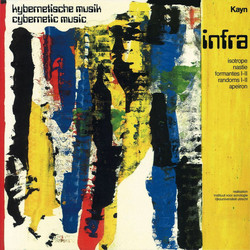
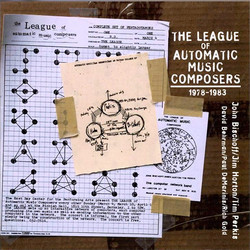
Between the late 1970s and the early 1980s, in the San Francisco Bay Area, The League Of Automatic Music Composers became the first group to bring microcomputers into live performance. Jim Horton, John Bischoff and Rich Gold, later joined by Tim Perkis, connected cheap KIM-1 boards into networks of independently programmed machines that listened to each other and reacted, treating the whole network as one large interactive instrument. The result was noisy, difficult, often unpredictable and sometimes beautiful music, and the direct ancestor of network music and of The Hub.
The League grew out of a specific moment: the hobbyist and hacker scene of a Silicon Valley that did not yet have a name, the West Coast tradition of John Cage, Henry Cowell, Harry Partch and Lou Harrison and their home-built instruments, free improvisation, and the theories of cybernetics and complex systems. Each member brought his own 'sub-composition', a melodic engine in a 29-tone just intonation scale, direct 8-bit audio synthesis, a virtual traveller crossing a terrain at audio rate, and the machines exchanged data to coordinate them.
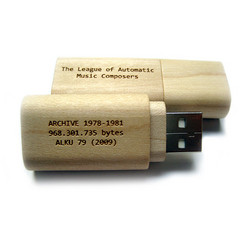
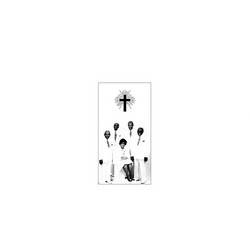
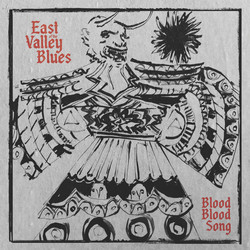
Ten recordings from 1978 to 1981, from home sessions to concerts in Oakland and San Francisco, including 'Finnish Hall' (1979) with Paul DeMarinis as guest, with track notes by Perkis and Bischoff. Limited edition double LP on Death Is Not The End.