Wiregrass Sacred Harp Singers
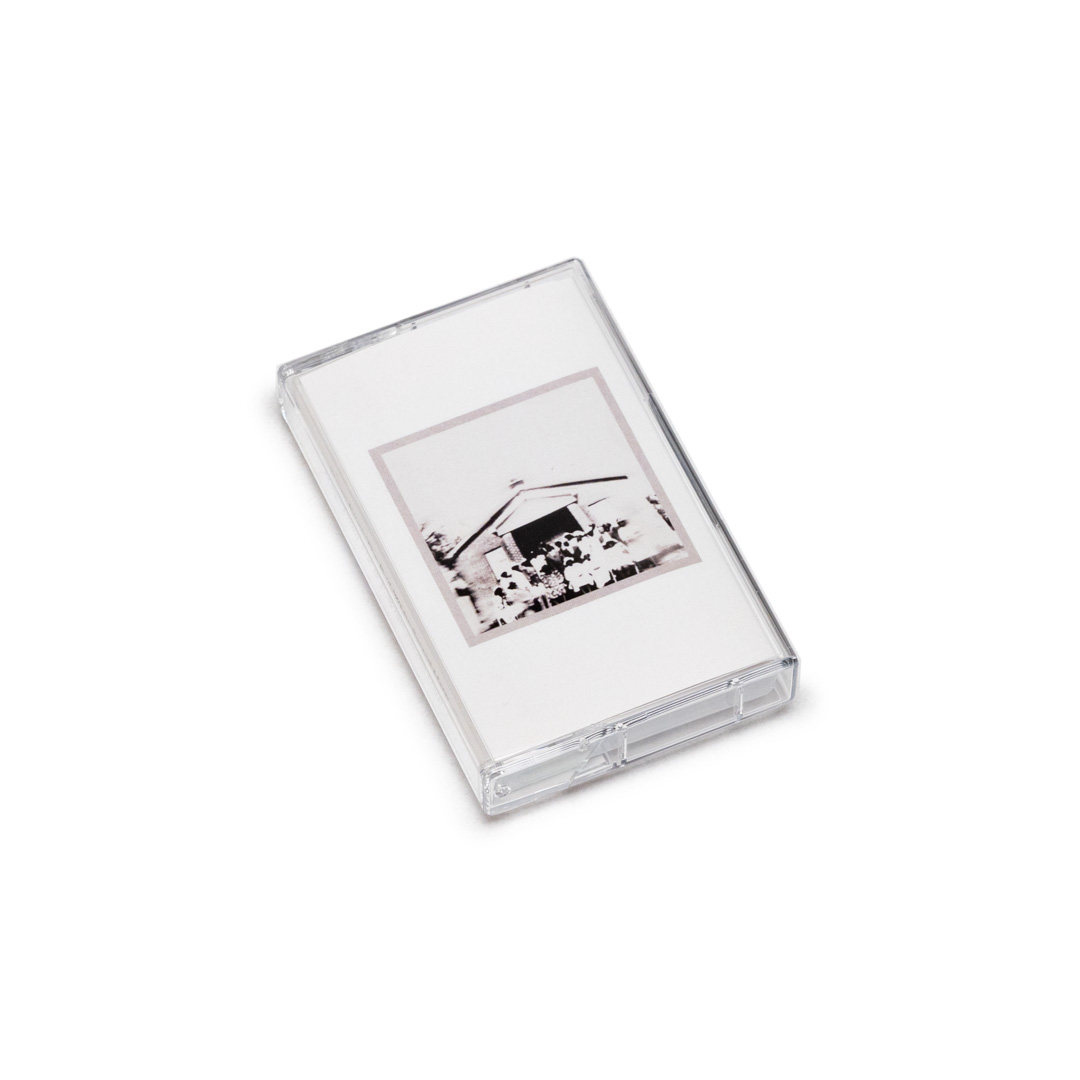
Songs From The B. F. White Sacred Harp (Tape)
FormatTapeLabelDeath Is Not The EndGenreFolk & Traditional
In stock (ships within 1-2 working days)
Tracked express shipping from Italy, no customs or import VAT in the EU. Shipping costs
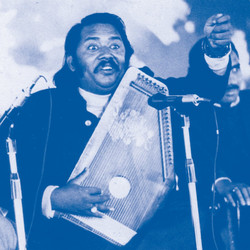
"The Wiregrass Singers' Dewey Williams began learning the shape-note tradition in his childhood. He studied under Judge Jackson, who authored the landmark 1934 hymnbook The Colored Sacred Harp. In 1971, Williams formally organized The Wiregrass Sacred Harp Singers to preserve the music full-time. This unified troupe began touring nationally and leading workshops, which ultimately launched them onto stages at the Smithsonian and Newport folk festivals up until Williams' passing in 1995 when the group disbanded. The African-American Sacred Harp tradition in the Wiregrass region has steeply declined since the start of the 21st century, due to an aging generation of singers, and today it is largely sustained through archival preservation and occasional multi-book singing meetups.
This raw recording, made at the Union Grove Baptist Church, Ozark in mid-April 1993 finds the group singing from B. F. White’s The Sacred Harp (1844), which together with his brother-in-law William Walker’s Southern Harmony (1835) formed the musical backbone of generations of Southern music and Southern musical styles.
"On almost any Sunday between the months of March and October, the season most conducive to travel and outdoor dinner-on-the- grounds, Sacred Harp devotés join with fellow songsters at the County Line Church in Slocomb, or the Mount Sinai Church in Henry County, or the Union Grove Baptist Church in Dale County, or at any one of a dozen or so churches in the southeast Alabama counties of Barbour, Coffee, Dale, Geneva, Houston and Pike, to form the square and sing fa-sol-la. Approximately fifteen African-American Sacred Harp singings occur annually in the Wiregrass region of southeast Alabama. A singing tradition characteristically associated with white culture in the Deep South, southeast Alabama has enjoyed a vibrant African-American Sacred Harp tradition for well over a century.
On a day of a typical African-American Sacred Harp Singing, the participants arrive casually in the late morning, seat themselves in the square according to voice part, and begin to sing. A dinner break occurs in the early afternoon, and the singers enjoy a covered-dish "dinner-on-the-grounds" (or in the church basement) prepared by the women. The most intense and emotional singing typically occurs after the dinner break. Each singer takes a turn leading the song of his choice. He walks to the middle of the square, calls out the song's page number and waits for the designated tuner to key the song. Singers are discouraged by the other singers from repeating a song that has already been sung, or "used." This proscription is often dispensed with, however, if the singer is particularly young, particularly old, or if the song has special significance to the individual song leader (perhaps the favorite song of a recently deceased relative).
Every singer is given an opportunity to lead a song. Often, older or more infirm singers will request younger singers to lead their songs for them. The motions of the song leaders are highly stylistic and often emotional. Young children are taught in singing school to mark time with their right arm while holding the book in their left. Typically, a singer will stand in place at the center of the square while leading the singing of the notes. When he begins to lead the lyrics portion of the song, he will often begin to "walk time," rhythmically pacing from one side of the square to the other, being careful never to turn his back on the tenor section. This "walking time" is unique to the African-American tradition. As a singer grows more confident he develops his own distinctive leading style. During fuguing songs in particular, he may gesture to each section of the square as its part joins in. Skilled song leaders often elicit applause or other emotional responses from the group. Occasionally a singer may fall into a state of spiritual ecstasy and "get happy." The episode might include a personal testimonial followed by a repeat of the last verse or refrain from the previous song. The singings break up around 5 P.M." - Henry Willett
Release notes
Recorded April 17 and 18, 1993 at the Union Grove Baptist Church, Ozark, Alabama.
| 1 | The Happy Sailor | 2:07 | |
| 2 | Blooming Youth | 2:11 | |
| 3 | Weeping Pilgrim | 3:20 | |
| 4 | There We Our Jesus Shall Adore | 2:28 | |
| 5 | Bound For Canaan | 2:04 | |
| 6 | Cuba | 2:03 | |
| 7 | Firm Foundation | 2:42 | |
| 8 | Florida | 2:30 | |
| 9 | Desire For Piety | 2:00 | |
| 10 | Ragan | 3:01 | |
| 11 | Struggle On | 3:06 | |
| 12 | Ninety-Fifth Psalm | 3:00 | |
| 13 | Fallen By The Way | 2:39 | |
| 14 | Happy Home | 2:48 | |
| 15 | Coronation | 2:58 | |
| 16 | The Dying Boy | 2:00 | |
| 17 | The Father's Boundless Love | 1:35 | |
| 18 | The Christian's Flight | 3:15 | |
| 19 | Give Me Just A Little More Time | 3:42 |
- Bernice Harvey
- Alto Vocals
- Cleona B. Stinson
- Alto Vocals
- Janice Jackson Johnson
- Alto Vocals
- Leola Whitehurst
- Alto Vocals
- Mary Jackson
- Alto Vocals
- Pauline Jackson Driggs
- Alto Vocals
- Ruth Jackson Johnson
- Alto Vocals
- Dewey Williams
- Bass Vocals
- Henry Japheth Jackson
- Bass Vocals
- John C. Jackson
- Bass Vocals
- Shem C. Jackson
- Bass Vocals
- Bob Defrin Design
- Design
- Paul Zinman
- Engineer, Mastered By [Digital Mastering]
- Henry Willett
- Liner Notes
- David Michael Kennedy
- Photography By
- Paul Marotta
- Producer
- Kathryn King
- Producer [Field Producer]
- Barbara L. Hampton
- Research
- Damascus Crittenden, Sr.
- Tenor Vocals
- Dovie Dee Jackson Reese
- Tenor Vocals
- Edward Snells
- Tenor Vocals
- Alice Williams
- Treble Vocals
- Emma Mae Jackson McKenzie Ernst
- Treble Vocals
- Estella Snells
- Treble Vocals