Loren Rush
Omaggio a Giuseppe Ungaretti
Label: Recital
Format: CD
Genre: Experimental
In process of stocking: ships in 2-3 weeks, direct from the label
* CD, limited edition of 200. * Loren Rush, born in 1935, has stood in the middle of Californian new music for sixty years and released almost none of it. In 1957 he set up an improvising ensemble with Terry Riley, Pauline Oliveros, Robert Erickson and Bill Butler. In 1970 he wrote Hard Music, for three amplified pianos hammering a single low D until the overtones gather into clouds. In 1975 he co-founded Stanford's Center for Computer Research in Music and Acoustics. The Boston Symphony, the New York Philharmonic and the San Francisco Symphony have all played his scores. Very few of them have been published.
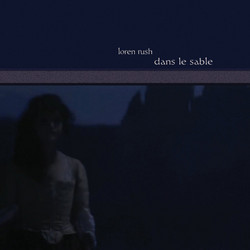
This is his second record for Recital and it sits at the opposite end from the first: where Dans le Sable was orchestral and imposing, here there are piano improvisations, plain and unhurried. The instrument is the Enhanced Piano in Just Intonation, developed at the Good Sound Foundation by Rush with Alfred Owens. The tuning follows the whole-number ratios of the harmonic series, and the resonance and sustain are extended electronically, so chords go on standing well past the point where a piano would ordinarily have let them drop.
The source is L'allegria, written by Giuseppe Ungaretti between 1914 and 1919 in the trenches. Born in Egypt in 1888, raised in Alexandria and formed in Paris, he spent those years holding on to his humanity by making the most beautiful images he could and by recalling the life he had before. The poems are the shortest he ever wrote. Veglia is one whole night spent beside the body of a massacred comrade, and it ends: never have I held so fast to life.
The suite closes with Mattina, where violin and cello join the piano. That poem is two lines long, M'illumino d'immenso, and it is the most quoted thing Ungaretti wrote.