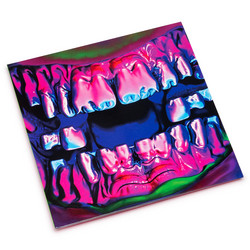
Lub arrives like a controlled implosion. On this debut full‑length, SOF - a Berlin‑based Portuguese artist steeped in metal, noise and the more hostile edges of underground sound culture - treats the album format as a site of self‑preservation through destruction. Rather than slotting into any familiar subgenre lane, these tracks rip up the social contracts of song form: riffs don’t resolve where they “should,” structures don’t flatter attention spans, and there is no chorus waiting to offer catharsis on demand. What emerges instead is a dissonant anarchitecture, a music that builds by unbuilding, that salutes metal and noise even as it refuses to be domesticated by their clichés.
At the heart of Lub is a radical affirmation of the sovereign individual, the sense of a single, embattled psyche clawing its way toward autonomy in the teeth of cultural conditioning. SOF’s distortion is not just a timbral choice but a philosophy: a scorched surface where every element - guitar, synth, percussion, voice - is dragged through the same overdriven circuitry until identities blur. Power, excess and virulence become the common language, a constantly rewritten palimpsest where new gestures are scratched over the ghosts of older ones. Yet the record never lets you forget how precarious this edifice is. There’s a persistent feeling that the mix could shear apart at any second, that the signal is dropping bits as it travels, leaving listeners clinging to “pareidoliac chaoid” fragments: half‑heard patterns, phantom hooks, glimpses of form inside the maelstrom before they’re torn away again.
Tempo choices underscore the psychological weight of the material. Most pieces move at mid to slow pace, closer to a doomed trudge than a sprint, allowing themes of existential anxiety, political entrapment and cultural stupefaction to sink in rather than flash past. When blasts do arrive, they feel less like genre obligations than panic attacks: clipped drums veering from blast‑beat tirades to cavernous doom grooves, overdriven guitars howling against them in sheets rather than neat riffs. Dark, viscous synths seep through the cracks, less pads than toxic vapours, while the vocal presence - agonising screams, strangled declarations, damaged whispers – cuts against that density like a human fault line running through a collapsed building. The overall saturation level is so extreme that dynamic contrast comes from texture as much as volume, drawing the ear into the clamorous depths of what reads as an inner revolution.