Thimar, Arabic for "fruits", brings together the Tunisian oud player Anouar Brahem, the English saxophonist and clarinettist John Surman and the English bassist Dave Holland. Released by ECM in 1998, it takes Arab classical music and jazz as its reference points. The three meet as improvisers, without any attempt to merge the two traditions into a style.
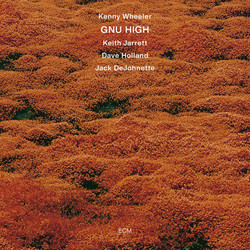
Brahem first noticed Surman through his 1990 solo album Road To Saint Ives, and the two met in 1994 on an ECM tour of Japan, where they talked of recording together. Holland came in through Manfred Eicher, who played Brahem Kenny Wheeler's Angel Song. Brahem followed the bass closely and wanted that sound, which he called "powerful, but rounded". The trio recorded on 13-15 March 1997 at Rainbow Studio in Oslo, with Jan Erik Kongshaug engineering and Eicher producing. Surman plays soprano saxophone and bass clarinet.
Brahem wrote nine of the eleven pieces, and he handed the music over the day before the session. The pages had no bar lines and no chord symbols, and many melodies ran in phrases of seven or nine beats. Holland recalled that he and Surman stumbled at first and worked out the structures on paper before playing. In the opening Badhra the bass sets up a drone under the soprano, and Brahem enters only later, while the brief Waqt is a solo interlude for Surman. Holland contributed Mazad, and Surman Kernow, where his bass clarinet moves in close step with the oud.
Writing for AllMusic, Raymond McKinney found that the album "superbly fuses the traditions of jazz with those of Arab classical music". Holland himself was more cautious, saying that bringing these traditions together "is by no means simple". Tyran Grillo, on ECM Reviews in 2013, heard the record as an illumination of shared roots rather than a fusion project. He singled out Al Hizam Al Dhahbi, with its fluid doublings and harmonies, as the high point of the session. At home in Tunisia, Brahem had by then been credited with restoring the sovereignty of the oud.
CD, ECM 1641, first released on 18 May 1998.