Raymond Scott
Three Willow Park: Electronic Music From Inner Space, 1961–1971 (3LP)
Tracked express shipping from Italy, no customs or import VAT in the EU. Shipping costs
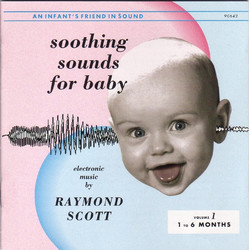
Early electronic music composer Raymond Scott will have a treasure trove of essential and extremely rare recordings collected on this new release Three Willow Park: Electronic Music from Inner Space, 1961-1971. From having his music adapted for Warner Bros. cartoons to inventing early electronic music instruments to releasing the classic (and recently reissued) Soothing Sounds For Baby series, Scott’s electronic music was famously ahead of its time and touched on sounds like techno and ambient music decades before those terms even existed. Many of the tracks feature Scott’s own inventions such as the Electronium and Clavivox instruments and capture a musician unimaginably ahead of his time.
Three Willow Park: Electronic Music from Inner Space, 1961–1971, represents the second anthology of pioneering electronica by Raymond Scott. The album contains 61 previously unissued gems, many featuring hypnotic rhythm tracks played by Scott’s Electronium — an invention which composed and performed using programmed intelligence. Three Willow Park reveals that Scott was producing beat-oriented proto-techno before the 1970s explosion of electronic music and rhythms on the pop charts, a significant achievement that should not be overlooked.
In 2000, Basta issued Manhattan Research Inc., a 2-cd set of 69 tracks recorded 1953–69, spotlighting Scott’s groundbreaking electronica — a gallery of strange sounds seemingly beamed down from UFOs. MRI also presented some of the earliest TV & radio commercials to feature electronic music, as well as early film soundtrack collaborations with Jim Henson. Three Willow Park presents the next stage in assuring Scott’s place in electronic music history.
Willow Park Center was an industrial rental complex of offices and warehouses in a Long Island suburb. Following his 1965 marital breakup, Scott set up shop at WPC. He operated a musical lab — researching, experimenting, testing, and measuring. He twirled knobs, flipped switches, and took notes. He installed equipment and machines, and used them to build new equipment and machines. This makeshift compound remained Scott’s workspace and bedroom until 1971, when he decamped for L.A. to work for Berry Gordy at Motown.
Scott was a highly qualified engineer who also happened to be a conservatory-trained (Juilliard) musician. He could compose, arrange, perform, improvise and edit, but given a shelf of hardware and a soldering iron, he could also rig an appliance to further his musical aims. Like many visionaries, Scott foreshadowed the future. He developed technological processes which were pivotal in the evolution of the fax machine. He composed a “silent” piece years before John Cage‘s 4′ 33″. He predicted (in 1944) that composers would someday reach audiences via thought transference. He applied for and was awarded numerous patents. Foremost, he developed electronic and automated sound-generating technology to craft the elements of pop music at a time when circuit-made sound was largely a novelty, used in “serious” works, or cranked-up for special effects in science fiction films.
In 1946, while still leading jazz bands, Scott established Manhattan Research, Inc., billed as “Designers and Manufacturers of Electronic Music and Musique Concrète Devices and Systems.” By the 1950s, he was using his inventions to produce commercials with electronic soundtracks, as well as developing automated sequencer technology. His friend and colleague Bob Moog said, “Scott was definitely in the forefront of developing electronic music technology and using it commercially as a musician.”
Besides the Electronium, sounds heard on Three Willow Park were generated by the Circle Machine; Clavivox; Bass-Line Generator; Bandito the Bongo Artist (a drum machine); tone, melody, rhythm and sound effects generators (some controlled, others random); oscillators, sequencers, and modulators; tape montages; and acoustic instruments and voices. These recordings, like those on MRI, define and establish Scott’s legacy in electronic music history.
Release notes
THREE WILLOW PARK: Electronic Music from Inner Space, 1961-1971 Three Willow Park: Electronic Music from Inner Space, 1961–1971, represents the second anthology of pioneering electronica by Raymond Scott. The album contains 61 previously unissued gems, many featuring hypnotic rhythm tracks played by Scott’s Electronium — an invention which composed and performed using programmed intelligence. Three Willow Park reveals that Scott was producing beat-oriented proto-techno before the 1970s…
| A1 | This Is a Sound/Alka-Seltzer Effects #7 | 0:42 | |
| A2 | Dorothea | 3:49 | |
| A3 | Idea #35 | 2:05 | |
| A4 | Ohio Bell Mystery | 0:33 | |
| A5 | Domino Sugar Demo | 1:01 | |
| A6 | Auto-Lite Effects | 5:54 | |
| A7 | Cyclic Bit #1 | 0:08 | |
| A8 | It's a Little Complicated | 0:36 | |
| A9 | A Rhythm Ballet | 4:44 | |
| B1 | The Sound of Money Being Wasted | 0:17 | |
| B2 | Pygmy War Dance | 0:46 | |
| B3 | Cindy Alternate (Pop Rock) | 1:31 | |
| B4 | Nice Sound #3 | 0:13 | |
| B5 | Carribea | 3:46 | |
| B6 | Rhythm Sample #9 | 0:42 | |
| B7 | Ballet-Like Bits | 4:05 | |
| B8 | Cyclic Bit #2 | 0:23 | |
| B9 | Portofino (Theme) | 0:16 | |
| B10 | Rhythm Sample #2 | 0:30 | |
| B11 | 1st Class Electronium (Part 1) | 6:22 | |
| B12 | Limbo Effects Reel | 2:04 | |
| B13 | Mood Piece | 0:23 | |
| C1 | Thermofax Effects | 0:55 | |
| C2 | Ripples Effects #1 | 0:24 | |
| C3 | Electronium Movie Score | 10:21 | |
| C4 | In A 21st Century Drawing Room | 1:22 | |
| C5 | Nice Set-up #7 | 0:23 | |
| C6 | Idea #36 | 2:25 | |
| C7 | Cyclic Bit #3 | 0:36 | |
| C8 | Sparrows Pt. 1 | 2:30 | |
| C9 | Ripples Fugue | 1:02 | |
| D1 | The Toy Trumpet (demo #1) | 0:20 | |
| D2 | IBM Probe #3 | 1:09 | |
| D3 | Portofino #3 | 2:40 | |
| D4 | Sparrows Pt. 2 | 4:05 | |
| D5 | Cindy Flair Look Rhythm | 1:28 | |
| D6 | Super Cheer Instrumental | 0:22 | |
| D7 | Auto-lite Wheels Effects | 0:30 | |
| D8 | Tone Stepper | 1:15 | |
| D9 | Rhythm Sample #2 (Half-Speed Demo) | 1:11 | |
| D10 | 1st Class Electronium (Part 2) | 7:05 | |
| D11 | The Toy Trumpet (Demo #2) | 0:23 | |
| E1 | Rhythm Sample #5 | 0:19 | |
| E2 | Ripples Effects #2 | 0:19 | |
| E3 | Effect #6/Five-Five | 0:10 | |
| E4 | Rhythm Sample #6 | 0:28 | |
| E5 | Cat Concerto (Alley Cats) | 2:22 | |
| E6 | Toy Funk | 3:12 | |
| E7 | Iceberg Bit | 1:01 | |
| E8 | 2nd Class Electronium | 7:33 | |
| E9 | 500 | 0:13 | |
| E10 | Bee Swing | 2:50 | |
| E11 | Clavivox Demo Intro | 0:20 | |
| F1 | IBM Probe #4 | 0:37 | |
| F2 | Portofino #4 | 2:11 | |
| F3 | Night on a Calm Sea | 3:51 | |
| F4 | Ohio Bell Rhythm Track | 0:30 | |
| F5 | 1st Class Electronium (Part 3) | 6:38 | |
| F6 | Baltimore Gas & Electric Test | 1:14 | |
| F7 | Cindy Variations Pt. 1 | 1:11 | |
| F8 | Three Motown Electronium Adaptations (By Hoby Cook) | 4:40 |
- Piet Schreuders
- Art Direction, Artwork, Design
- Jeff Winner
- Co-producer, Liner Notes, Research, Editor
- Hoby Cook
- Liner Notes
- Raymond Scott
- Performer
- Jim Henson
- Photography
- Irwin Chusid
- Producer, Booklet Editor, Editor, Liner Notes
- Gert-Jan Blom
- Producer, Editor