1
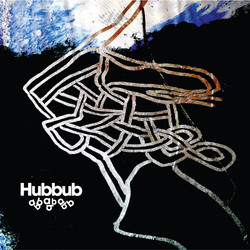
Hubbub
Whobub
LabelMatchless RecordingsGenreJazz & Improvisation
Out of stock
Tracked express shipping from Italy, no customs or import VAT in the EU. Shipping costs
The great surprise with the French quintet Hubbub comes with seeing them in performance before you’ve heard one of their recordings. Five men walk on stage, two carry saxophones, one a guitar, the pianist and drummer sit down at their instruments. It looks like a conventional notion of a band, the sole concession to the world of electronics the Gibson Les Paul, itself a guitar design that has changed little in the past sixty years. Every instrument carries with it the expectation of a characteristic envelope, the attack and decay of individual sounds. And then Hubbub starts to play and that visual presence remains in place, almost a tableau, as warm reminder and comforting insistence on the acoustic experience and the tradition of watching people play musical instruments rather than laptops, oscillators, synths and sampling machines. In Hubbub’s hands every technique for the typically discrete sound is regularly exchanged for a drone. Bowing is as typical of Hubbub as it is of I Musici. The piano is sometimes bowed (a la Stephen Scott and C. Curtis-Smith); the cymbals are bowed; the guitar is sometimes bowed, with the additional use of volume knobs to erase the picked or bowed attack. The saxophonists employ circular breathing and multiphonics as they create continuous waves of sound, and the effect can at times resemble a vast organ chord swimming with random micro-details—beat patterns between pipes, the scurry of a mouse, the click of a stop. Within that often continuous sound that Hubbub favors—the sound so completely unlike the band’s name—there is continuous and constant evolution so that that music that you think sounds the same as it did five minutes ago may not, upon examination, sound similar at all.
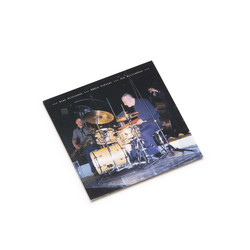
So devoted is the group to a kind of continuous sound and organic whole that the two-CD Whobub lists the group’s members without identifying instruments, but here they are anyway: Frédéric Blondy, piano; Bertrand Denzler, tenor saxophone; Jean-Luc Guionnet, alto saxophone; Jean-Sébastién Mariage, guitar; and Edward Perraud, percussion. There may be additional instruments used, but somehow I don’t think so. Whobub documents two performances, each an emblem of the kind of gradual unfolding of which the group are masters. “Who,” the first disc, is a single 43-minute piece, expanding and unfolding with a kind of focused calm. It begins in relatively isolated and identifiable sounds, most notably Mariage’s bare, sustained guitar notes struck with a pick. Other sounds enter discreetly, some clearly traceable to an individual instrument, others not; densities shift, time stretches, and there’s a kind of calm that is very close to listening to nature (human nature?), as if silence is being gently embellished. “Bub 1,” its 32 minutes the bulk of the second performance, has stretches of extraordinary delicacy, including a lengthy phase in which Guionnet’s whispering harmonics creating a kind of sonic veil with Perraud’s tinkling Zen-monastery percussion and Blondy’s whistling string glissandi. The brief “Bub 2” continues to develop the same attenuated atmosphere, the group becoming a kind of close-mic’d and multiply-amplified gong. As with Hubbub’s previous recorded performances, the constant subtle gradations and close interactions create a kind of panoramic unity, abrasions and pleasantries alike folding into a larger tapestry.
As his work with Hubbub indicates, Bertrand Denzler is an ardent explorer of saxophone sonics, and his solo work on the CD Tenor is fearless, demanding work. The opening “Filters” begins with the contrasting of long iterations of the same harsh note alternated with periods of extended silence, setting up dialectics between presence and absence, duration and rhythm. The lengths of the notes and silences will vary, but Denzler keeps up the pattern for all of “Filters’” 17 minutes, microscopically varying the same note with shifts in embouchure, fingering and breathing that introduce different harmonics. It’s insistent work, demanding the utmost in concentration on the listener’s part as well as Denzler’s, the tones and silences expanding to create a universe. The other pieces are in some sense less daunting. The gentler “Signals” has significantly more variety—rhythmic, timbral and tonal—as it carries the variations in technique to the point where an overtone will dominate; the relatively brief “Airtube” (11’49”) breaks down the saxophone into its series of component tubes, the sound of breath barely hinted at in “Filters” now dominant. Clearly this is not music for everyone (that, too, might be hard to imagine), but its improvisation of the highest discipline, ready to reward those kinds of listening that are commensurate with it.
Details
Cat. number: MRCD 80
Year: 2011