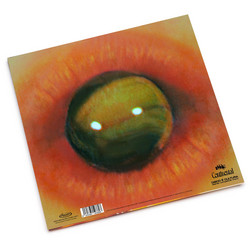
Todos Os Olhos
Reissue of this collectible avant madness LP from 1973 from one of the most influential artist in the Tropicália movement of 1960s Brazil. The joke with this album is that the album art -- which looks like an eyeball -- is actually a photo of a marble shoved up someone's anus... a little jab at the Brazilian dictatorship's office of censorship, which apparently didn't recognize a mirror when they saw one. Tom Ze's nutty side comes dancing to the fore here, with some of his more playful, delibera…
Sold Out

Sergio Mendes & Brasil '66
On Herb Alpert Presents Sergio Mendes & Brasil ’66, the pianist and his group turn bossa nova and Brazilian songcraft into sleek, cross‑border pop. Their version of Jorge Ben’s “Mais Que Nada” became the first Portuguese‑language hit in the US, opening doors for Brazilian music worldwide and helping earn the album a place in the Grammy Hall of Fame.
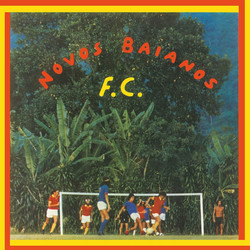
Novos Baianos F.C.
“Novos Baianos shaped an entire generation of Brazilian music — their sound is pure freedom.” — Caetano VelosoOriginally released in 1973, Novos Baianos F.C. captures the band’s communal lifestyle and fearless experimentation. After the success of Acabou Chorare, the group expanded their sound into a vibrant mix of samba, choro, folk, psychedelia, and electric street-soul.With the unmistakable chemistry of Baby Consuelo, Pepeu Gomes, Moraes Moreira, Paulinho Boca de Cantor, and Dadi, the album r…
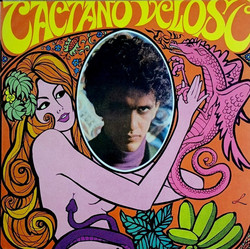
Caetano Veloso
*Back in print ! 2026 repress* "The Tropicalia art movement of the late 1960s, with flourishes in visual art, poetry, theatre and music, is one of Brazil's most adored cultural concoctions. It was a movement which began out of necessity, shortly after a repressive military dictatorship seized power after 20 years of peaceful democracy. The term Tropicalia first came from the mind of Brazilian visual artist Helio Oiticica, whose eponymous piece consisted of a sandy maze bordered by tropical Brazi…
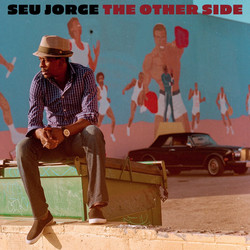
The other side
A new solo album from Seu Jorge reveals his 'other side' on this new solo album featuring Beck and Maria Rita. Produced by Mario Caldato Jr. (Beastie Boys), the album moves between jazz and bossa nova and is the result of a 16-year musical journey. Seu Jorge is ready to present to the world the most ambitious project of his international career. After 16 years in the making, “The Other Side” finally arrives on streaming platforms in May. A departure from the soul and samba that defined his solo …

Negro É Lindo
"1971 is a complicated year in Brazil, with the dictatorship in its hardest period, and the censorship acting in every part of the culture. In this context Negro é Lindo was released: a LP in which Jorge Ben adopts an artistic form of confrontation. In the lyrics you can see Cassius Marcelus Clay aka Muhammad Ali taking the space of Spiderman or Captain America, and the beauty of black people in tunes like Cigana, Zula, and the title track. The name Negro é Lindo means Black is Beautiful, an emp…

Transa
*2026 repress* Transa is the fourth album by Brazilian musician Caetano Veloso, released on 1972 by PolyGram. Like its predecessor, it was recorded while the artist was exiled in London, though he returned to Brazil shortly after completing it. Evocative, eclectic, intimate, and rhythmically complex, Transa contains everything that has made Caetano Veloso the most distinctive and, arguably, most important voice in modern Brazilian music. The record was cut in 1972, shortly after Veloso's return …
Sold Out
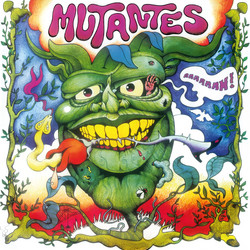
Jardim Elétrico
Jardim Elétrico (1971) is a vibrant and inventive entry in the Brazilian band Os Mutantes’ discography, marking the transition beyond the core Tropicália movement into a heavier, more experimental blend of psychedelic rock, Brazilian popular music, and early progressive influences. The album balances playful irreverence with darker, more electric textures, featuring distorted guitars, studio experimentation, layered vocal harmonies, and the charismatic interplay between Rita Lee, Arnaldo Baptist…

Tropicália Ou Panis Et Circencis
Originally released in 1969, "Tropicália: Ou Panis et Circencis" remains one of the most significant and transformative albums in Brazilian musical history. This groundbreaking collective work spearheaded the Tropicalia movement, led by Brazilian legends Caetano Veloso and Gilberto Gil, along with Gal Costa, Tom Zé, Nara Leão, and the wildly inventive Os Mutantes.
Blending traditional Brazilian sounds with psychedelic rock, avant-garde experimentation, and international pop influences, the alb…
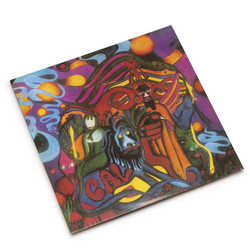
Gal
*2025 repress* After Caetano Veloso broke out with his solo debut, the self-titled 1968 release recognized as the building block for the now infamous Brazilian Tropicalia movement, his friends and musical peers released similar albums, always upping the ante in terms of outrageousness and inventiveness. This release, the second of two self-titled albums released by Gal Costa in 1969, set the high watermark in terms of overall insanity and complete experimental freedom for the entire lot; not Vel…

Guilherme Coutinho E O Grupo Stalo
Mad About Records present a reissue of Guilherme Coutinho E O Grupo Stalo's self-titled album, originally released in 1978. Guilherme Coutinho started playing at the age of five and, at the age of seventeen, he was already part of Os Mocorongos and Os Iguanos, both as an amateur. But he soon became a group leader, playing in several nightclubs in Belém (Pará), until he settled in the Paraense Assembly, where he lived for more than 15 years. He was a musician who played for high society, he was a…

Os Afro Sambas
“The Afro-Sambas from Baden Powell and Vinícius de Moraes”… Many guitarists all over the world respectfully smile when they hear these words. The compositions are true masterpieces that never seem to loose their inspiring quality. The two legends in Brazilian Music recorded the album in 1966 as a conclusion of their mutual interest in the Afro-Brazilian culture.
As a witness of the rise of Bossa Nova, Baden Powell (1937, Varre-Sai (north of Rio de Janeiro)) got in contact with Tom Jobim in 1959.…
Sold Out
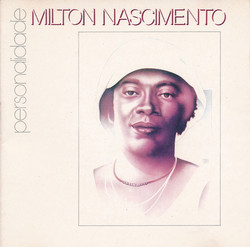
Personalidade
1987 release ** "One of Brazilian PolyGram's anthologies of homegrown music, this volume offers a cross-section of Milton Nascimento's Brazilian output from 1980 to 1985, with a side trip way back to the unforgettable tune that launched him in 1967, "Travessia." From North American rock/funk -- a live rendition of a tune dedicated to the Beatles, "Para Lennon e McCartney" -- to smooth-textured pop, lush electronic backdrops, a mournful Villa-Lobos melody ("Cantiga"), and various Brazilian backgr…

Estudando O Pagode
2006 release ** "Tom Zé has always had a knack for mixing rural, back-porch compositions with whatever technology was available to him -- giving his music a distinctive spice of the avant-garde. His tunes may be centered around the strumming of his battered acoustic guitar, but his production and mixing techniques often take his songs into a weirder world. A self-described "musical journalist," Zé isn't concerned with making you boogie as much as he is concerned with telling you what the deal is…

Ben
The long unavailable ninth album by Brazilian star Jorge Ben. Released in 1972, "Ben" comes from one of Jorge Ben’s most artistically important phases, the early 70s. The album has some of Ben’s most famous songs, “Taj Mahal” (plagiarized by Rod Stewart on his song “Da Ya Think I’m Sexy?”, as the British singer admitted himself in 2012), and “Fio Maravilha”, paying homage to Flamengo’s iconic football player Fio Maravilha.
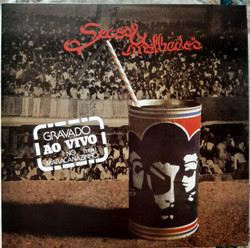
Gravado Ao Vivo No Maracanãzinho
*2024 stock * Recorded live at the Maracanãzinho gymnasium in 1974 for a TV Globo special and released in 1980. Good quality considering the time and the precariousness of Brazilian technology. Lot for the improvisations and the totally Rock'n Roll feel. This phrase stolen from the band's Orkut community says it all: "If, at that time, a mother ship had landed, for example, in the Praça dos Três Poderes in Brasília and dumped some aliens through its doors, it wouldn't have caused such an impact,…
Des (Trambelhar) Ou Não
A joint release between Litoral Records and Três Selos in Brazil. One of the first independently released Brazilian records, Alcides Neves’ debut LP ‚Tempo de Fratura’ is reissued for the first time on vinyl, alongside his second release ‚Des (Trambelhar) Ou Não‘. Hailing from the Brazilian North East, Alcides Neves released his debut album a few years after moving to São Paulo, in 1979. The LP’s release coincided with the emergence of the city’s seminal Vanguarda Paulista movement, which led so…

Tempo De Fratura
A joint release between Litoral Records and Três Selos in Brazil. One of the first independently released Brazilian records, Alcides Neves’ debut LP ‚Tempo de Fratura’ is reissued for the first time on vinyl, alongside his second release ‚Des (Trambelhar) Ou Não‘. Hailing from the Brazilian North East, Alcides Neves released his debut album a few years after moving to São Paulo, in 1979. The LP’s release coincided with the emergence of the city’s seminal Vanguarda Paulista movement, which led so…

Leaf-Playing In Quito, 1960-1965
Tip! *In process of stocking.* The out-of-this-world recordings of Dilson de Souza, leading a kind of tropical chamber jazz on leaves from a ficus tree. Dilson was from Barra do Pirai, in the Brazilian countryside; moving to Rio as a young man, where he worked in construction. He recorded his first record in 1954, for RCA Victor. He travelled to Quito around 1957, soon hooking up with Benitez & Valencia, who introduced him to the CAIFE label. Dilson played the leaf open, resting on his tongue, h…
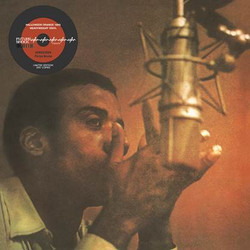
Fôrça Bruta
The combination of Jorge Ben and Trio Mocotó had already produced great things when Força Bruta first appeared in 1970. Ben's self-titled album of the year before had reeled off a succession of Brazilian hits, including "País Tropical" and "Cadê Teresa," and made the four musicians very busy as a result. Força Bruta was a slightly different album, a slice of mellow samba soul that may perhaps have been the result of such a hectic schedule during 1969. One of the hidden gems in Jorge Ben's discog…

Som
**CD edition** Persona is the brainchild of the Italian born, Brazil based, multimedia artist, Roberto Campadello, who, during the late 1960s and early '70s became highly regarded for a body of work that drew heavily on the I Ching. Notable among these was interactive installation for São Paulo’s XII Bienal in 1973, where, via an octagonal structure of mirrors, participants were guided by Campadello through meditations and cosmic dances. It was this work that laid the crucial groundwork for The …
Sold Out
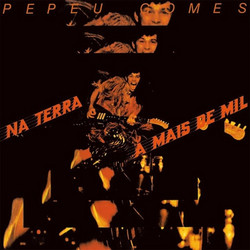
Na Terra A Mais De Mil
*2024 stock * Known throughout Brazil for his success with the group Novos Baianos, Pepeu Gomes launched his solo career with the album "Geração do Som" (1978). In 1979, after the end of the band and already considered one of the greatest guitarists in the country, Pepeu presented his first album also singing, "Na Terra a Mais de Mil" (1979). The album is now back on the shelves on 180 gram vinyl, in Polysom's "Clássicos em Vinil" collection.The album features 12 songs, all written by Pepeu with…
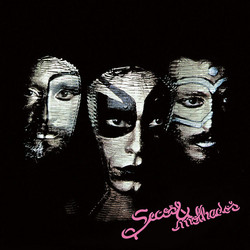
Secos & Molhados
*2024 stock * Vinyl LP-only repressing of this album from the Brazilian band. Formed in 1971 by Ney Matogrosso (vocalist), Gerson Conrad (vocalist/composer/violao) and Joao Ricardo (singer/composer/violao/harmonica), Secos & Molhados is inscribed in a privileged category of few bands and musicians who led Brazil from bossa nova through Tropicalia then to Brazilian rock, a style which only blossomed in the '80s. Much of the group's importance, apart from the huge success of it's first album, whic…

A Música Século XX de Jocy
A virtuoso pianist and composer of seminal works in early electronic and experimental classical music, Jocy de Oliveira’s musical output has had a great influence within Brazil and abroad. Her sole contribution to Brazilian popular music, her 1959-recorded album, ‘A Música Século XX de Jocy’ in many ways stands apart from the rest of her artistic oeuvre. The original vinyl release marketed the record as adding to Brazil’s samba heritage with a ‘simple and original dialectic’, naming its style ‘…
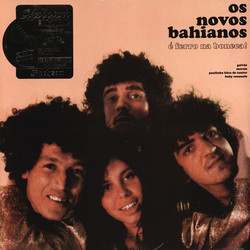
Ferro Na Boneca
The debut album from the legendary Brazilian group, Os Novos Bahianos. Originally released by RGE in 1970 in Brazil, ‘É Ferro Na Boneca!’ features 13-songs composed by Luiz Galvão and Moraes Moreira. This record shows the roots of the group, moving through psychedelics, edgey pop, rock and Tropicália. After writing ‘É Ferro Na Boneca!’ their music began to move towards MPB due to the influence of João Gilberto, who began working with the group. In 1972 they released their incredible ‘Acabou Chor…
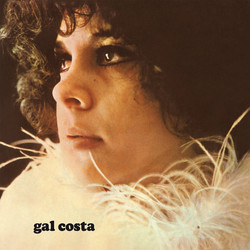
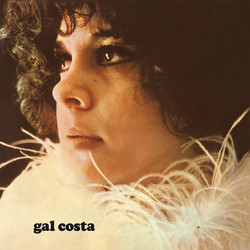
Gal Costa
Reissue on 180gm vinyl! Originally released in 1969, Gal Costa's 2nd album is one of the finest releases to come out of Brazil's Tropicalia movement. Feat. songwriting & vocal help from 2 of the original Tropicalismos, Caetano Veloso & Gilberto Gil, she flows effortlessly between shredding psychedelia & smooth bossa nova. An essential record for anyone that appreciates the far reaches of Brazilian popular music. Incl. the classic trks "Baby" * "Não Identificado." Such a pleasant surpise to see t…

Caetano Veloso (Irene)
*2024 repress* Lilith Records present a reissue of Caetano Veloso's Caetano Veloso (Irene), originally issued in 1969. Although Veloso had already been thrown in jail once for his criticism of Brazil's military regime, he continued to speak out against it on Caetano Veloso (Irene), with tracks like Irene, (about a machine gun-toting outlaw celebrated by the left). No wonder he would soon find himself in political exile in the UK. The general tone of the album is in keeping with its dire message …
Sold Out
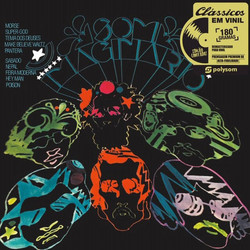
Som Imaginário
*2024 reissue* An essential psychedelic album and a must for fans of Tropicalia. Som Imaginário released a few albums during the progressive rock era which are also highly recommended but reissues are criminally unavailable.... The powerful grouping was a true academy of sound imagination: Wagner Tiso, Tavito, Luiz Alves, Robertinho Silva, Frederyko, Naná Vasconcelos and Zé Rodrix.Som Imaginário (Imaginary Music) is a Brazilian band from the 70s. They joined together to support Milton Nascimento…
Sold Out

África Brasil
África Brasil is a 1976 release by Brazilian artist Jorge Ben. It was Ben's 14th studio album and a milestone in his career with a switch to electric guitar and funk music leaks. For África Brasil Ben reworked three of his earlier compositions: "A Princesa e o Plebeu" from Sacundin Ben Samba, "Taj Mahal" from Ben, and "Zumbi" from A Tábua de Esmeralda. The album's opening track "Ponta de Lança Africano (Umbabarauma)", a song about an African football striker, became a well known soccer-associate…
Sold Out

Desenhos
2020 repress, totally sold-out at source. First time worldwide vinyl reissue of the Brazilian jazz holy grail Desenhos by Vitor Assis Brasil, originally released in 1966. This is the incredibly rare and Coltrane influenced debut of Brazilian sax great Victor Assis Brasil (1945-1981) for Roberto Quartin's cult label Forma. Vitor Assis Brasil led this session on January 11th, 1966 with his quartet which featured the legendary pianist Tenório Jr, double-bassist Edison Lôbo and drummer Chico Batera.…

Qualquer Coisa
2024 stock. Mini-LP Papersleeve Replica CD. Elemental Music proudly present a new LP reissue of Qualquer Coisa, a 1975 studio album by Caetano Veloso which was released simultaneously with the album Jóia. Qualquer Coisa differs from the more experimental modes of previous records like his Tropicália sets, or the 1973 album Araça Azul, but possesses a unique charm that makes it every bit as special as those. The set’s quite stripped-down and personal, and really has Veloso getting back to basics …
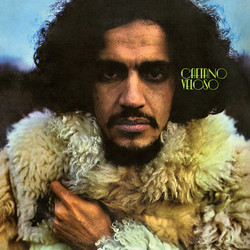
Caetano Veloso (A Little More Blue)
2024 stock. Mini-LP Papersleeve Replica CD. Following the stunning reissue of Transa (1972), Elemental Music, together with Universal Music, proudly presents a new reissue of another long unavailable gem by the one and only Caetano Veloso.
Also known as A Little More Blue or London, London, Caetano Veloso (1971) is the third self-titled album by the Brazilian genius and the first to be recorded in London, where the artist was living in exile from the Brazilian dictatorship. This masterpiece is c…
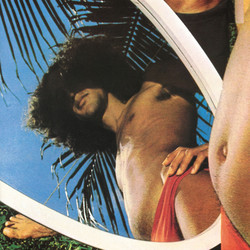
Caetano Veloso (Araçá Azul)
2024 Stock. Mini-LP Papersleeve CD Replica. The fifth solo studio album by the Brazilian genius, Araçá Azul, is considered his most experimental work to date and also the most controversial. In its time it was rejected by part of his audience, which expected a more pop-oriented record (following the trend of his previous UK albums). However, Araçá Azul received critical acclaim in 1973, and is almost unanimously regarded today as one of the most creative works from Caetano Veloso’s celebrated di…
Sold Out
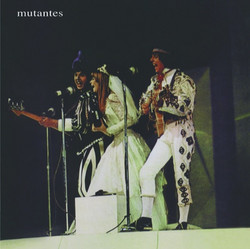
Mutantes
*2024 repress* One album into their career in 1969, Mutantes showed few signs of musical burnout after turning in one of the oddest LPs released in the '60s. Similar to its predecessor, Mutantes relies on an atmosphere of experimentation and continual musical collisions, walking a fine line between innovation and pointless genre exercises. The lead track ("Dom Quixote") has the same focus on stylistic cut-and-paste as their debut LP's first track ("Panis et Circenses"). Among the band's musical …

Se O Caso É Chorar
"Wonderful 70s work from Tom Zé! The record's a bit more straightforward than some of his other records from the decade, and has a number of tracks with a samba sound at the base – but there's more than enough fantastic material to keep the record fresh, and Tom's writing is as great as ever. There's a vocal group that sings with Zé on many of the tracks on the record – but they also seem to sometimes act as a Greek chorus, in response to breakaway vocal passages that are dominated by Zé. The wh…
Sold Out
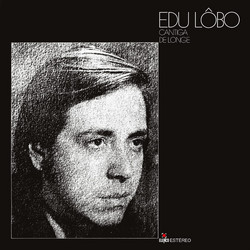
Cantiga De Longe
With a few more instrumental solos than regular Lobo albums, Cantiga De Longe takes advantage of the genius of the arranger / instrumentalist Hermeto Pascoal. The album has other stars, including percussionist Airto Moreira and drummer Cláudio Slom. There are several important songs on this album: "Casa Forte" (which would be recorded later by Flora Purim), "Mariana, Mariana," "Cantiga de Longe," "Zanzibar," and others. Not Lobo's biggest hits, but beautiful melodies and lyrics on an album with …
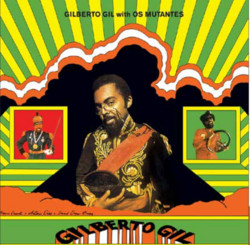
Gilberto Gil With Os Mutantes
*In process of stocking* Gilberto Gil’s second album is packed with some of the best songs of his career; jubilant pop extravaganzas like “Domingo No Parque”, “Pega a Voga, Cabeludo”, and “Frevo Rasgado” that were equally inspired by the irresistible, brassy bombast of Carnaval and intelligent rock & roll from America and Britain. Even more than the other Tropicalistas, though, Gil blends his rock and native influences seamlessly, resulting in songs like “Ele Falava Nisso Todo Dia”, which chart …
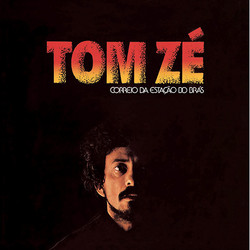
Correio Da Estação Do Brás
A fluid, low-key effort, with less of the challenging, music box melodies of his earlier efforts. This is a record which eases its way past your ears (and I mean that in a good way!) It’s not sappy or unchallenging, but it is a lot smoother and less overtly avant than the stuff David Byrne loves so much.” – slipcue.com
Tom Zé began his career together with Caetano Veloso, Gilberto Gil, Gal Costa, and Maria Bethânia. As a composer, he influenced Caetano and many others and delivered an expressive…
Sold Out

Caminho Do Interior (Deluxe Edition LP)
37 Years after its original release on Egberto Gismonti's Carmo label, Piry Reis' classic Caminho Do Interior album is finally available again. All original tracks are restorated and remastered. 'Idade Média' is added as a bonus track which has only been released as a B-side on the 7" vinyl 'Quase Meio Dia / Idade Média' printed in small amounts in 1974. This deluxe edition is pressed on 180 gram vinyl. Special word of thanks from Piry himself: "Agradecimento especial a Egberto Gismonti pelo a…