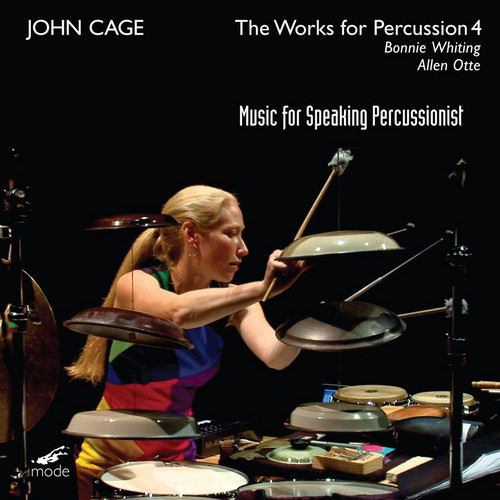
Cage Edition Vol.52 : The Works for Percussion 4
John Cage works for a speaking percussionist, including Bonnie Whiting's realization 51'15.657" and Music for Two (By One), the early voice and piano songs, and a piece by Allen Otte built on Cage's methods.
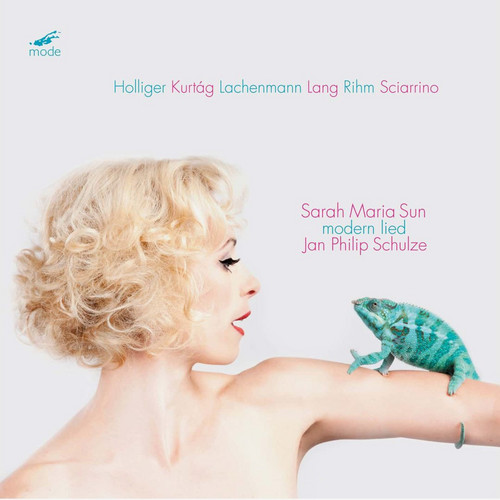
Modern Lied
Six modern song cycles for soprano and piano by Holliger, Sciarrino, Lachenmann, Kurtág, Rihm and Bernhard Lang, sung by Sarah Maria Sun with pianist Jan Philip Schulze, with several first recordings.
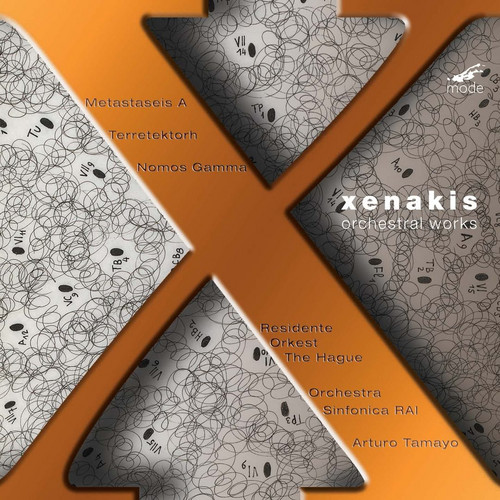
Xenakis Edition 15, Orchestral Works
Three orchestral works by Iannis Xenakis: Metastaseis A in its original version for 65 musicians (first recording), with the Orchestra Sinfonica RAI, and Terretektorh and Nomos Gamma, with the Residentie Orkest The Hague under Arturo Tamayo.
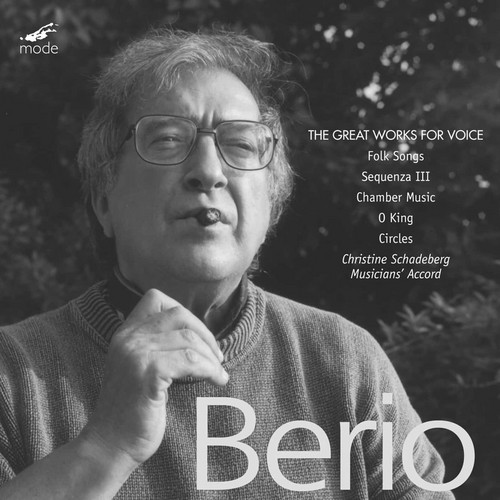
The Great Works For Voice
Vocal works by Luciano Berio, among them Folk Songs, Sequenza III, Chamber Music, O King and Circles, sung by Christine Schadeberg with Musicians Accord, reissued with the first recording of Quattro Canzoni Popolari.
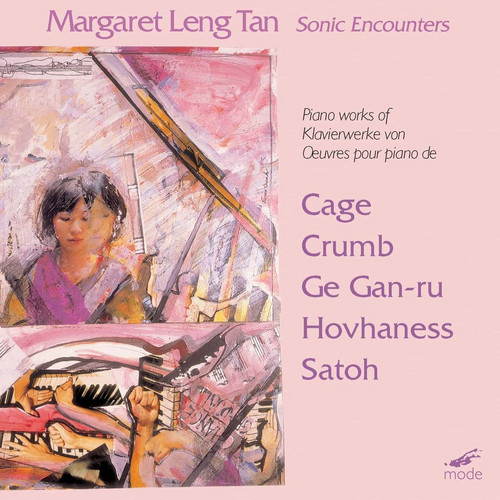
Sonic Encounters
Margaret Leng Tan's second recording, on piano: Cage's Primitive and In the Name of the Holocaust (first recordings), Hovhaness, Crumb, Satoh's Cosmic Womb for two pianos with digital delay, and Ge Gan-ru's Gu Yue. Released in 1988.
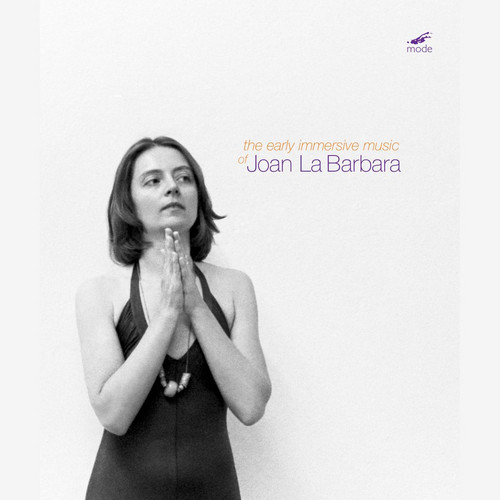
The Early Immersive Music of Joan La Barbara
Three long-form works from Joan La Barbara's first decade of recordings, with new stereo and surround mixes from the analogue tapes: As Lightning Comes In Flashes (1981), Autumn Signal (1978) and the previously unreleased CYCLONE (1976-77).
And On The Seventh Day Petals Fell In Petaluma
The history of American avant-garde music is a snarled knot, twisting through the decades, spanning genre, practice, and approach. Most narratives plant its origins within the post-war period, orbiting around John Cage, Morton Feldman, and those artists springing from the movements of Fluxus and free-jazz. American creative innovation issued unquestionable influence over the later half of 20th century, but the root of its radicalism was earlier, with its origins often misplaced. Rather growing f…
Explosion Of A Memory (A Literary Canvas For Orchestra)
An extended iterative, cycling, dissipating cloud of fragments, constantly shifting focus, which throws up detail, evolves, returns, settles and re-dissolves; it's a four-dimensional explosion in which stretches of baroque, folk themes and Byzantine liturgy exist contemporaneously alongside modern and (arguably) post-modern materials and techniques, all shaken loose out of the same experiential block, much as strata emerge as tectonic plates fold one time over another. Long, beautiful, to…
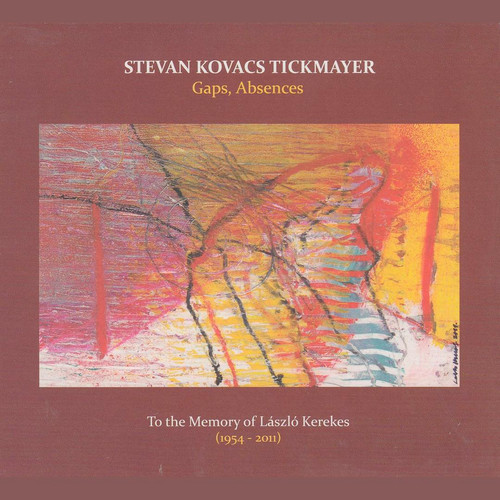
Gaps, Absences
A beautifully recorded and produced cycle of pieces that combine complexity and precision with rich and unfamiliar timbres. The ensemble pieces amplify and enrich a core piano with various combinations of harmonium, double bass, violin, percussion, Hungarian zither, citara bassa, bowed cymbals, alto clarinet, melodica, sampler and field recordings, all sparsely but powerfully deployed. This is a deep and powerful music with both crystalline clarity and cinematic low frequency power. And no fat o…
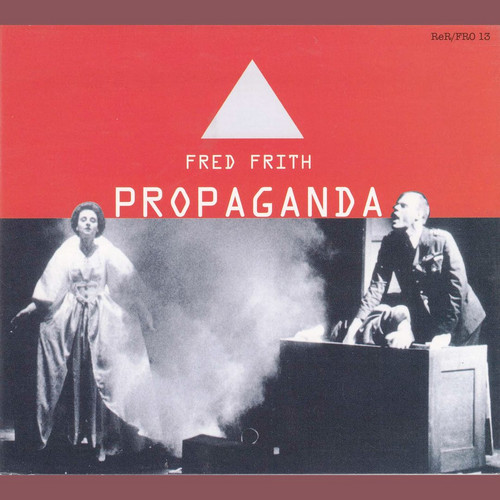
Propaganda
Written for theatre in 1987 using a host of avian and mammalian voices, snippets of unidentified musical material and electroacoustic noise- sculpting, as well as invented and real instruments played by Fred Frith. This was a hard time and the mood is intense, lean and not cheerful, though there are some gruesomely cheery inserts. There's no fat but a lot of meat here.
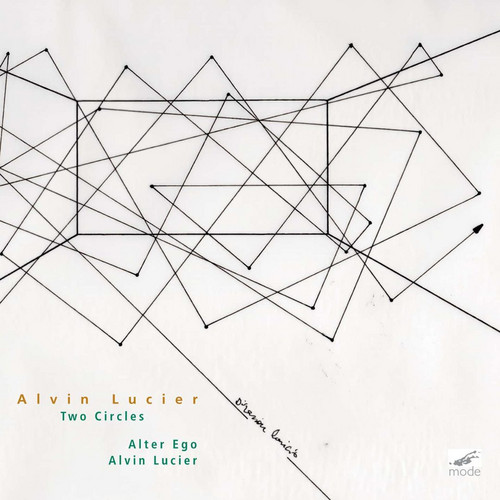
Two Circles
Four works by Alvin Lucier played by the Italian ensemble Alter Ego: Two Circles, Fideliotrio and Three Translations of the Works of Maurizio Mochetti, plus a new recording of I Am Sitting in a Room with the composer.
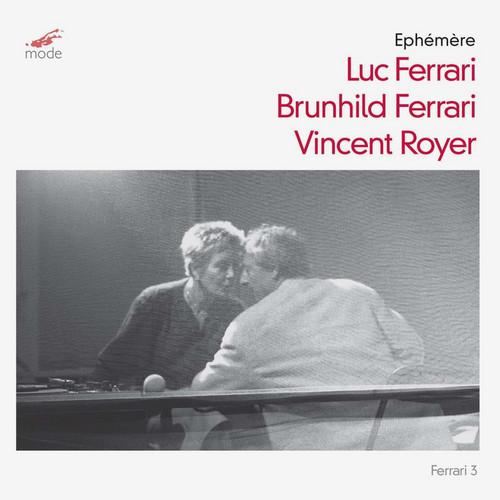
Ephémère
Three works for viola and tape or electronics played by Vincent Royer: Luc Ferrari's Ephémère in a 2012 version by Brunhild Ferrari, her Le Piano Englouti, and Royer's live improvisation on Ferrari's Ce qu'a vu le Cers.
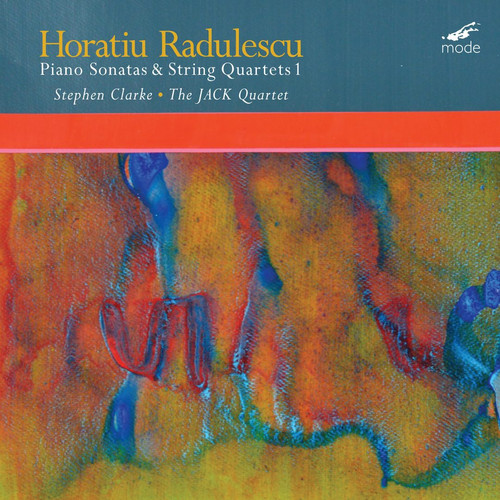
Piano Sonatas & String Quartets 1
First volume of Horatiu Radulescu's Piano Sonatas and String Quartets, with String Quartet No. 5 and Piano Sonatas Nos. 2 and 5, the quartet and Sonata No. 5 first recordings, played by the JACK Quartet and Stephen Clarke.
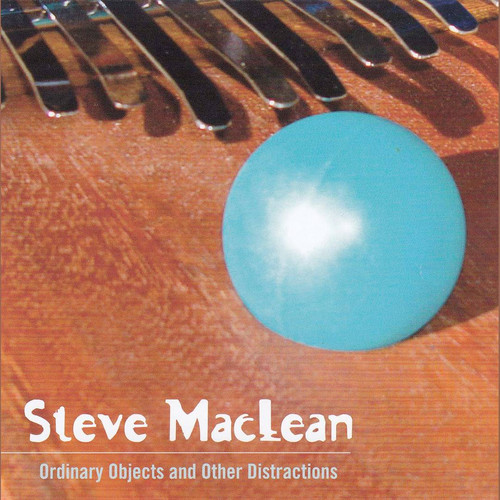
Ordinary Objects and Other Distractions
In this episode, a number of short recordings of household objects and curious instruments become the core thematic material for a range of exquisitely conceived and realised pieces in which the recordings are shaped, stretched, tuned, combined and otherwise manipulated before being folded into a variety of musical structures with additional elements or parts added. Much use is made of rhythms derived from gravity – that is, dropping and bouncing - embedded into microtonal, poly-rhythmic and dee…
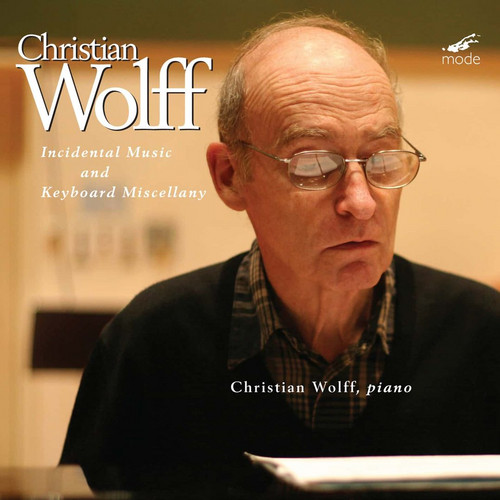
Incidental Music and Keyboard Miscellany
Volume 7 of Mode's Edition Christian Wolff, on 2CD: the composer plays his own Incidental Music (2003-04), written for a Merce Cunningham Dance Company Event, and the ongoing series Keyboard Miscellany, on piano and melodica.
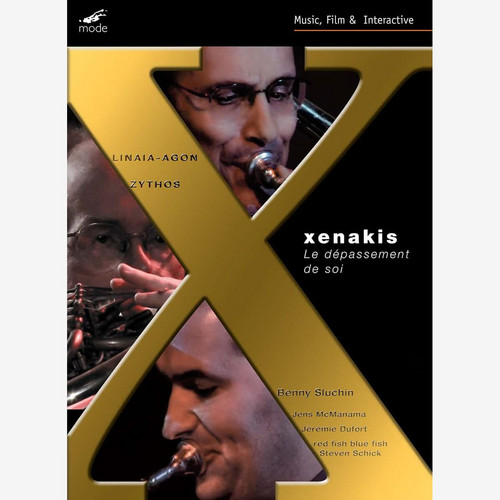
Le depassement de soi
DVD centred on Iannis Xenakis's Linaia-Agon for trombone, French horn and tuba, in two performances with Benny Sluchin, plus Zythos for trombone and six marimbas, a 78-minute film by Sluchin and an interactive interface.
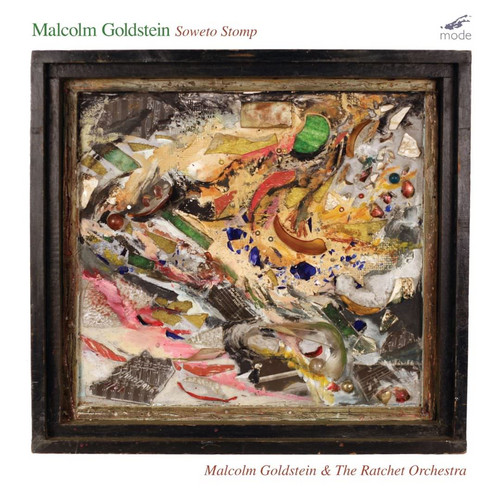
Soweto Stomp
Structured improvisation compositions by violinist Malcolm Goldstein, ranging from jazzy to dense microtonal sound, in which he plays with the Montreal-based Ratchet Orchestra as composer, soloist and ensemble member.
11 Microexercises
2013 release **
"11 Micro-Exercises were invented by Christian Wolff in response to a commission from the Miniaturist Ensemble. For Wandelweiser Editions, other miniaturists perform these eleven pieces (plus two bonus pieces): Beat Keller and Reza Khot. Keller and Khot are two electric guitarists who pierce the ivory (sometimes tear it) and respect the principle of a musical art free from preconceptions. Nine seconds, twenty-two, one minute and thirteen, or eleven minutes and forty-seven… The le…
Hildegard von Bingen : John Cage
2012 release **
"Combining the deep voice of Hildegard von Bingen and the inner song of John Cage (or vice versa)—what a wonderful idea, isn't it? And it's Irene Kurka herself who seems to have come up with it. She performs Hildegard nine times and gives her version of Sonnekus² (in nine parts, which Satie's Je te veux inspired Cage to use). She blends, finally, the eighteen pieces already sung. She merges attachment to faith and detachment from all things, Latin and the elevation it encourages …
Accordion Music
2007 release **
Fold in; fold out: the breathing of the accordion. On this CD the accordion unfolds in a very special way, unusually close to the instrument. Four works, four worlds that seem to know each other; refer to each other like a greeting from far away.Hearing John Cage's ,,Cheap Imitation" played on accordion gives you the impression of folk music from an unknown, probably non-existent country. This music comes from nowhere, goes nowhere, is forever on its way.....Like ,,Sam Lazaro Bro…