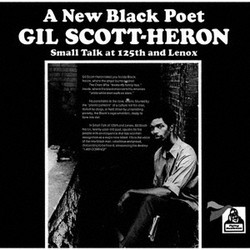
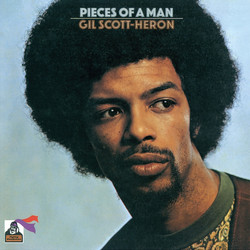
Two sides, two records. The first half of Free Will is a band: Brian Jackson on pianos and flute, Hubert Laws on flute and piccolo, David Spinozza on guitar, Gerald Jemmott on bass, Bernard Purdie on drums, with Horace Ott conducting. The second half strips back to Gil Scott-Heron's voice and two percussionists, Eddie Knowles and Charles Saunders, the way his first record had done.
It was cut on 2 and 3 March 1972 at RCA Studios in New York, produced by Bob Thiele, released in August, and it closed his time at Flying Dutchman. Uncut, reviewing the label box set, calls it the less admired of the three, one side of Pieces of a Man-style song and one of Small Talk-style poetry. Discogs's editorial guide reads the same division as a bridge between the two earlier albums.
The song side has the title track, The Get Out of the Ghetto Blues with Spinozza's guitar, and Speed Kills, about amphetamine. The poems are the political core: No Knock, on the police entry policy, The King Alfred Plan, Ain't No New Thing, Billy Green Is Dead, and a tribute to Coltrane, ...And Then He Wrote Meditations. The Wire's essay on the Flying Dutchman years hears Laws's flute as suitably paranoid for a season of Watergate headlines, and finds the force of the music grows when the acoustic personnel take over. AllMusic's John Bush singles out the ghetto blues as one of Scott-Heron's best-known performances.
Japanese CD edition from Solid's Flying Dutchman series.