Earth, Black Noi$e
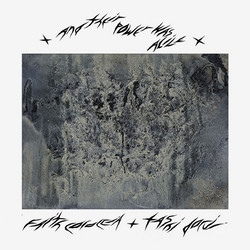
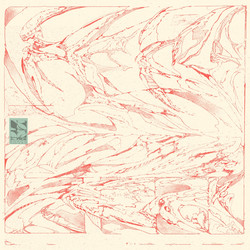
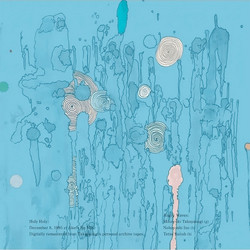
Geometry of Murder: Extra Capsular Extraction Inversions (2LP, Clear)
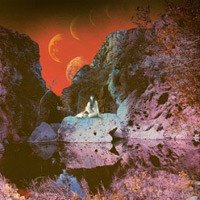
Geometry of Murder: Extra Capsular Extraction Inversions is less a remix project than a temporal experiment: what happens when one of drone rock’s slowest, heaviest early statements is submerged in an even deeper, more viscous bath of sound. Built from new “inversions” of Earth’s debut release Extra-Capsular Extraction, the album emerges from a collaboration between Dylan Carlson and Black Noi$e (known for work with Armand Hammer, Danny Brown and Earl Sweatshirt), forged out of mutual respect for each other’s ability to carve vast musical landscapes. Both artists share an obsession with music as a transport mechanism - sound that doesn’t just play in the room but moves the room somewhere else. Earth’s music has long been celebrated for its glacial pace and tectonic weight; the surprise here is that Black Noi$e responds not by accelerating or fragmenting it, but by slowing it further, smearing it into new shapes.
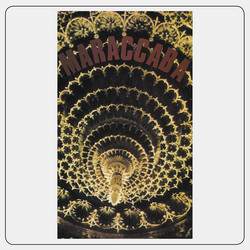
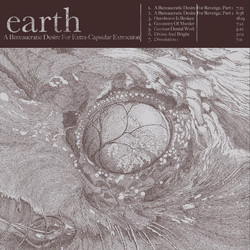
The original Extra-Capsular Extraction, released in 1991, is a foundational document: the first music Dylan Carlson recorded under the Earth name, and his first experience of a studio as a space where raw sound could be reified into a tangible object. It also offered an early glimpse of the band’s collaborative spirit, featuring appearances by Kelly Canary and Kurt Cobain on “A Bureaucratic Desire for Revenge Part 2” and “Divine and Bright.” For Carlson, those sessions were “terribly exciting” - the beginning of a lifelong habit of using the studio as a laboratory and of inviting others into a sound that might easily have remained solitary. The record caught a specific moment in his creative development, freezing a particular vision of low, slow, distorted guitar and bass in amber.
On Geometry of Murder, Black Noi$e approaches those same recordings with an experimental sensibility honed in hip‑hop, noise and left‑field electronics. Rather than treating Earth’s riffs as sacred, untouchable objects, he treats them as raw signal to be warped, re‑routed and re‑lit. Heavy, droning bass and guitars, along with languid, monolithic rhythms, are threaded through a contemporary toolkit of synthesis, sampling and processing. Beats are not bolted on so much as implied, ghost‑like, through pulses in the low end; textures are stretched, reversed, granulated; feedback tails are looped into hovering clouds. The result oscillates and reverberates with a different kind of energy while still spotlighting the “low, slow and distorted” properties that made the original so beloved.
These inversions don’t aim to modernise Earth in a cosmetic way; they pull the material sideways into another register. Familiar motifs surface like half‑remembered dreams, veiled by layers of hiss, sub‑bass and spectral electronics. Vocals from Canary and Cobain, when they appear, feel more like hauntings than traditional features, floating inside echo chambers Black Noi$e has carved out of the original sessions. Moments of recognisable riffage dissolve into abstracted tone; stretches of nearly pure noise resolve suddenly into a slowed‑down, massively magnified fragment of the debut’s DNA. The sense is of listening to Extra‑Capsular Extraction as if it were being broadcast from a distant future, the signal eroded but still potent.
For Carlson, these versions offer a way to fold his earliest studio work back into his current practice. The original album will always remain a document of a specific period and a particular set of limitations and discoveries. Reworking it now, in collaboration with an artist from a different generation and scene, becomes “an exciting way to reintegrate them into the present time and with my more expanded conceptions of musical endeavours.” The spirit of that first session - the thrill of collaboration, of hearing an idea become “real” on tape - carries through, but the frame has shifted. What was once a stark, groundbreaking drone record is now also a set of stems in a much larger, more flexible ecosystem.
Geometry of Murder: Extra Capsular Extraction Inversions ultimately functions as both homage and re‑inscription. It honours the bones of Earth’s debut - its refusal of speed, its insistence on mass and duration as primary musical parameters - while asking what else those bones can support. In Black Noi$e’s hands, the material becomes more porous, more haunted by contemporary sonics, yet never loses its core character. The album invites long‑time listeners to hear Extra‑Capsular Extraction anew, as if walking through the same landscape under altered light, and offers newcomers a point of entry where heavy guitar music, experimental electronics and hip‑hop’s textural sensibility meet in a single, extended, low‑frequency hallucination.