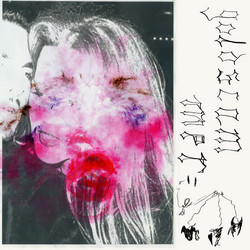
Maps is the second album from Driftwood, the duo of Nick Ashwood and Aviva Endean, and it feels less like a follow‑up than a widening of a world they only just began to chart on their 2024 self‑titled debut. That first record established a distinctive sound grounded in an unlikely core: two microtonally re‑tuned pump organs, their reeds detuned and offset so that every chord shimmers with slow‑moving beats and subtle dissonances. Around those organs, Ashwood and Endean wove clarinets and guitars into a shared landscape that quickly became a place they wanted to inhabit again - not as a fixed aesthetic, but as a frame for further experiment. Maps documents their return to that terrain with new tools and a deeper trust in the strange vitality of their combined resonance.
The heart of Driftwood’s music remains the friction and accord between those two pump organs. Microtonal retuning turns what could be a nostalgic, hymn‑like instrument into something more unsettled and luminous; when both organs sound together, complex patterns of interference ripple through the air, harmonies thickening and thinning as chords breathe. Playing them is already a physical challenge - alternating between bellows, keys and breath - and the duo lean into that difficulty, letting the strain of sustaining sound become part of the music’s texture. Clarinets and guitars thread through this drone‑field in slow arcs and delicate gestures: a reed tone that folds into an organ chord, a plucked harmonic that briefly catches the light before sinking back into the mass.
For Maps, Ashwood and Endean wanted to fold more of their solo practices into this shared language. Modular synth, effects pedals, electric guitar and contact microphones slip into the setup, not as a new centre of gravity but as extensions of the existing instruments. Contact mics turn the pump organs’ internal mechanics - valve clicks, wooden creaks, bellows’ breath - into amplified grain. Modular tones and pedal chains are not splashes of colour on top, but bass undertones and spectral smears that thicken the organ bed. Electric guitar appears as texture more than riff: eBowed lines, swelling feedback, chiming harmonics that mirror the microtonal beating patterns already at work in the reeds.
The album’s title reflects its method. Rather than pre‑composing pieces, Driftwood treat each recording session as an act of cartography: the instruments and the room define a terrain, and the improvisations trace paths through it. Electronics are “subtly worked back into the original improvisations,” saturating live takes with low‑end pressure and carefully judged signal processing. The result is music that feels both acoustic and uncanny. On the surface you hear wood, metal and air; underneath, there is a slow electronic weather, tilting the harmonies into more otherworldly shapes, bending timbres just enough that the listener loses track of where one instrument ends and another begins.