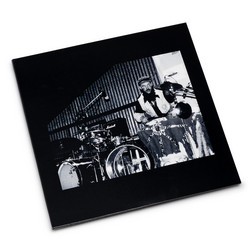
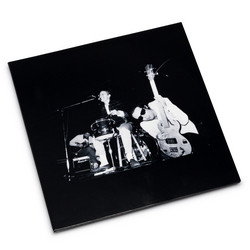
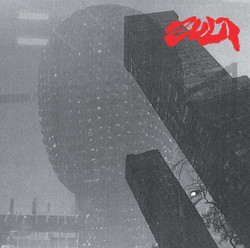
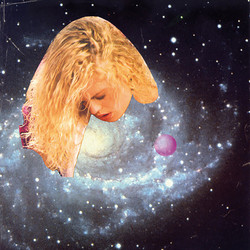
*Edition of 200* Vulcanalia marks the long‑awaited fourth album from AX, the cult solo project of Anthony Di Franco (Ramleh, JFK), and it feels less like a comeback than a re‑ignition of an idea that has been smouldering since the mid‑1990s. Di Franco founded AX in 1993, at 21, with a stripped‑down but radical premise: fuse distorted guitars and feedback with electronics and synthesizers, but remove rhythm and percussion entirely. What remained would be beatless sound - flows, surges, crescendos and climaxes that behaved more like weather systems or tectonic shifts than “songs.” Between 1994 and 1997 he realised that vision with three albums recorded on a four‑track portastudio, using a simple arsenal of guitars, synths and effects. Those records became quiet touchstones for listeners drawn to the borderland between power electronics, drone and guitar sculpture.
With Vulcanalia, Di Franco deliberately returns to that “same sound world,” but armed with an additional quarter‑century of experience and a more expansive toolset. The core aim remains unchanged: to build a “towering edifice in sound” that overwhelms him as much as it does the listener. The means, however, have evolved. Where the early AX albums leaned on the intimate compression of home‑recorded four‑track tape, this new work uses amplifiers, complex chains of effects and considered microphone placement in the studio to sculpt greater depth, weight and atmosphere. The distortion is no longer just a layer; it becomes architecture. Harmonics stack into vast, throbbing columns; feedback is steered like molten metal through narrow channels and then allowed to spill out in incandescent sheets.
Crucially, the music remains resolutely beatless. There are no drums to anchor or explain the eruptions, no pulse to domesticate the mass. Instead, pieces unfold as large‑scale processes: tones rise from a simmer to a roar, plateau, fracture into higher‑pitched shards, then fall away into resonant voids. At times the sound approximates organ‑like drones fed through blown speakers; at others, it resembles a swarm of detuned strings or a foundry heard from inside the furnace. Dynamics are central. Quiet passages are not respites so much as chambers of pressure, zones where the next surge is being prepared. When it arrives, it feels less like a “riff” dropping and more like a section of the edifice collapsing in slow motion.
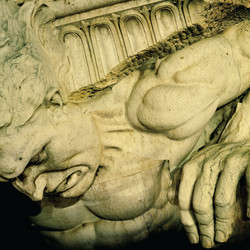
Binding these sonic strategies is a unifying obsession: Roman mythology and religion. Vulcanalia takes its name from the ancient Roman festival of Vulcan, god of fire, volcanoes and the forge, and Di Franco has long immersed himself in this cosmology. Years of touring Italy and visiting archaeological sites have given him a direct, tactile relationship to Roman stone, heat and ruin, and those experiences seep into the album’s atmosphere. You can hear it in the way the sound evokes furnaces, scorched altars, subterranean rumblings beneath imperial architectures. The music does not attempt literal illustration, but the mythic framework offers a lens: each track can be heard as a rite for a particular aspect of fire - destructive, purifying, creative, subterranean.