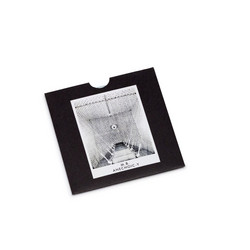
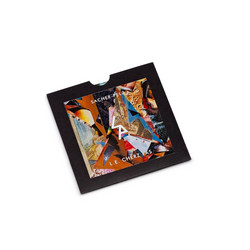
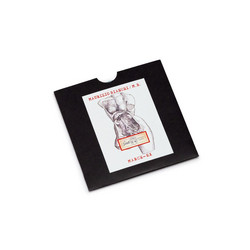
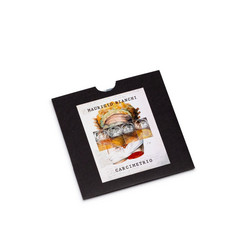
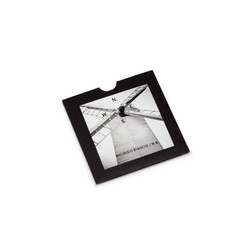
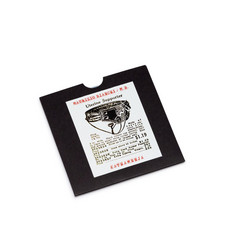
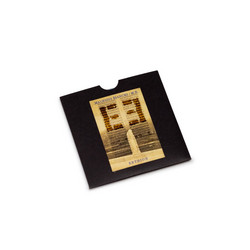
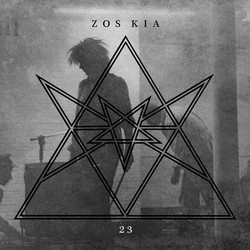
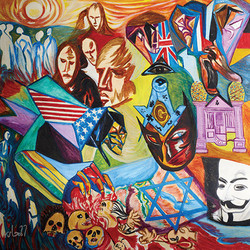
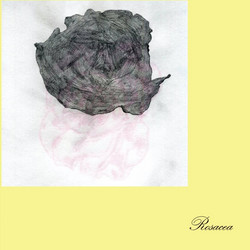
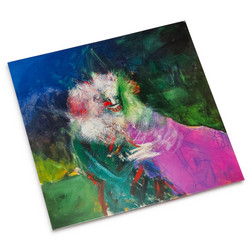
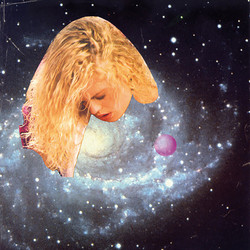
Le Temps des Figures du Soleil Noir marks a rare moment when Unglee Izi’s vast, clandestine practice coalesces into something you can actually hold. A French artist, composer, author, photographer and typographist, he has long cultivated an aesthetic of opacity: impenetrable long‑form pieces, scarce live appearances, almost no explanatory discourse. His work hovers at the edges of electronic music yet refuses to settle into any recognisable genre, as if the machines themselves were trying to dream beyond their circuits. With this new composition - a strictly four‑hour work spread across four compact discs - he offers what is arguably his most introspective and self‑contemplating statement, not by clarifying his methods but by doubling down on immersion and duration. Composed and recorded in near‑total isolation, literally disconnected from the world, Le Temps des Figures du Soleil Noir feels less like a “studio album” and more like the residue of a private ritual. Unglee Izi locked himself away for two years to carve this piece from silence, following an open‑ended quest in sound that has no obvious narrative arc yet a palpable inner logic. The music unfolds with surgical precision: tones emerge with almost forensic care, electronic textures are shaved to the micron, and dynamics creep so gradually that changes often register first in the body rather than the ear.
Dark and blissful sensations coexist: low‑frequency murmurs and hovering drones are streaked with fragile harmonics, while glacial pulses occasionally coalesce into something like rhythm before dissolving again into a weightless stasis. It is electronic, yes, but stripped of genre marker and timeline, as if composed outside history. This is demanding music, and it insists on a different contract with the listener. Four hours is not a flex but a necessary frame, a way to stretch perception so that the “moment” can be experienced rather than merely signposted. Instead of climaxes, there are slow shifts in density; instead of melodies, recurring spectral figures that only reveal themselves after prolonged exposure. The sense of being gently but inexorably drawn toward “unknown spiritual realms” is not an empty promise but the result of how sound, silence and duration are braided together. At times, the work feels almost monastic in its restraint, at others like an abstracted, black‑sun take on ambient ecstasy, suffused with a mystifying, dark/bliss aura that is more visionary than depressive. You do not so much listen to these four discs as enter them, and once inside, the usual distinction between background and foreground sound collapses.
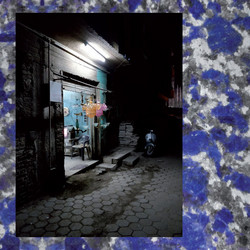
The physical edition amplifies this sense of immersion. The four CDs are housed in a thick cardboard slipcase that treats the box set as an object of contemplation rather than mere storage. Inside, a 150‑plus‑page booklet becomes an integral part of the work rather than an afterthought. Photographer Sy Coleman contributes a documentary suite that attempts to retrace the different phases of the project’s creation, capturing the spaces, tools and gestures that surrounded Unglee Izi’s long seclusion. These images do not “explain” the music so much as mirror its atmosphere: stark light and shadow, textures of walls and cables, the quiet intensity of a solitary practice. Interwoven with the photographs is a text by Unglee Izi himself, La Clef, written during the development of Coleman’s gallery, which enters into a dialogue with the images and the sound. A few of the photographs are by Unglee Izi, folding his eye back into the documentation of his own work and further blurring the lines between composer, subject and observer. Taken together, the four discs, the booklet and the slipcase form a single, hermetic environment - a slow‑time device painstakingly assembled over two years, completed just in time to be fixed into this box. In an era of accelerated listening and disposable playlists, Le Temps des Figures du Soleil Noir feels almost defiant: a four‑hour demand on attention, a refusal to explain itself, a document of an artist for whom sound remains an inexhaustible, unsolved problem. Those willing to surrender to its scale will find that its “figures” of the black sun do emerge over time - not as clear images, but as afterglows on the inner eyelid, traces of an experience that lingers long after the final disc falls silent.