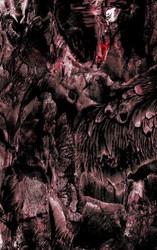
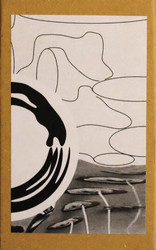
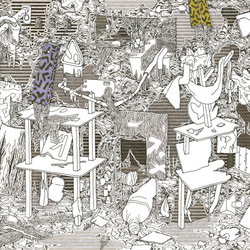
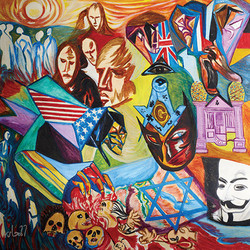
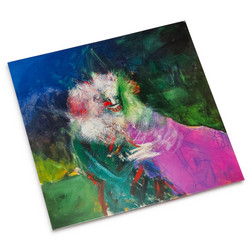
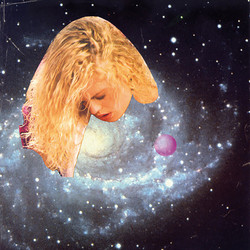
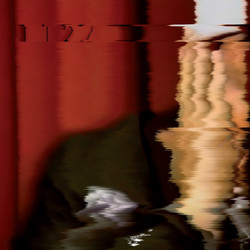
*Edition of 200* With Rosacea, Gaute Granli exposes a new layer of his singular aesthetic—one that transforms dissonance into form and turmoil into expression. The Stavanger-based musician, long celebrated for his disorienting guitar work and obsessive vocal treatments, offers in this album his most cohesive distortion symphony yet. Issued by Nashazphone, the Cairo label known for its fearless curation of boundary-defying sounds, Rosacea feels both feverish and composed, a ritual performed in a room where language collapses and texture takes its place. Granli’s practice has long operated between performance art and instinctive composition, favoring repetition as an act of resistance against control. Across Rosacea, that repetition manifests as tense, circular guitar figures, warped tape voices, and fractured rhythmic scales that oscillate between primitive pulse and free-form collapse. The sound, though chaotic at first listen, is meticulously handled: feedback behaves like melody; noise assumes the role of speech. Microtonal guitar tunings bleed into shrill vocalizations, while bursts of percussion emerge as irregular punctuation marks in this surreal dialogue between body and machine.
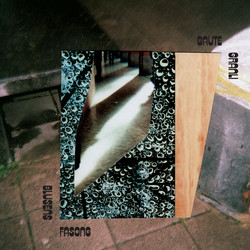
In live settings, Granli’s work borders on shamanic theatre—a continuum that this record captures with uncharacteristic clarity. There’s something unsettling yet humorous in the way Rosaceaunfolds, recalling both the demented kinetics of early Residents records and the deconstructed groove logic of free improvisation. The mix remains tactile, raw, yet undeniably musical; a testament to Granli’s ability to balance madness with meticulous craft. If previous releases like Blusens Fasong (Ultra Eczema) or his duo work with Mark Morgan (Sightings) reveled in ecstatic confusion, Rosacea refines that energy into something resembling coherence—if only momentarily. The album title suggests inflammation, exposure, a flushing of the skin—and the sound mirrors that physiological discomfort. There’s fragility beneath the distortion: an emotional charge that turns the grotesque into a kind of empathy. Granli’s art thrives on such contradictions, crafting from noise a paradoxical form of intimacy. Rosacea stands as one of his most assertive statements, reaffirming his place among Europe’s bravest experimental voices. Through the prism of chaos, Granli achieves improbable clarity, producing a body of sound that feels unhinged yet exquisitely alive.