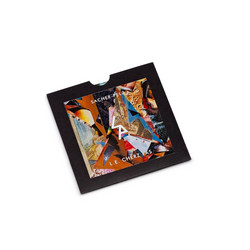
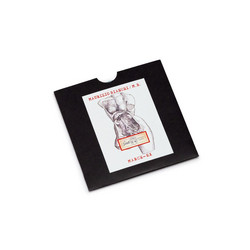
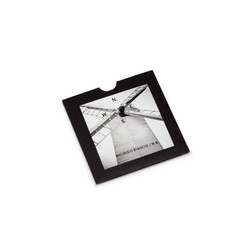
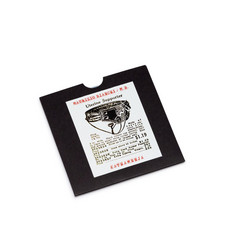
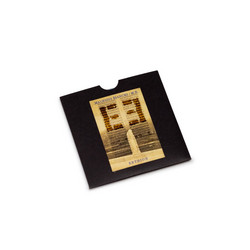
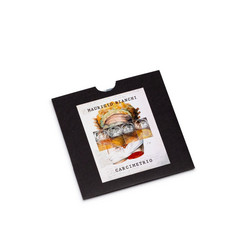
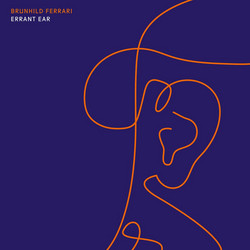
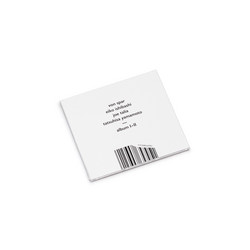
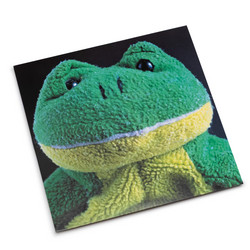
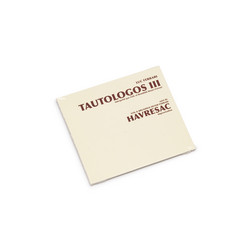
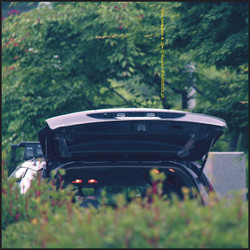
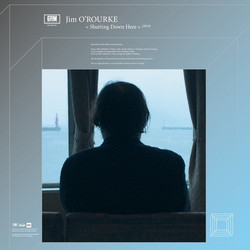
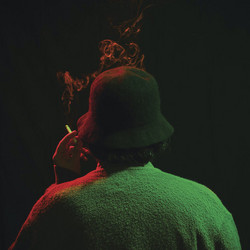
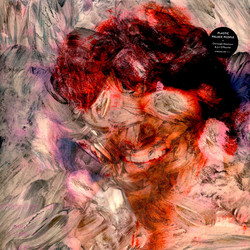
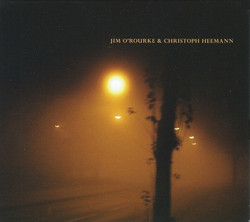
L’oreille Voleuse begins with a refusal of voyeurism: “Without listening at doors, the ear captures noises here and there and unexpected sounds without choice, but remains attentive to the messages of each one picked up over the years.” In that simple declaration, Brunhild Ferrari sketches an ethics and a poetics of listening. The ear does not spy; it gathers. It lives in the open, porous to the world’s incidental acoustics, welcoming whatever arrives. These captured “surprises and impressions,” most of them fixed on magnetic tape across decades, become the raw matter of a new “mix tape” on which Eiko Ishibashi and Jim O’Rourke play - not as decorators, but as co-dreamers reanimating a memory theater of sound.
Ferrari’s own biography reads like a quiet counter-history of postwar experimental music. “Like most of my fellow human beings, I was born, I grew up, I attended schools, I passed exams, I failed, I loved, I worked hard sometimes, I enjoyed life; I continue.” From within that disarming understatement unfolds a life alongside some of the key mutations of musique concrète and radio art. She worked with Pierre Schaeffer in the ORTF research department, studying the volatile relationship between sound and image. Of German origin, she moved between roles as interpreter, translator and, crucially, as collaborator and companion to Luc Ferrari, whose advice “in matters of life, music, and composition” helped her shape her own Hörspiele and radio plays, broadcast on France Culture, in the United States, and across the major German networks. After Luc’s death in 2005, she became guardian and activator of his legacy: founding the Association Presque Rien, initiating the Presque Rien Prize that gives artists access to his field recordings, and editing volumes of his writings, including Musiques dans les spasmes and the English-language Luc Ferrari: Complete Works. “I composed music; I continue.” The sentence lands like a quiet manifesto.
Into this long continuum step Ishibashi and O’Rourke, whose practices are already attuned to instability, montage and the productive friction between composition and chance. Ishibashi, a Japanese composer, singer and multi-instrumentalist, has built a body of work in which experimental pop, improvisation and film music bleed into one another, always with a keen sensitivity to texture and space. Her scores for Ryusuke Hamaguchi - Drive My Car, Evil Does Not Exist - have carried her music far beyond specialist circles without diluting its strangeness; the same ear that can shape a haunting piano motif for cinema can also thread noise, drones and fractured song into unstable tableaux. Jim O’Rourke, an American composer, producer and multi-instrumentalist based in Japan since the early 2000s, brings an equally promiscuous history: rock, electroacoustic composition, free improvisation, contemporary music, from Sonic Youth and Wilco to Gastr del Sol and collaborations with Merce Cunningham. In his work, formal rigor and wild invention aren’t opposites but partners; he understands how to let structure emerge from accidents, and how to make accidents feel inevitable.
On L’oreille Voleuse, these three trajectories intersect around the idea of “ear memories.” Ferrari’s tapes - a private archive of noises, voices, environments, mechanical ghosts - are not treated as fixed works but as a landscape to be inhabited. The ear “gathers surprises and impressions, bringing them together in a simple mix”; Ishibashi and O’Rourke, in turn, respond to this mix in real time, playing on it rather than over it, tunnelling into its gaps, doubling its gestures, sometimes barely disturbing its surface. The result is a music of layered attention: Ferrari’s long listening folded into their own, three sensibilities tracing different paths through the same thicket of sound.
What emerges is less a “collaboration” in the usual sense than a shared act of re-listening. Ferrari wakes up her tape-bound memories, allowing them to breathe again in the present, while Ishibashi and O’Rourke test how far they can bend, refract or shadow those memories without erasing them. The “thieving ear” of the title becomes a paradox: if there is theft here, it is theft as care, the taking-on of another’s auditory past as material for a new, collective present. In a moment when archives are often treated as static monuments, L’oreille Voleuseinsists that recorded sound remains volatile - a set of doors that, without being listened at, still open onto other rooms, other lives, other ways of hearing.