Tristan Da Cunha
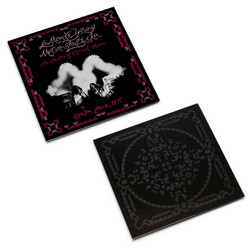
Maris Stella (LP)
LabelBoring MachinesGenreExperimental
Out of stock
Tracked express shipping from Italy, no customs or import VAT in the EU. Shipping costs
Maris Stella emerges from an urgent need within Tristan da Cunha to revisit and deepen the very idea that has quietly anchored the project from the beginning: isolationism. Rather than treating isolation as mere withdrawal or numbed distance, the album refracts it through a liturgical lens, drawing on the ancient Marian cult of Our Lady, Star of the Sea (Stella Maris). In that image – a guiding light for sailors traversing treacherous waters – Tristan da Cunha finds a way to turn solitude into something more transcendent and spiritually resonant. The music inhabits the space between abandonment and fragile hope, where being alone does not erase the possibility of being led, however faintly, by a distant star.
Conceived as one singular, cohesive minimalist opus rather than a set of discrete tracks, Maris Stella moves with a remarkable fluidity between tonal and atonal territories. Post‑drone currents flow into neoclassical structures, subtle choral textures hover at the edge of audibility, and the boundaries between harmony and dissonance are treated less as lines than as zones of overlap. The result is a seamless, hypnotic listening experience that feels both ancient and strikingly contemporary: slow, patient arcs of sound evoke the austerity of sacred music and the gravity of 20th‑century modernism, while the production and pacing speak to a present‑day understanding of texture and space.
Instrumentally, the ensemble is reimagined as a kind of pocket orchestra. The guitar assumes the role of a full string section, casting sweeping, atmospheric layers that behave like massed violins and cellos rather than a single six‑string voice. The viola steps forward as the primary lead instrument, carrying the emotional weight of the compositions with a haunting, lyrical presence that makes each phrase feel like a sung line or a solitary chant. Drums function as refined orchestral percussion, less about backbeat than about color and ritual punctuation – rolls, soft impacts, and carefully placed accents that add textural depth and rhythmic solemnity. Beneath all of this, solemn, resonant basses provide a dark, stable foundation, anchoring the entire sonic edifice with a sense of gravity and inevitability.
Across its length, Maris Stella explores a deeper, indefinable, multi‑layered sense of abandonment, intertwined with flickering hope that never fully extinguishes. Moments of stark, almost monastic simplicity open onto sections where harmonic overtones pile up into luminous clouds; stretches of near‑silence give way to slow surges of sound that feel like waves striking a shore in the middle of the night. The liturgical undertone is less about explicit religious reference than about atmosphere and function: this is music that behaves like a ceremony, even when it eschews traditional form, guiding the listener through an inner passage as much as it maps an outer landscape.
Listeners drawn to the spiritual depth of Arvo Pärt or Henryk Górecki, the widescreen lamentations of Godspeed You! Black Emperor, the microtonal focus of Giacinto Scelsi, or the glacial drone tapestries of Stars of the Lid will find familiar resonances here, though Tristan da Cunha never settles into homage. Instead, Maris Stella threads these affinities into an original voice that values textural richness and emotional resonance above all. It is a record that rewards attentive, repeated listening: details in the choral haze, shifts in viola timbre, subtle changes in bass weight and drum placement gradually reveal themselves, turning each revisit into a deeper descent.
The album was recorded in September 2025 at Trai Studio in Inzago, near Milan, by Fabio Intraina and Alessio Bertuzzi, whose engineering captures both the breadth and intimacy of the ensemble. Mixing was handled by Bertuzzi, preserving the delicate balance between instruments and the sense of a single, continuous arc rather than discrete movements. Vinyl mastering by Matt Bordin at Outsideinside Studio completes the chain, ensuring that Maris Stella translates its liturgical isolationism and post‑drone orchestration into a physical format with full impact. The final work stands as a profound and immersive listening journey – a star over a dark sea, beckoning those willing to sit with their own solitude and see what new light might emerge from it.