Mood Programs – Extended Play introduces La Marr, a new chapter in Ron Trent’s ever‑expanding universe, via a two‑track release on Music From Memory that treats sound less as content and more as atmosphere. Conceived as the first entry in an ongoing series, the project is rooted in mood‑driven composition, spatial depth and the emotional charge that sound carries within physical space. Trent channels decades of thinking about how music interacts with rooms, systems and people, distilling it into pieces designed not only to be heard, but to be inhabited.
La Marr sits at an intersection of influences that have shadowed Trent’s work since the early 1980s: ambient and environmental music, New Age’s glow, dub’s sense of echo and negative space, New Wave’s synthetic melodicism, Krautrock’s motorik hypnosis and the precision of hi‑fi sound‑system culture. Rather than leaning on these histories as nostalgia, he recontextualises them through contemporary production language, balancing analog warmth with clear, modern definition. The project feels like a long‑considered response to questions he has been asking for years: what happens when rhythm becomes architecture, when tone becomes light, when a track functions as a “mood program” for whatever environment it enters.
Developed through extended sonic experimentation and research into the physical and psychological qualities of sound, La Marr extends Trent’s long‑standing interest in the relationship between rhythm, acoustics and human connection. The music is built through a combination of analog processes – hardware synths, outboard effects, tactile mixing decisions – and computer‑assisted production that fine‑tunes the spatial and spectral balance. Warmth, resonance, depth and clarity are treated as primary materials. Each element is placed not only for musical effect, but for how it will feel in a room: how the low end will move air, how mid‑range details will sit in conversation, how high‑frequency shimmer will register as glow rather than glare.
Within this framework, Mood Programs – Extended Play unfolds gently but deliberately. Across both tracks, “Good Magic” and “Clear”, hypnotic synthesizer arpeggios cycle in long, patient phrases, while floating pads drift in and out like changes in weather. Organic percussion and subtle low‑end movement anchor the pieces just enough to keep them physical, turning what might otherwise be pure ambience into something closer to a slow‑motion dance of elements. The music resists the idea of passive background listening: if you tune in, small shifts in texture and harmony begin to feel like emotional events, the kind of changes that can tilt a mood or sharpen awareness.
Sound here is treated explicitly as an environmental force, capable of shaping perception and atmosphere within a space. A single chord voicing can soften a corner; a reverb tail can open the ceiling a little higher; a dub‑inflected delay can stretch time at the edges of the mix. In this sense, La Marr links back to Trent’s club lineage – his understanding of how tracks can recalibrate a dance floor – while stepping into a different tempo and intensity range. The aim is less to drive bodies than to recalibrate rooms, less to push energy upward than to allow it to settle, pool and glow.
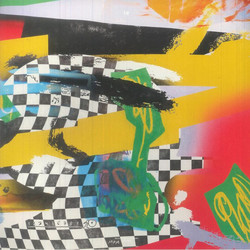
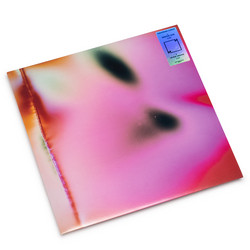
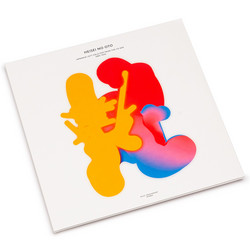
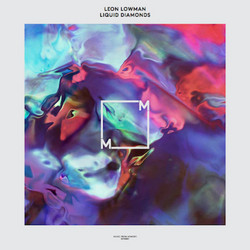
Mood Programs – Extended Play will be released digitally and on vinyl on July 15th via Music From Memory, with sleeve art and design by Michael Willis. The cover extends the project’s concern with space and mood into the visual realm, framing the release as both standalone statement and doorway into future La Marr explorations. As the opening move in this series, it sets out a clear proposition: that carefully sculpted sound can function as a program for feeling and perception, and that in an era of sonic overload, there is still immense value in music that takes its time and invites us to breathe with it.