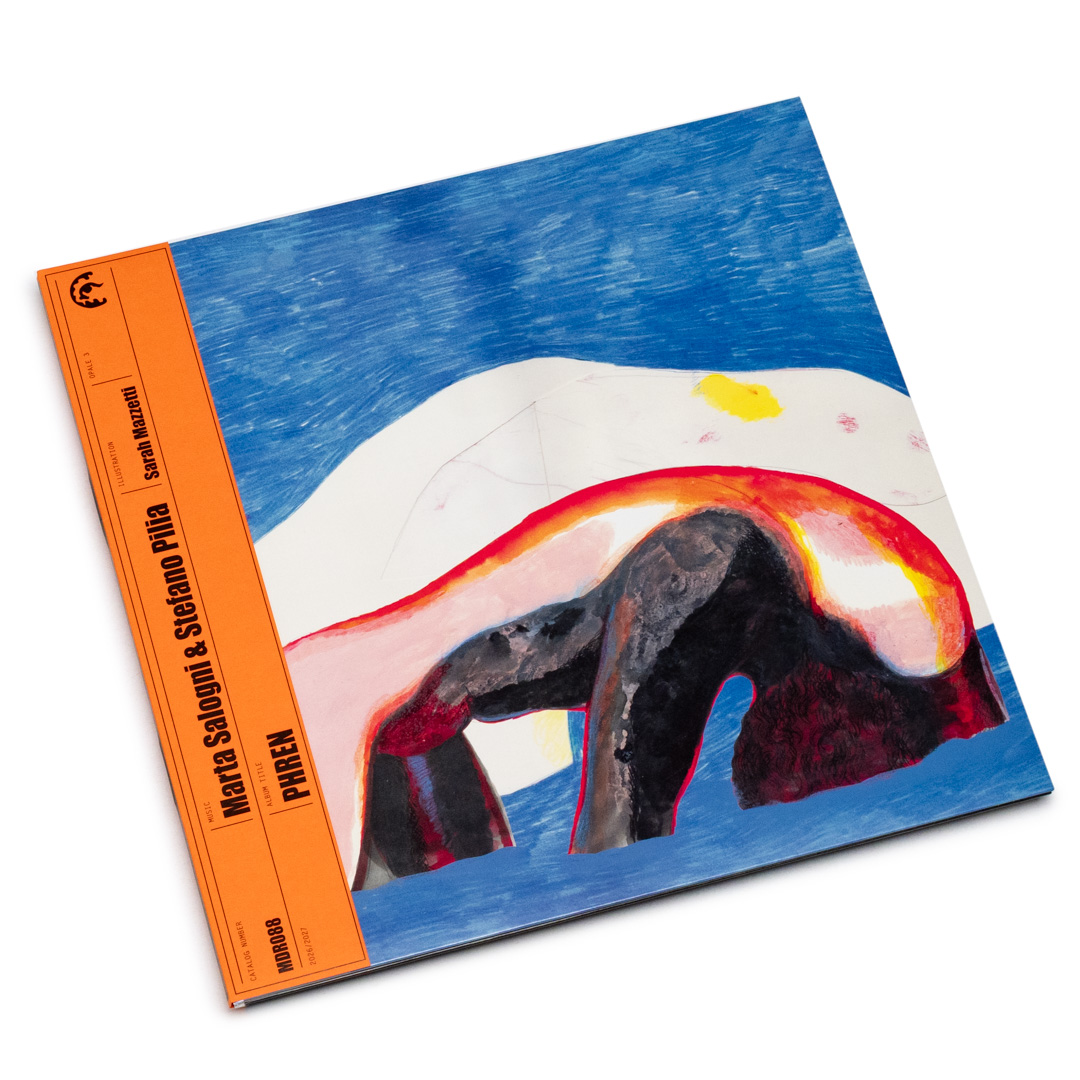
Marta Salogni, Stefano Pilia
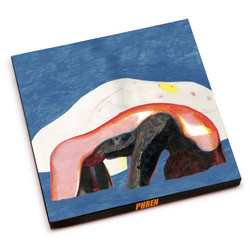
Phren (LP)
FormatLPLabelMaple Death RecordsSeriesOpaleGenreExperimental
In stock (ships within 1-2 working days)
Tracked express shipping from Italy, no customs or import VAT in the EU. Shipping costs
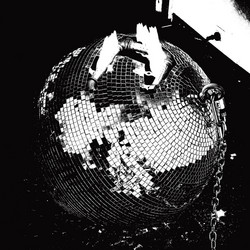
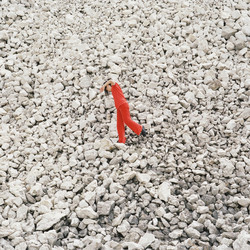
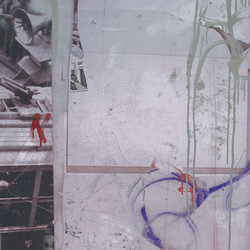
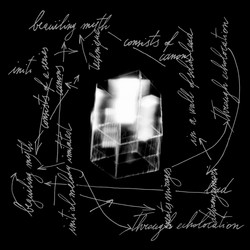
A structure rises from the water: an object suspended between architecture and landscape, between reflection and depth. Its surface mirrors the world around it, while within its walls another space exists, a place of listening, isolation and encounter.
Phren, the first collaborative work by Marta Salogni and Stefano Pilia, emerges as a layered and articulated sound-hymn-dialogue between Stefano’s abstract guitar work and Marta’s manipulation of tape machines. Conceived alongside the imagined space created by Sarah Mazzetti for the Opale series, a project by Maple Death Records and Canicola edizioni, the album becomes a form-shifting composition where memory itself is continuously transformed through resonance, repetition and reconfiguration.
Here, sound is not preserved as an object of the past, but treated as a living material: something capable of carrying traces, absorbing new meanings and generating unfamiliar voices.
The album develops from a simple yet constantly shifting principle: a sound is set in motion and then passed through a series of interconnected systems where it is delayed, altered and returned in another form. Stefano Pilia’s guitar travels through a complex chain of modular processes, composed of different stages of preamplification and filtering, before entering a tape echo system that introduces further layers of repetition, resonance and spatial displacement. These signals are then absorbed into Marta Salogni’s Revox tape machines, where additional lines of delay, modulation and environmental transformation reshape the material once again.
The resulting music is not a dialogue between two instruments, but a shared system - a living architecture in which a single signal moves simultaneously through parallel and serial pathways, gathering traces of each passage. Sound becomes a material in constant motion: a gesture becomes an echo, the echo becomes a new gesture, and the distinction between origin and reflection gradually begins to dissolve.
In this sense, Phren enters into conversation with a lineage of artists who have explored sound, duration and recording technology as forms of memory. From the immersive harmonic environments of Éliane Radigue to the fragmented archives of Philip Jeck and the sustained meditations of Pauline Oliveros, these practices reveal recording not merely as a means of preservation, but as a space where time itself becomes audible.