crys cole, Oren Ambarchi, Giuseppe Ielasi
Sparkling or Silent / Unfamiliar Music (Paris) (LP)
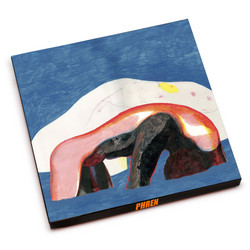
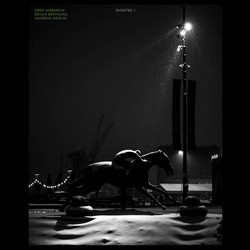
Sold out at the label. Sparkling or Silent finds crys cole and Oren Ambarchi pausing their restless, always‑on‑the-move discographies at a curious angle, as if turning the light slightly to see what has been glinting at the edges all along. Both artists have long carried an electroacoustic sensibility in their work - in cole’s hyper‑attentive treatment of small sounds and negative space, in Ambarchi’s use of guitar and electronics as malleable matter rather than fixed instruments - but here that sensibility becomes the central compositional engine. The album is less a detour than a point of fixation: a moment where they deliberately hold still over one method and see how deep it can go.
Crucially, electroacoustic practice is not treated as a genre badge or a set of formal tropes to be dutifully ticked off. For cole and Ambarchi it functions as a writing tool, a way of drawing from within the sound itself rather than imposing form from outside. Microphone placement, contact hum, granular processing, spectral filtering, the friction between acoustic sources and their electronic doubles - all of these become strokes in a kind of sonic calligraphy. The music does not flaunt technique; it uses it to carve a space where shimmering details and near‑silences carry as much weight as any overt gesture, where a tiny shift in texture can feel like a plot twist.
Within that space, Sparkling or Silent turns toward narrative, but not in any linear or programmatic sense. What unfolds is closer to a shared, lucid dream: reminiscences, impressions and fleeting sensations weaving in and out of focus, threading themselves into a story that hovers between what actually happened and what might have been imagined. A brushed surface, a distant room tone, a buried voice or bowed string - elements like these recur as if remembered from another time, slightly altered, their meanings shifting with each return. The duo write in the medium of afterimage and echo, allowing sounds to suggest places and moments without ever fixing them too tightly.
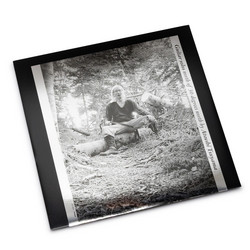
Unfamiliar Music (Paris) grows out of a private, ever‑evolving archive. “Unfamiliar Music” is the name Giuseppe Ielasi gave to the collection of sounds he has been carrying from venue to venue over the past few years - a reservoir of fragments that usually exist only in the moment of performance. Some of these sources have surfaced, in altered guise, on previous records, but most have lived strictly on stage, activated in front of an audience and then allowed to fall back into latency. For Ielasi, each concert is an improvised construction rather than a fixed work on tour: materials are chosen, processed, combined and mixed on the spot in response to the acoustics, size and configuration of the room. The “piece” is what happens when this archive collides with a specific space.
In November 2024, after a performance at Présences électronique in Paris, Ielasi was invited to publish the music he had just played. The proposition was flattering, but also conceptually awkward, because what had taken place that night was not, in his view, “an actual piece” yet - more a singular event: a set of decisions tightly bound to an octophonic loudspeaker setup and a particular listening situation. Releasing the concert recording as‑is was never an option. Mixing for a multi‑speaker environment is fundamentally different from shaping sound for two‑channel listening at home; balances, movements and dynamics that make sense in a surround field can feel flat or arbitrary when collapsed to stereo. Many of the choices Ielasi makes live are designed to activate the architecture around the audience, not a pair of speakers in front of them.
The solution was to treat the recording as a kind of score - a structural and timbral trace that could guide a new work. Back in the studio, Ielasi decided to re‑compose the piece using the same sounds and following the same overall form, introducing only those changes necessary to make it breathe in a domestic setting. In doing so, he effectively created his first piece based on any type of score, even if this score was unconventional: not notation on paper, but a map of transitions, densities and gestures derived from the live performance. The studio becomes a second performance space, where the original concert acts as a script to interpret rather than an artefact to preserve.

![Σ [sigma]](https://cdn.soundohm.com/data/products/2026-10/a0550686140_10-jpg.jpg.250.jpg)