Oren Ambarchi, Will Guthrie
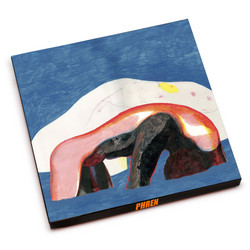
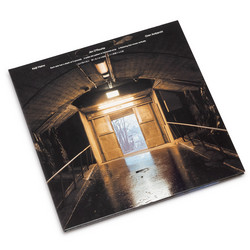
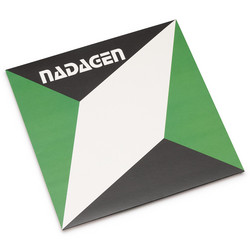
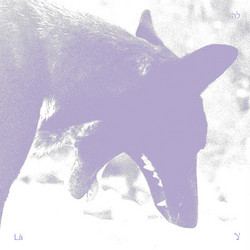
Cold Shoulder (LP)
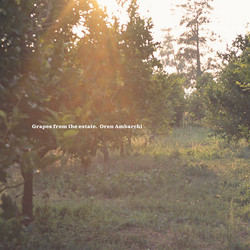
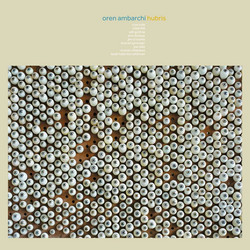
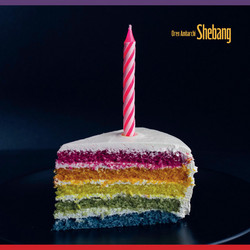
Cold Shoulder documents Oren Ambarchi and Will Guthrie at the point where long, circuitous histories finally click into an almost effortless present. Recorded live at Morphine Raum in Berlin on October 9, 2024 and beautifully mixed and mastered in Melbourne by Joe Talia, the album captures a single duo performance that feels less like a “set” and more like a continuous weather system. For Francis Plagne, who has been listening to and occasionally playing with both musicians for around twenty years, hearing this recording meant hearing the whole arc of their development refracted into one luminous, unhurried flow. The record stands as a testament to what happens when two artists who have both pushed themselves through extremes of abstraction, noise and reduction decide simply to play. Ambarchi’s trajectory is written into the sound of this music. In the early 2000s, his live work was still closely tied to the clipped, bass‑heavy guitar tones of Suspension, where the instrument was reduced to a source of low‑frequency throb and surgically precise glitches. Then came the expanded palette and melodic openness of Grapes from the Estate, and later the kinetic, pulse‑driven architectures of records like Hubris and Shebang.
On Cold Shoulder, elements from all these phases are present but integrated into a single, flexible grammar: swirling, stuttering Leslie‑cabinet tones that seem to spin the air itself; organ‑like sustained chords that hang like auroras; long, gliding guitar‑synth lines that smear pitch into liquid. Melodies emerge from these clouds as if by accident, a single line rising briefly into focus, becoming a motif, then dissolving again before it can ossify into “the tune.” Guthrie’s story runs alongside and across this. When Plagne first encountered him, Guthrie was deep into a detour away from the drum kit, hunched over a table of DIY electronics, radios, metal and junk percussion, working in the volatile vocabulary of early‑2000s electro‑acoustic improvisation: static fields abruptly slashed by feedback, tape‑edit severity in real time, dense concrète collages like his self‑released mini‑masterpiece Spear.
Over time, the kit reasserted itself, not as a retreat but as a new frontier. Guthrie folded the lessons of eai into a “vibrating skins and metal” approach that owes as much to Han Bennink and Tony Oxley as it does to non‑Western percussion traditions, further deepened by his work with Gamelan and hybrid instrumentation in Ensemble Nist‑Nah. On Cold Shoulder, all of this comes through: cymbals and gongs shimmer in long, singing arcs; small gestures on rims and tambourines draw out hidden resonances; implied pulses appear and evaporate as if Guthrie were breathing tempo in and out of the room. The opening minutes of Cold Shoulder make this shared language plain. Ambarchi sends those drifting Leslie tones slowly spinning into space while Guthrie answers with chiming cymbals and ringing gongs, a kind of ambient drift that nonetheless contains an undercurrent of time: tiny stresses and releases hint at cycles that might lock in at any moment. One of the real pleasures of this performance lies in that play between stating and dissolving rhythm. Guthrie will trace the outline of a groove without quite landing it, then suddenly firm up into a clear pattern only to subvert it again. Ambarchi performs a parallel operation with pitch, allowing quasi‑themes to coalesce before letting them trail off into shimmer, like a radio station that never quite comes fully into tune. As the set unfolds, the movement between sections is strikingly organic. Transitions aren’t marked by abrupt cuts so much as by lateral shifts: a texture thickens until it tips over into a new configuration, or a detail that has been lurking at the margins is suddenly promoted to centre stage. That sense of continuity coexists with a willingness to seize on chance and push it hard - a cymbal overtone might suggest a new harmonic centre, a glitch in the pedal chain might trigger a rougher, more percussive attack from Ambarchi. The second half of the concert builds to one of its most arresting passages when the guitarist leans into a flurrying, harp‑like cascade that Plagne likens to “Henry Kaiser goes Alice Coltrane”: an ecstatic, rippling lattice of notes over which Guthrie braids rolls, accents and swells that feel simultaneously free and deeply grounded.